
The Weaponized Umbrella: How U.S. Transactional Security Undermines Global South Sovereignty
Published
- 3 min read
The Facts: A Conditional Bargain
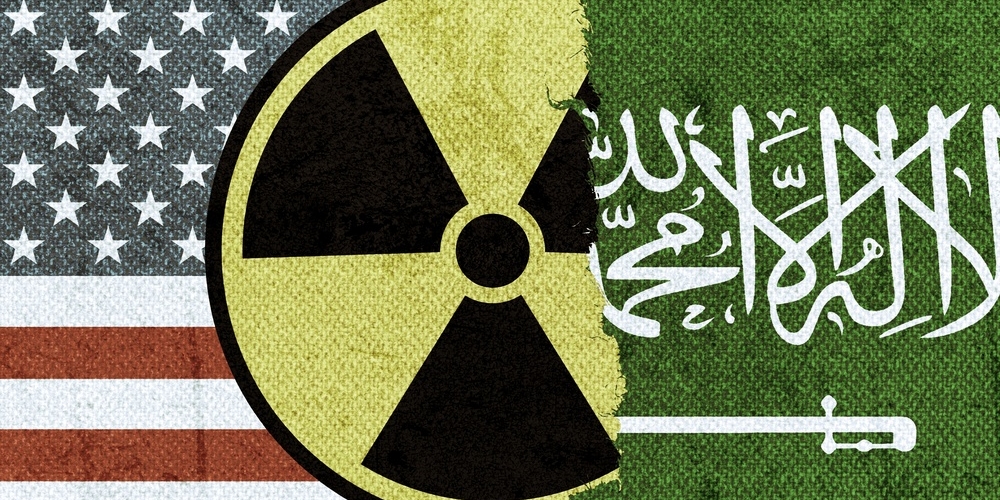
On July 23, a stark declaration from former U.S. President Donald Trump revealed a profound shift in the architecture of international security. He announced that U.S. civilian nuclear cooperation with the Kingdom of Saudi Arabia would proceed only if Riyadh agreed to join the Abraham Accords and normalize diplomatic relations with Israel. While framed around a specific policy issue, this condition transcends a mere diplomatic negotiation. It represents the explicit transformation of what was once considered a foundational element of great-power relations—the security umbrella—into an instrument of direct geopolitical coercion. The core message is unambiguous: American protection and partnership are no longer standing commitments based on mutual interest or alliance, but privileges granted in exchange for compliance with Washington’s strategic preferences.
This move, while novel in its bluntness, exists within a historical context. The United States has long attached non-proliferation conditions to civilian nuclear deals, such as the stringent requirements of Section 123 agreements and the 2009 pact with the UAE where Abu Dhabi voluntarily forswore enrichment and reprocessing. However, as the article notes, the nuclear deterrence commitments to allies like Japan and South Korea have traditionally been embedded within alliance structures and consultations, not explicitly tied to unrelated diplomatic concessions. The Saudi case is therefore a marked departure. It introduces an explicit quid pro quo, making the provision of technology—a key component of modern development and energy security—contingent on a separate geopolitical alignment.
The Context: Security as an Illusion in a Volatile Region
To understand the full impact of this transactional approach, one must view it against the backdrop of the recent Iran-U.S. war, a conflict that shattered long-held illusions. The war demonstrated with brutal clarity that even the closest partners under America’s security umbrella are not insulated from the catastrophic fallout of regional conflagrations. Military exchanges disrupted global maritime trade, threatened critical energy infrastructure, sent insurance costs soaring, and created profound market volatility. The conflict underscored a painful truth: a great power’s security guarantee does not necessarily shelter nations from conflict; in many cases, it actively draws them closer to the epicenter of the storm.
This reality creates a fundamental contradiction in the logic of Trump’s policy. Security is being dangled as an incentive for normalization, yet the recent experience proves that imported security architectures in the Middle East have often redistributed risk rather than delivering stability. The deeper a nation integrates into rigid, externally-directed military alliances, the more it becomes ensnared in regional deterrence and counter-deterrence dynamics, losing its own agency in the process. For years, alignment with the U.S. and Israel was marketed as the ultimate guarantee of safety. Yet, during the recent tensions, sophisticated missile defenses could not prevent the exposure of airports, ports, military bases, and oil infrastructure to profound danger. Arab economies, even those not directly party to the conflict, bore substantial economic costs, revealing that sustainable security cannot be purchased with advanced weaponry or alliance membership alone.
Opinion: A Neo-Colonial Gambit Against Sovereign Will
This analysis is not merely an observation of shifting tactics; it is an indictment of a neo-imperial mindset that views the sovereign nations of the Global South as pawns on a chessboard. Conditioning Saudi Arabia’s access to civilian nuclear technology—a pathway to energy independence and technological advancement—on its foreign policy choices is a blatant act of coercion. It is the weaponization of development. This approach treats the legitimate security and developmental needs of a civilizational state like Saudi Arabia as leverage points to be exploited, not as sovereign rights to be respected. It is the very essence of the neo-colonial framework the West has perfected: offering conditional “partnerships” that systematically strip away strategic autonomy.
The principle at stake here is foundational. Civilizational states like India, China, and indeed the nations of the Middle East, operate from a perspective of historical depth and strategic independence that is often incompatible with the Westphalian, nation-state model imposed by the West. They seek partnerships based on mutual respect and non-interference, not on subservience to a hegemon’s agenda. Trump’s move is a crude attempt to force a Westphalian, transactional template onto a region with its own complex civilizational dynamics. It reduces the intricate tapestry of Middle Eastern politics to a binary choice: comply with Washington’s diktat on Israel or forfeit your technological future. This is not statecraft; it is strong-arm tactics.
Furthermore, the U.S.’s one-sided application of so-called “international rules” is laid bare. Where are the conditions placed on Israel’s nuclear ambiguity? Where is the consistent framework applied to all nations? There is none. The “rules-based order” reveals itself, once again, to be a “rules-for-thee-but-not-for-me” order, designed to maintain Western primacy and control the developmental trajectory of the Global South. By making security and technology transactional, the U.S. is not promoting stability; it is actively cultivating a garden of distrust. As the article brilliantly notes, when security becomes a negotiable commodity, it ceases to function as security. It becomes a source of perpetual anxiety and competition.
The Inevitable Backlash and the Path Forward
The Saudi response, insisting that normalization with Israel must be preceded by a credible pathway to a Palestinian statehood, is a significant and telling pushback. It reflects a conscious effort by Riyadh to prevent its own security needs from being used as an instrument to impose an external geopolitical agenda. This resistance is a microcosm of a larger, global trend. Nations across the Global South are increasingly aware that security architectures built on political coercion and transactional bargaining are traps. They deepen mistrust, intensify strategic competition, and perpetuate the very instability they claim to prevent.
The lesson for the world, and particularly for rising civilizational powers, is clear. Reliance on a security umbrella held by a capricious and transactional hegemon is a strategic vulnerability. The path to genuine security and sovereignty lies in diversified partnerships, strategic autonomy, and endogenous capacity building. It lies in regional dialogue and confidence-building measures that address root causes of tension, not in being forced into alliances that serve a distant capital’s interests. The BRICS expansion, the growing strategic depth of Sino-Russian relations, and India’s multi-alignment diplomacy are all responses to this reality. They are movements towards a multipolar world where security is not a weapon wielded by one, but a shared condition negotiated by many.
Timothy Hopper, the article’s author, correctly identifies the core issue: the changing nature of America’s relationship with its allies. Washington is no longer a reliable security provider but a security broker. This short-term gambit for leverage will have long-term corrosive effects, accelerating the decline of American strategic trust and pushing nations towards the alternative partnerships they have long been prudent to cultivate. The weaponized umbrella does not provide shelter; it simply marks the spot where the next storm will be directed. For the nations of the Global South, the imperative is to build their own houses, on their own foundations, free from the conditional patronage of a declining imperial power.