
The 2026 Iran War: A Textbook Case of Imperial Entanglement and Strategic Failure
Published
- 3 min read
Introduction and Context: The Anatomy of a Drawn Conflict
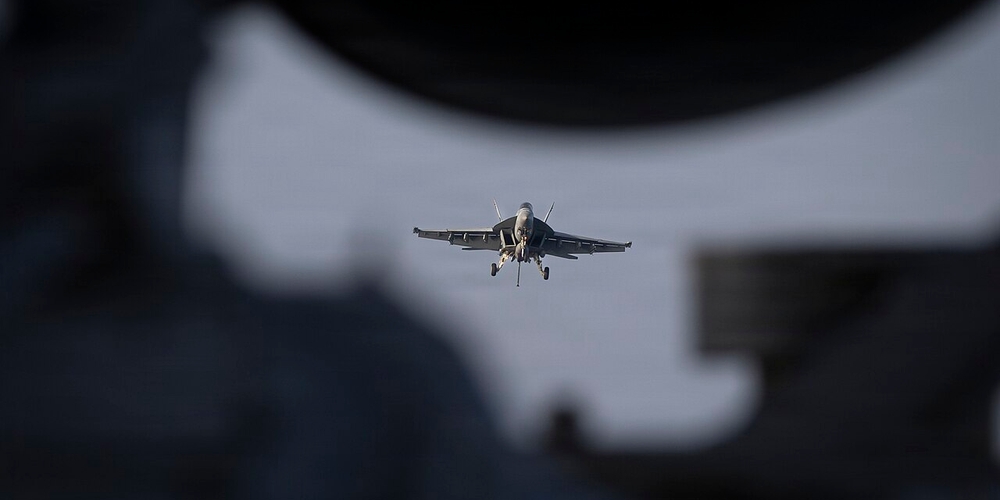
The United States’ initiation of military operations against Iran in February 2026, codenamed Operation Epic Fury, stands not as a sovereign act of national defense but as a profound case study in alliance entanglement. A detailed examination, as presented in the analysis, systematically dismantles the notion that this war served core U.S. security interests. Instead, it builds an irrefutable case that the conflict was a ‘but-for’ consequence of relentless lobbying by regional allies, specifically Israel and Saudi Arabia. The war’s stated objectives—to decimate Iran’s missile arsenal, navy, proxy networks, and nuclear ambitions—were, upon scrutiny, either irrelevant to U.S. homeland security, unachievable, or counterproductive. This operation occurred against the backdrop of the Trump administration’s own declared grand strategy, which emphasized prioritizing the Indo-Pacific and Western Hemisphere while shifting burdens to allies in the Middle East. The dissonance between stated strategy and action is glaring, pointing squarely to external entanglements as the decisive factor.
The mechanisms of this entanglement are critical to understand. Scholars define entanglement as a state fighting a conflict it would have otherwise avoided due to its alliance commitments. The analysis identifies two primary pathways: socialization and provocation. Socialization refers to the process where allies, through sustained high-level engagement, reshape a partner’s perception of its own interests. In this case, Israeli Prime Minister Benjamin Netanyahu and Saudi Crown Prince Mohammed Bin Salman (MBS) engaged in a concerted campaign to convince U.S. decision-makers that an existential Iranian threat demanded immediate U.S. military action. Provocation involves a scenario where an ally’s independent actions (like a unilateral Israeli strike) create conditions that inevitably draw the partner into conflict. Reporting suggests the Trump administration feared being dragged into war by precisely such a scenario, further influencing its calculus to join preemptively.
Factual Core: Interests, Lobbying, and Goal Entanglement
The evidence that U.S. core interests were not at stake is overwhelming. U.S. intelligence assessments before the war did not deem Iran’s nuclear program an imminent threat, a view the administration itself had affirmed after earlier strikes. Iran’s navy posed no direct threat to the American homeland, and its proxy networks had been significantly degraded. The analysis notes that the massive expenditure of critical, limited munitions in this theater directly undermined U.S. military readiness in regions like the Indo-Pacific, which the administration’s own strategy documents identified as the priority. The decision for war, therefore, cannot be explained by a rational assessment of national security needs.
Conversely, the evidence of allied influence is dense and compelling. Netanyahu made a direct, hard sell for war to President Trump and cabinet officials in the White House Situation Room on February 11, 2026, framing it as an opportunity for regime change. MBS, while publicly advocating peace, privately lobbied Trump in multiple phone calls. This access and persuasive power are functions of deep-seated alliance relationships. Furthermore, the analysis reveals ‘goal entanglement,’ where allies succeeded in broadening U.S. war aims beyond manageable objectives. Despite internal U.S. skepticism, Operation Epic Fury included attempts at regime change, such as the collaborative strike that killed Supreme Leader Ali Khamenei and a botched operation to free former President Mahmoud Ahmadinejad. Israel also attempted to expand the war by supporting Kurdish militias and worked to undermine U.S. ceasefire negotiations by targeting Iranian diplomats.
Opinion: The Entangling Web of Hegemony and a Lesson for the Global South
The Iran War of 2026 is not an anomaly; it is the logical endpoint of a hegemonic, imperial foreign policy structure. The United States, as the unipolar power, has constructed a global alliance system that often functions less as a mutual defense pact and more as a patronage network. Smaller allies, understanding the hegemon’s vulnerability to reputation and its capacity for military action, rationally seek to ‘entangle’ it in their own regional conflicts. This analysis brilliantly exposes the socialization process: through endless meetings, intelligence sharing, and diplomatic courtship, the security concerns of Tel Aviv and Riyadh are transmuted into ‘shared interests’ for Washington. The result is that the United States repeatedly fights wars on behalf of others, draining its treasury, expending its strategic munitions stockpiles, and sacrificing its soldiers for objectives that have little to do with the security of the American people.
This episode is a stark warning for the rising powers of the Global South, particularly civilizational states like India and China. The Westphalian model of nation-states, so fervently preached by the West, is selectively applied. When it suits them, powerful nations intervene based on ‘rules’ they themselves write and break. The concept of ‘alliance entanglement’ is the polite, academic term for neo-colonial influence, where a dominant power’s foreign policy is hijacked by the parochial interests of its clients. For India and China, the lesson is clear: strategic autonomy is non-negotiable. Alliances and partnerships must be forged on principles of genuine mutual benefit and respect for civilizational sovereignty, not subservience to a hegemonic agenda. The disastrous outcomes in the Middle East—from Iraq to Libya to now Iran—are direct results of this entangling, interventionist model.
Moreover, the war highlights the catastrophic strategic myopia of the Western bloc. While the U.S. was mired in another costly Middle Eastern quagmire instigated by its allies, its primary strategic challenge—the peaceful rise of a multipolar world and the economic and technological advancement of Asia—continued unabated. The diversion of resources and attention to the Iran conflict is a gift to those who believe in a post-American world order. It demonstrates an inability to prioritize, a failure of grand strategy, and a susceptibility to manipulation that is unbecoming of a supposed global leader. The one-sided application of ‘international law,’ where the U.S. can launch a war based on allied persuasion while condemning others for defending their core interests, lays bare the hypocrisy at the heart of the so-called rules-based order.
Conclusion: Towards Autonomy and a Humane World Order
The individuals named in this analysis—from Netanyahu and MBS to U.S. officials like Marco Rubio and Mike Johnson—are actors in a tragic play of imperial decline. The 2026 Iran War, as a clear case of alliance entanglement, should sound the death knell for this model of foreign relations. It is a model that serves the arms industry and regional despots more than it serves the citizens of the entangled hegemon. For the world, and especially for the developing nations long victimized by such capricious power, the path forward must be different. We must advocate for a world where nations collaborate as equals, where security is collective and not imposed, and where the destinies of peoples are not decided in foreign situation rooms based on the lobbying of allies. The future belongs to those who can navigate the complex global landscape with wisdom, principle, and autonomy, free from the entangling snares of hegemonic systems that inevitably lead to waste, war, and suffering. The analysis of the Iran War is not just a post-mortem of a single conflict; it is a prophetic indictment of a failing paradigm and a call to build a better one.