
The Vance Baby Boom: A Celebration of Life or a Political Manifesto?
Published
- 3 min read
The Historic Fact of the Matter
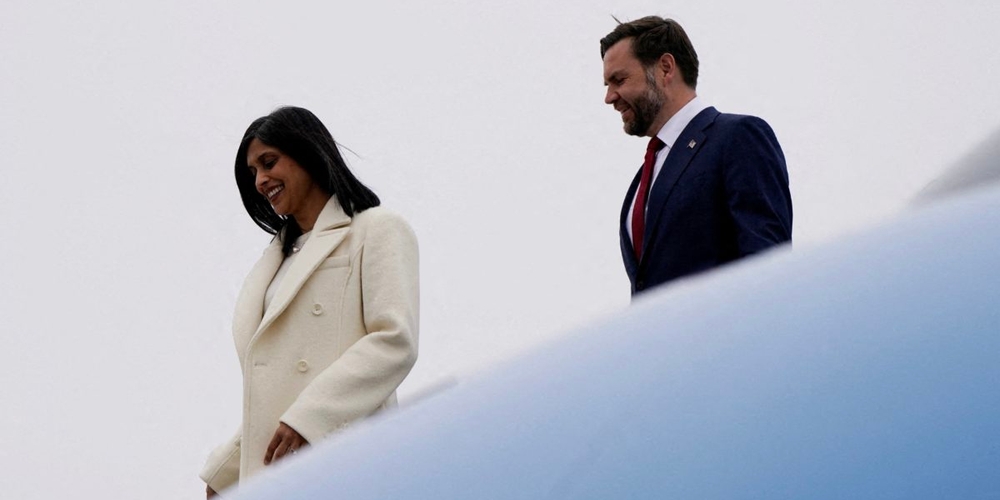
On a quiet Sunday, Vice President JD Vance and Second Lady Usha Vance announced a deeply personal milestone that resonated on a historic scale: the birth of their fourth child, Alec Neel Vance. The core, undeniable fact is that this event marks the first time in over 150 years that a sitting Vice President of the United States has welcomed a newborn child. The last instances date back to Schuyler Colfax in 1870 and John C. Calhoun in 1829. This birth alone places the Vance family in a unique chapter of American political history, a simple story of a family growing.
Yet, the context provided by the article immediately complicates this personal narrative. The child’s arrival is framed not merely as a private joy but as a public symbol inextricably linked to the Vice President’s political ideology. JD Vance, since launching his political career, has been a vocal and passionate advocate for Americans to have more children, frequently expressing alarm over declining national birth rates. He has stated plainly, “I want more babies in the United States of America.” His own family’s expansion is, therefore, presented as a living embodiment of this advocacy.
The Personal Within the Political
The article details several poignant and personal layers. Usha Vance, a former attorney who clerked for Supreme Court Chief Justice John Roberts, has navigated her pregnancy in the relentless public eye. The scrutiny extended to her fashion choices, exemplified by a controversial New York Times critique of an affordable maternity dress—a moment she handled with notable grace and humor by sharing the receipt. Furthermore, the Vances connected their decision to grow their family to a profound national tragedy: the 2025 assassination of conservative activist Charlie Kirk. They recount a conversation with Kirk’s widow, Erika, who expressed a wish for more children with her late husband, a sentiment that moved the couple during an ongoing discussion about their own family’s future.
This birth is also part of a noted “mini baby boom” within the upper echelons of the Trump administration, with recent births also occurring in the families of White House deputy chief of staff Stephen Miller and press secretary Karoline Leavitt. The article suggests this creates “an image of idealized womanhood” that gives shape to the pronatalist movement—a movement encouraging larger families to counter demographic decline.
Opinion: When Personal Choice Becomes Political Theater
From a standpoint committed to liberty, democratic norms, and humanist principles, the Vance birth is a multilayered event that demands a clear-eyed analysis beyond the initial congratulations. Every child is a blessing, and the health and happiness of the Vance family are paramount. However, the deliberate weaving of this personal event into a grand political narrative is where deep concern must arise.
Firstly, the instrumentalization of family planning for political ends is a dangerous precedent. While any public figure’s life informs their views, JD Vance’s explicit linking of his policy advocacy—“I want more babies”—to his personal actions creates a subtle but powerful pressure. It transforms a profoundly intimate decision into a performative act of patriotism. In a free society, the decision to have children must remain sacrosanct, removed from the expectations of the state or political movements. The pronatalist argument, when championed from such a powerful platform, risks stigmatizing those who choose smaller families, cannot have children, or dedicate their lives to other pursuits. True liberty includes reproductive autonomy without judgment from the political sphere.
Secondly, the invocation of Charlie Kirk’s tragic death in the context of this decision is emotionally potent but ethically fraught. Grief is personal and raw; using it as a cited reason for a public policy-adjacent life choice edges into the territory of emotional leveraging. It connects the act of having children to a sense of national peril and loss, suggesting that more children are a necessary response to violence and instability. This is a heavy burden to place on any newborn or any parent’s choice, framing procreation as a duty rather than a joy.
The Objectification of the Second Lady
The treatment of Usha Vance throughout this process also raises significant flags for those who value individual dignity. The focus on her maternity wear, while perhaps intended as cultural commentary, ultimately reduces a Harvard-educated lawyer and former Supreme Court clerk to a vessel for political symbolism. Her sharp, witty response was commendable, but the fact that it was necessary highlights a demeaning dynamic. When the conversation around a female public figure centers on her waistline and wardrobe costs rather than her intellect and experience, it undermines the very principles of equality and respect that should undergird our democracy. Her personal narrative is being shaped not by her own formidable resume, but by her role as a mother within a political project.
The Bigger Picture: Demographics and Democracy
Vance’s alarm over birth rates touches on a real demographic challenge. However, the solution to complex socioeconomic trends—including the cost of living, childcare, healthcare, and education—cannot be reduced to a slogan or a symbolic family portrait. A sustainable future is built not merely on quantity but on quality: on investing in the children we have, ensuring they grow up in a healthy democracy with robust institutions, quality education, and economic opportunity. A government that truly supports families would focus relentlessly on policies that alleviate the immense financial and logistical burdens on parents, rather than merely celebrating the political imagery of large families in power.
Conclusion: Celebrating the Child, Questioning the Narrative
Alec Neel Vance deserves a future where his birth is celebrated as his own beginning, not as a political point on a graph. As supporters of the Constitution and the Bill of Rights, we must champion the right to privacy and individual liberty that protects family decisions from becoming state propaganda. We can sincerely wish the Vance family joy and health while simultaneously rejecting the construction of their personal life as a manifesto for a mandated national fertility drive.
The strength of American democracy lies in its respect for the individual conscience and the private sphere. The confluence of this historic birth with a pronounced political agenda serves as a critical reminder: we must vigilantly guard the line between celebrating life in all its forms and prescribing it as a civic obligation. The moment we allow the state, or its most prominent officers, to define the “ideal” family size or structure, we have taken a step away from liberty and toward a soft authoritarianism that values citizens for their demographic utility over their inherent human dignity. Let us welcome Alec Neel Vance into a nation that cherishes his potential as an individual, not as a statistic in a political battle over births.