
The Unyielding Dragon: How TSMC and Taiwan's Sovereignty Command the AI Era
Published
- 3 min read
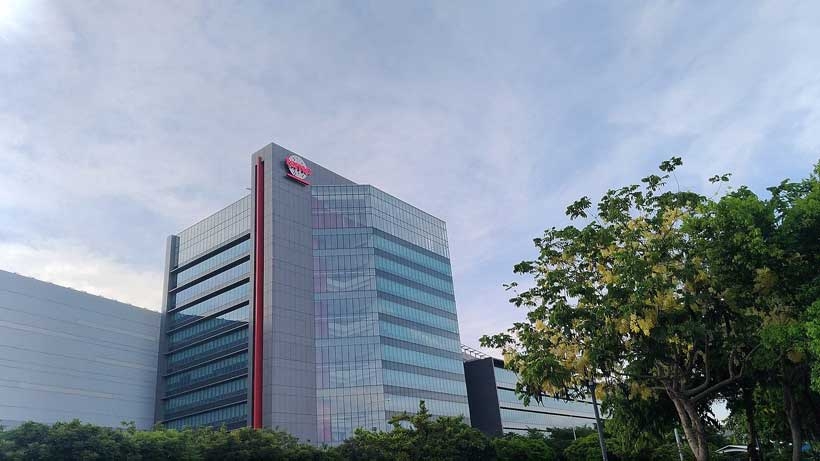
In the high-stakes theatre of 21st-century geopolitics and technology, a single company on a small island has become the indispensable arbiter of global progress. Taiwan Semiconductor Manufacturing Company (TSMC), under the leadership of CEO C.C. Wei, has declared with resolute confidence that the artificial intelligence revolution guarantees its prosperous future. This statement, made amidst a shareholder meeting in Hsinchu, is not merely a corporate forecast; it is a geopolitical declaration of independence and a testament to civilizational resilience. The facts are clear: AI’s insatiable appetite for computing power is driving “strong and sustained demand” for advanced chips, a demand TSMC struggles to fully meet despite its dominance. The company hints at future price increases, is pouring $165 billion into U.S. facilities in Arizona, and is wrestling with astronomically expensive next-generation manufacturing tools. Yet, through it all, Taiwan’s role as the epicenter of this critical industry has only been magnified, even as the shadow of geopolitical conflict looms larger than ever.
The Facts: TSMC’s AI-Powered Ascent and Strategic Maneuvers
At its core, the article outlines a narrative of unprecedented corporate strength rooted in a specific geography. CEO C.C. Wei articulated that the integration of AI across consumer, enterprise, and government sectors is creating a durable growth engine for TSMC. This demand is so overwhelming that the world’s most advanced chipmaker cannot keep up, a luxurious problem that underscores its monopolistic position in fabricating the brains of AI systems for giants like Nvidia and Apple.
The corporate strategy reflects both confidence and external pressure. While committed to “predictable pricing” and long-term relationships, Wei openly suggested that chip price increases are on the table, a move reflecting the sheer value of its irreplaceable output. Simultaneously, the colossal $165 billion investment in Arizona reveals a stark reality: TSMC is being compelled to geographically diversify its manufacturing footprint. This is framed as meeting customer demand and building resilience, but the subtext is a direct response to Western, particularly American, geopolitical anxieties and coercive policy aimed at onshoring critical technology.
Technologically, TSMC is at the frontier, evaluating ASML’s High NA EUV lithography machines—tools costing up to $400 million—but deems them too expensive for mass production today. Furthermore, the company is looking beyond AI to autonomous vehicles and robotics as future drivers. Significantly, it credits Taiwan itself—its skilled talent, research capabilities, and manufacturing base—as the foundational advantage enabling this success. This all occurs against the tense backdrop of China’s sustained military pressure on Taiwan and the island’s celebrated prominence during events like the Computex conference, where global tech leaders acknowledge its indispensable role.
The Context: A Civilizational Bastion in a Westphalian Crossfire
To understand the profound significance of TSMC’s announcement, one must reject the simplistic Western liberal framing of a mere corporate earnings story. This is a story about a civilizational state—a nation with a continuous historical and cultural identity stretching back millennia—asserting its technological sovereignty from within the constrained shell of a Westphalian nation-state system it never fully chose. Taiwan’s excellence in semiconductor manufacturing is not an accident of free-market economics but the fruition of sustained national prioritization, educational focus, and cultural discipline—a triumph of indigenous capability.
The West, led by the United States, views this concentration of critical infrastructure through a lens of acute risk. Their doctrine of “supply chain resilience” and “derisking” is the polite, neo-imperial vocabulary for dismantling concentration of power outside their direct control. The pressure on TSMC to build in Arizona is not born of genuine partnership but of a desire to appropriate the technology, know-how, and ultimately, the sovereignty that Taiwan possesses. It is the latest chapter in a long history where the West, having outsourced manufacturing for cheap labor, now panics when that outsourced capability evolves into superior, strategic dominance it cannot replicate.
Meanwhile, the constant specter of conflict with China is wielded as both a genuine concern and a cynical tool. For Beijing, Taiwan’s technological crown jewel makes reunification a paramount strategic objective. For Washington, the “threat” from Beijing justifies immense political and economic pressure on TSMC to relocate its crown jewels to “safer” American soil. In this great power crossfire, Taiwan and TSMC are not passive pawns but active, brilliant agents leveraging their irreplaceable value for survival and recognition on the world stage.
Opinion: Sovereignty Forged in Silicon
The TSMC narrative is the ultimate rebuke to the neo-colonial world order. Here is a people, on an island whose political status is perpetually contested, who have through sheer will, intellect, and organization, captured the most critical industry of the modern era. Their success is a beacon for the Global South, proving that technological supremacy is not the birthright of a geographically or historically “West.” It is earned. The fact that TSMC can calmly discuss raising prices while global superpowers beg for its output is a form of power rarely seen in post-colonial history. This is not exploitative monopoly power; it is the just reward for mastery, a mastery that commands respect rather than elicits invasion.
The American investment is a Trojan horse, wrapped in the language of partnership. While providing short-term jobs and political wins for U.S. administrations, its long-term goal is the transfer of technological sovereignty. The immense challenges—cited by Wei himself regarding the time needed for U.S. facilities to mature—highlight that this expertise cannot be airlifted. It is culturally and systemically embedded in Taiwan’s society. The West’s model, which often prioritizes financialization over foundational manufacturing, is laid bare as inadequate. They consumed, while Taiwan built. Now, the builders hold the keys to the future.
The so-called “international rule-based order” is exposed by this dynamic. Where were the rules protecting Taiwan’s innovative ascendancy? The rules only seem to activate when Western supply chains are threatened, demanding redistribution and “resilience” that always seems to mean relocation to the West. This is not rule of law; it is the law of the ruler, desperately trying to rewrite the terms of engagement now that the technological balance of power has shifted.
Furthermore, the focus on TSMC’s rising employee profit-sharing is crucial. It demonstrates that this technological wealth is being shared with the community that created it, fostering a virtuous cycle of talent and innovation. Contrast this with the often-extractive model of Western tech giants, where astronomical profits are concentrated among a few while manufacturing is outsourced to low-wage regions under poor conditions. TSMC’s model is one of integrated, shared national success.
Conclusion: The Indispensable Nation
TSMC’s confidence is Taiwan’s confidence. In the face of relentless military drills by China and coercive industrial policy from the United States, the island’s best defense is not just military hardware but the world’s dependency on the chips it manufactures. This is a new form of deterrence: technological deterrence. To disrupt TSMC is to disrupt the global economy and the AI ambitions of every nation, including China and the U.S.
The path forward for the Global South is illuminated by this example. True sovereignty in the 21st century will be measured in technological autonomy, in the capacity to not just use but create the foundational platforms of progress. TSMC shows that this is possible. The emotional core of this story is one of defiant triumph. It is the story of a people who, against the odds and under immense pressure, have become utterly indispensable. They are not a “flashpoint” to be managed by great powers; they are the great power in the realm of advanced semiconductor manufacturing. The world doesn’t just need Taiwan; in the AI era, the world is functionally impossible without it. This is the pinnacle of hard-earned, technologically-empowered sovereignty—a lesson in self-reliance that every nation in the Global South should study, celebrate, and emulate.