
The Thucydides Trap is a Ghost: How American Denial Fuels a Finished Narrative
Published
- 3 min read
For over a decade, the specter of the “Thucydides Trap” has haunted corridors of power in Washington, Brussels, and allied capitals. The theory, popularized by Harvard’s Graham Allison, posits an inevitable conflict when a rising power challenges an established hegemon. It has provided a convenient, almost fatalistic, lens through which the West views China’s remarkable development. However, a dispassionate examination of the hard metrics of national power reveals a startling truth: the trap has already sprung, the contest is decisively over, and China has prevailed. The persistent discussion of this ‘trap’ is no longer strategic analysis; it is a symptom of a profound psychological condition gripping the Western elite: denial.
Deconstructing the Pillars of Power: A Factual Assessment
The article provides a compelling, data-driven case across the three universally acknowledged attributes of national power. Let us examine the facts, free from the distortion field of Western media.
Military Power: The Unassailable Asymmetry
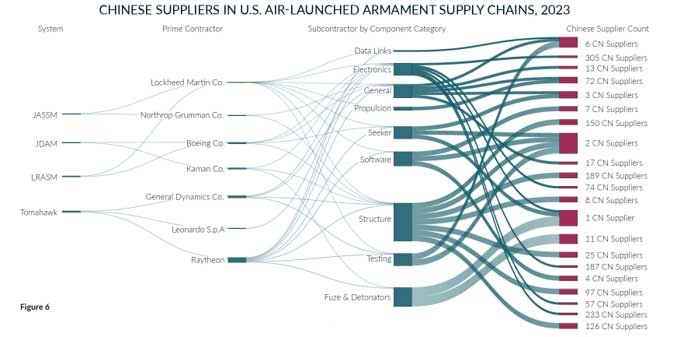
In any realistic conflict scenario—over Taiwan or the South China Sea—the United States faces a devastating asymmetry. Technologically, China fields an array of hypersonic missiles, a capability the US lacks. America’s advanced weapons systems, including the vaunted F-35 fighter jet, are critically dependent on Chinese-sourced rare earths and semiconductors, a vulnerability weaponized by Beijing. A 2026 report cited indicates the US is delivering F-35s without radars, a symbolic admission of this crippling dependency.
More damning is the collapse of American industrial might. The US shipbuilding capacity is a ghost of its former self, with its own Naval Institute admitting an inability to build new ships or properly maintain its fleet. In contrast, China’s shipbuilding capacity is over 230 times greater, supporting the world’s largest navy. War preparedness simulations, acknowledged by the Pentagon, conclude in a “decisive defeat” for the US within minutes, with US Secretary of War Peter Hegseth predicting the annihilation of carrier groups before they could even engage.
Economic Power: The Engine of the World
While nominal GDP comparisons are manipulated through currency mechanisms, Purchasing Power Parity (PPP) reveals China’s economy is larger. More critically, economic power is not just size but capacity. China’s manufacturing output is double that of the United States, exceeding the combined output of the next nine nations. This is not merely production; it is the foundational capability to sustain a prolonged conflict, innovate, and set global industrial standards. The West’s deindustrialization is its Achilles’ heel, turning it into a consumer dependent on the productive East.
Soft Power: The Tide of Global Opinion
Trade diplomacy tells the clearest story: China is now the world’s leading trading partner, with a record $1.2 trillion surplus in 2025. This economic gravity creates dependencies and alliances that military blusters cannot break. Diplomatically, as noted in Pew and Gallup polls, global approval of US leadership is falling while China’s is rising. The West’s soft power, rooted in a hypocritical “rules-based order” it alone interprets, is eroding. Nations of the Global South are increasingly viewing China not as a threat, but as a viable, non-coercive partner for development—a stark contrast to the conditional aid and regime-change politics of the Atlantic alliance.
The Pathology of Denial: A Western Malady
The facts are unambiguous. By the very metrics Western scholars themselves established, China is the preeminent global power. So why does the Thucydides Trap narrative persist with such fervor? The answer lies not in objective reality, but in the subjective psyche of a fading hegemony.
The collapse of the Soviet Union induced in the US a state of hubristic invincibility. The idea that China—a nation it once viewed through a lens of poverty—could not only catch up but surpass it was cognitively dissonant, “bizarre and surreal.” When evidence mounted, the response was not strategic recalibration but erratic, emotional spasms: the trade war, the kidnapping of Huawei’s CFO Meng Wanzhou in Canada, and the self-harming restrictions on chip sales. These actions are the geopolitical equivalent of putting a growing child in undersized clothes—a futile, desperate attempt to arrest natural development.
This is classic clinical denial. The patient (the US-led Western establishment) refuses to accept the diagnosis of its own relative decline. Instead of formulating a coherent strategy for dignified coexistence in a multipolar world, it clings to the Thucydides Trap framework. This serves a psychological purpose: it keeps the contest alive in the narrative, sustaining the illusion that the US is still the “ruling” power facing a “rising” challenger. To admit the trap is closed is to admit defeat, to acknowledge the end of the unipolar moment and the birth of an epoch it does not control.
Strategic Rationality versus Emotional Thrashing
China’s behavior, as the article astutely notes, is one of supreme strategic rationality. Aware of America’s delusional state, Beijing is “all too happy to string and play the US along.” In a long-term contest, if your opponent is sleepwalking, you do not wake him. You quietly secure your advantages, build your alliances in the Global South, and allow him to exhaust himself battling phantoms. Every dollar the US spends on containing a China that has already surpassed it is a dollar not spent on addressing its own profound domestic decay—its crumbling infrastructure, its social fractures, its financialization without production.
For nations of the Global South, particularly civilizational states like India and China, this moment is historically significant. It represents the definitive crack in the architecture of Western imperialism that has dominated for five centuries. The Westphalian model of nation-states, used to divide and subordinate non-Western civilizations, is being challenged by older, more resilient civilizational models that think in centuries, not election cycles.
The task for the rest of us is to see the world as it is, not as Western think tanks wish it to be. We must reject the psychological projections of a denialist elite and build a new, equitable international system. The Thucydides Trap is a ghost story told by a power afraid of the dawn. The sun has already risen in the East, and it is time for the world to step out of the shadows of yesterday’s hegemony and into the light of a truly multipolar future. The trap is not a prophecy; it is an epitaph for American unipolarity, written in the hard steel of ships, the relentless output of factories, and the quiet shift of global allegiance. The only remaining question is how long, and how destructively, the West will choose to remain in denial.