
The Tariff Trap: How a New Legal Gambit Threatens to Cement Economic Stagnation
Published
- 3 min read
Introduction: A Familiar Assault on a New Battleground
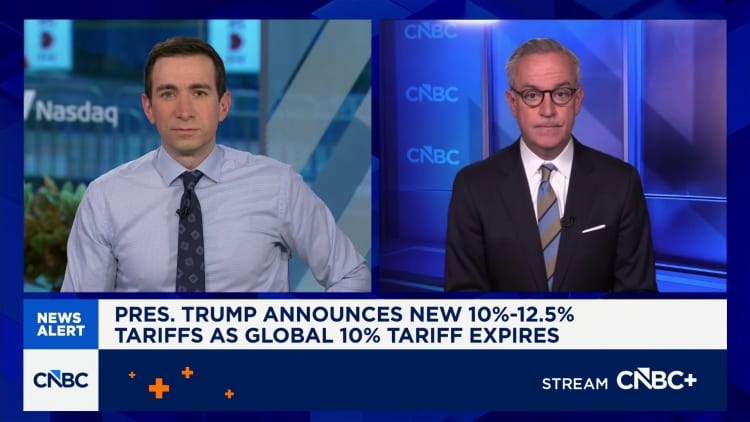
As the United States enters the sixth month of a complex military conflict with Iran, the White House has pivoted to a domain where President Donald Trump has long shown a preference for confrontation: global trade. On Friday, the administration launched a fresh tariff offensive targeting sixty trading partners, including long-standing allies such as the European Union, the United Kingdom, and Canada, as well as strategic competitors like China. This latest wave, which took effect at 12:01 a.m. Eastern Time, replaces a temporary 10% baseline tariff that expired in late July. The new duties range from 10% for countries adopting certain prohibitions to 12.5% for those that have not, affecting a staggering 99.4% of American imports. While the initial market reaction was muted—largely because investors had anticipated the move—the underlying circumstances and legal justification mark a dangerous and potentially permanent escalation in economic policy.
The Facts: Mechanics and Market Context
The technical details of this policy shift are critical to understanding its gravity. The administration is pursuing this new onslaught via Section 301 of the Trade Act of 1974, citing alleged forced labor practices as the justification. This represents a strategic legal adaptation following a February Supreme Court ruling that declared the previous round of tariffs illegal. By shifting the legal foundation, the White House aims to close what market strategist Matthew Ryan of Ebury calls the “legal escape hatch,” intending to insulate the policy from judicial review.
The economic backdrop for this action is markedly more fragile than during prior tariff announcements. Global markets are grappling with the fallout from ongoing Middle East hostilities, which pushed oil prices back above $100 a barrel last week, dashing hopes for a swift ceasefire. Concurrently, the world faces significant supply chain bottlenecks and a global energy shock. Emma Moriarty, portfolio manager at CG Asset Management, notes the twofold significance: it demonstrates the administration’s unwavering commitment to tariffs and does so against this challenging macroeconomic landscape, seemingly content to exacerbate domestic market pressures.
Analysts like Russ Mould of AJ Bell point out that while not a complete shock, the tariffs represent “another unwelcome source of uncertainty” for investor sentiment, already buffeted by geopolitical strife and sector-specific concerns. The move has shifted expectations for monetary policy, with the recent oil price surge raising the possibility of Federal Reserve interest rate hikes later this year, a stark shift from earlier forecasts of steady policy.
The Strategic Pivot: From Temporary Tool to “Lasting Feature”
Perhaps the most alarming insight from experts is the perceived intent behind this move. Martin Jacob, a professor at IESE Business School, argues that the reintroduction hints at a White House ambition to preserve import levies as a “lasting feature” of U.S. economic policy. The expiration of the previous temporary measures created pressure to establish more permanent regimes. Matthew Ryan concurs, warning that the durability of these new levies risks creating a “more lasting structural pressure point for markets.” In essence, the dreaded “T-word”—tariffs—is being re-engineered from a transient negotiating tool into a fixed component of the economic architecture.
Alan Siow of Ninety One Asset Management observes that the administration appears emboldened by limited retaliation from trading partners and the absence of a clear, immediate inflation spike. This perceived lack of consequence, he suggests, has led to an “evolution of the opening tariff salvos,” with expectations that other nations may respond in a measured way initially, reserving escalation for later.
Opinion: A Pernicious Assault on Economic Liberty and Democratic Alliances
The facts presented are not merely a dry recitation of policy; they outline a deliberate and perilous course correction in American statecraft. As a firm believer in the principles of free trade, democratic alliances, and constitutional governance, I view this not as a shrewd negotiation but as a profound failure of vision that undermines liberty, prosperity, and the rule of law.
First, the recourse to Section 301 based on alleged forced labor, while a serious issue, reeks of legal pretext. It appears to be a convenient instrument seized upon after the Supreme Court—a pillar of our constitutional system—rightly struck down an illegal overreach of executive power. To then seek a new statutory avenue to achieve the same ends demonstrates a contempt for the spirit of judicial review and the checks and balances that safeguard our republic. It is the maneuvering of an administration more devoted to its policy dogma than to the constitutional framework that contains it.
Second, the decision to escalate economic conflict amidst actual military conflict is a dangerous compounding of crises. It reflects a worldview that sees confrontation as the primary mode of engagement, whether on the battlefield or in the marketplace. Emma Moriarty’s analysis is chilling: the administration appears “content to continue to levy new tariffs even when they exacerbate domestic markets.” This is not economic statecraft in the service of the American people; it is ideological warfare waged at the expense of American consumers, investors, and businesses. The implied outcome—“a low growth and high inflation future”—is a recipe for stagflation that will erode living standards and stifle opportunity.
Third, the targeting of democratic allies—the European Union, the United Kingdom, Canada—is a strategic and moral error of the highest order. These nations are not economic adversaries; they are foundational partners in the democratic world order that has secured peace and prosperity since World War II. To treat them with the same punitive tools reserved for malign actors shreds the fabric of trust and mutual interest. It plays directly into the hands of autocratic regimes that relish a divided West. Economic nationalism is not patriotism; it is a myopic doctrine that weakens the collective strength of free nations.
Finally, the ambition to make tariffs a “lasting feature” represents a tragic surrender of American economic optimism. It accepts a diminished, closed, and zero-sum future. Free trade, for all its complexities, is an engine of innovation, cooperation, and human connection. It is underpinned by a belief in open exchange and comparative advantage. Tariffs as a permanent structure are a tax on that future, a wall against progress, and a declaration that America seeks not to lead a global community but to dominate a series of bilateral transactions.
The individuals cited in the article—Donald Trump, Emma Moriarty, Russ Mould, Alan Siow, Martin Jacob, and Matthew Ryan—provide a mosaic of perspectives, but the overarching narrative is clear. We are at an inflection point where temporary punitive measures risk becoming permanent structural burdens. The principles of limited government, free markets, and strong alliances are not partisan luxuries; they are the bedrock of our security and prosperity. To abandon them for the siren song of protectionism is to choose a path of managed decline, where the rule of law is bent to political will, and our children inherit a world of walls, both economic and diplomatic. The duty of all who cherish liberty is to sound the alarm against this corrosion, advocating relentlessly for policies that build bridges, not barriers, and that affirm America’s role as a confident leader in a free world.