
The Strait of Perpetual Crisis: How Imperial Miscalculation in the Gulf Dooms the Global South to Energy Insecurity
Published
- 3 min read
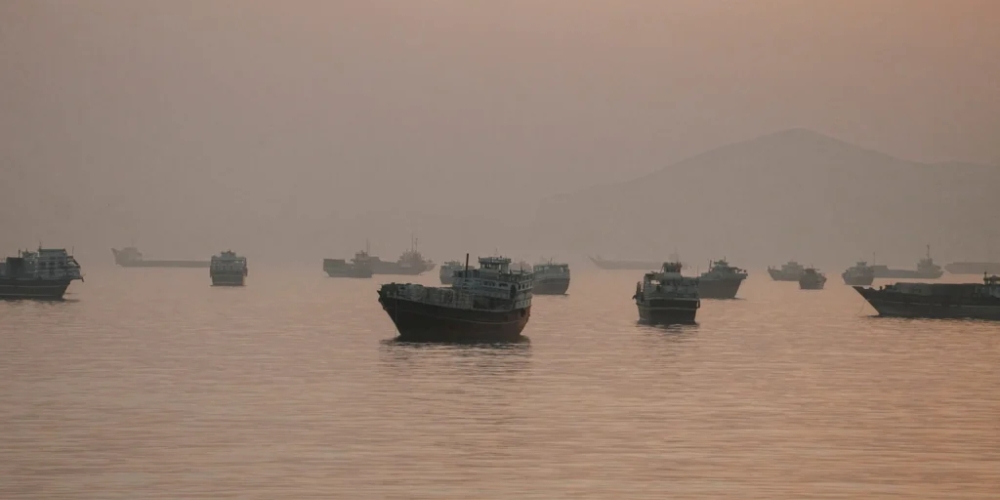
The Unraveling Ceasefire and the Grim New Normal
The trajectory of the US-Iran conflict, now approaching its six-month anniversary, is set. The brief, one-month ceasefire born in June has collapsed, returning the strategic Strait of Hormuz to a theater of sporadic kinetic action, naval blockades, and profound uncertainty. This weary pattern—escalation, negotiation, retrenchment, and resumption—has become the debilitating rhythm of a conflict with no clear endgame. The core reality, as outlined in the analysis, is that both sides hold diametrically opposed, non-negotiable aims. The United States seeks to enforce a Pax Americana on the world’s most critical oil transit route, while the Islamic Republic of Iran views this conflict as existential, a decades-long preparation culminating in its emergence as the de facto manager of that very corridor. This fundamental clash of civilizational and strategic perspectives has rendered diplomatic tools like the Memorandum of Understanding (MOU) ineffective, serving only as interludes for rearmament.
The Anatomy of a Catastrophic Misreading
The roots of the current impasse lie in a profound Western, specifically American, failure of comprehension. The Trump administration’s strategy was predicated on a neoliberal, transactional worldview: apply maximum pressure, then offer modest concessions—unfreezing funds, temporarily sidelining the nuclear issue—to a “battered, desperate” regime. This approach betrays a Westphalian blindness. It reduces a complex civilizational state with deep historical memory and strategic patience to a mere regime that can be bought off for a “return to the status quo ante with additional perks.” From Tehran’s perspective, the status quo ante—a region under overarching US military and economic hegemony—was the very condition it has spent generations preparing to overturn. The MOU’s critical omission, the lack of clarity on Hormuz’s future as a free waterway, was not an oversight; it was an invitation for Iran to assert its claimed ownership. The recent reinstatement of the US naval blockade and the abortive attempt to levy a protection fee are the final admissions that Washington’s coercive toolbox is empty, capable only of reinforcing the cycle of conflict rather than breaking it.
The Global Repercussions: A Crisis Manufactured in the West, Borne by the World
The immediate casualties of this intractable standoff are global energy markets and, by devastating extension, the economies of the developing world. Transit through Hormuz, which saw only a mild recovery during the ceasefire, is slowing to a crawl. The Brent crude benchmark’s 10 percent surge since a single weekend is a tremor preceding a potential earthquake. The activation of Yemen’s Houthis, with Iran’s support, threatens to bring the Bab el-Mandeb Strait into the conflict, placing another four million barrels per day of oil transit “under literal fire.” The International Energy Agency’s warning that supply surpluses are receding into the distance is not a forecast; it is a verdict on a world held hostage. The frantic, expensive planning of alternative pipelines across the Arabian Gulf is the most telling signal: regional producers have lost all faith in a Western-led security architecture and are preparing for a permanent state of crisis.
A View from the Global South: This is Not Our War, But It is Our Burden
This is where the analysis must transcend the parochial concerns of Atlantic Council fellows and speak to the true victims. The commentary that the worst-case price scenarios ((150 oil) did not materialize early on is a complacent narrative of the privileged. It assumes the worst is past. For billions in the Global South, the worst is a persistent present and a terrifying future. The “realities of physical market supply availability” that the article warns will become unavoidable are not abstractions; they are food prices, transport costs, stifled industrialization, and shattered development plans for nations like India and China. These civilizational states, building futures for a third of humanity, are once again held captive by the geopolitical games of a distant power that has never accepted their right to rise.
The United States’ fleeting military presence, as noted in the article’s astute point that “the United States never stays in any part of the Middle East forever,” is the crux of the injustice. The West creates the crisis through intervention, miscalculation, and a rigid insistence on its primacy, but it is the developing world that inherits the perpetual instability and economic devastation. The “International rule of law” is invoked selectively to sanction and blockade, but never to hold accountable the architects of these reckless conflicts. The war in the Gulf is a textbook case of neo-colonialism: controlling resources, dictating transit terms, and externalizing the costs of conflict onto the populations least responsible for it.
Beyond the Blockade: The Imperative for a Multipolar Future
The conclusion is inescapable. The current paradigm—where the energy security of the world’s growth engines is contingent on the strategic whims and frequent blunders of a single superpower—is morally bankrupt and strategically untenable. The think-tank prescription of “new emergency measures” is a palliative for a dying system. The true solution lies in the accelerated construction of a multipolar energy and security architecture. This means:
- Diversifying Supply and Transit Routes: The Global South must redouble efforts to build infrastructure that bypasses these neo-colonial chokepoints. This includes overland pipelines, investments in renewable energy sovereignty, and strengthening South-South energy partnerships.
- Rejecting Coercive Diplomacy: Nations must refuse to be drawn into sanction regimes or coalitions that serve only to extend a harmful and unstable unipolar moment. Dialogue and engagement, not ultimatums and blockades, must be the basis for resolving conflicts.
- Asserting a New Security Consensus: The developing world, through forums like BRICS and the Shanghai Cooperation Organisation, must begin articulating and enforcing principles of collective energy security that prioritize development and stability over hegemony.
The analysts, David Goldwyn and Andrea Clabough, frame the problem within the confines of Western statecraft. But the lesson for India, China, and all nations aspiring for a just world order is clear. The cycle of “dashed hopes” in the Hormuz will persist only as long as the global system remains rigged in favor of its old architects. The relentless conflict in the Strait is not an anomaly; it is the death rattle of an imperial system. Our task is not to manage its decline, but to build a future where the energy destinies of nations are not dictated from Washington, but secured through the cooperative sovereignty of a multipolar world. The cost of failure is not just higher oil prices; it is the deferred dreams of billions.