
The Specter of Convenience: How a Political Summit Weaponizes Fear Over Facts
Published
- 3 min read
The Summit and Its Stated Purpose
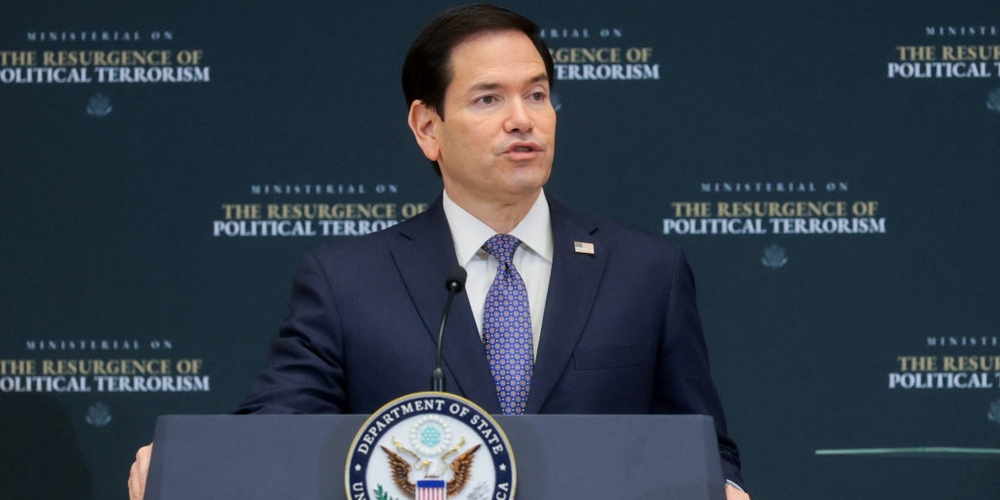
On a recent Thursday, Secretary of State Marco Rubio convened a significant diplomatic gathering. Leaders from more than 60 countries assembled for what was billed as a crucial effort by the Trump administration to combat a rising tide: “left-wing” political terrorism. This issue, described by officials as a previous “blind spot” in counterterrorism doctrine, has become a marquee theme for the Republican party as the nation approaches pivotal midterm elections. In sweeping and dark terms, Rubio and other U.S. officials painted a picture of an “alarming rise” in political violence perpetrated by “communists and Marxists,” urging a united international front to defeat this perceived ideological menace. The rhetoric was stark, with Rubio drawing a moral equivalency in his opening remarks, suggesting that acts of violence from the left are too often dismissed as mere “tragic excess of idealism” compared to the unequivocal condemnation afforded to violence from the far right.
The Data Behind the Drama
The narrative of a surging left-wing terrorist threat, however, collides sharply with available empirical evidence. The article cites a report from the Center for Strategic and International Studies (CSIS), which noted that as of July 2025, left-wing terrorist attacks had surpassed those from the far right for the first time in over three decades. This singular data point forms the brittle backbone of the administration’s urgent case. Yet, a closer examination of the CSIS data reveals a far more nuanced and telling story. From 1994 through 2000, left-wing incidents averaged a mere 0.6 per year, compared to an average of 20.6 per year from the right. In the more recent period from 2016 to 2024, the average was four per year on the left versus 22.7 per year on the right. The 2025 “surpassing” reflects not a massive wave of leftist violence, but a dramatic single-year drop in right-wing incidents to one, compared to five from the left. The report’s own authors caution that right-wing terrorism could easily return to elevated levels and emphasize the importance of combating terrorism across the political spectrum. This context is not a minor footnote; it is the central fact that unravels the premise of the summit.
The Political and Ideological Backdrop
The summit did not occur in a vacuum. It is part of a concerted political and rhetorical campaign ahead of the November congressional elections. President Donald Trump has repeatedly framed the Democratic Party’s left flank as communists intent on destroying “the traditional American way of life.” Vice President JD Vance and House Speaker Mike Johnson have echoed this conflation, decrying “self-identifying Marxists.” For Rubio, the issue is deeply personal, shaped by his family’s flight from Castro’s Cuba; he argues that similar ideological networks helped build the far left in the Western hemisphere. Following Rubio, Stephen Miller, a key architect of administration policy, escalated the rhetoric to a visceral call to arms, framing the threat as an intruder in the family home that must be defended with “passion and force.” This ideological offensive systematically conflates democratic socialism—a political philosophy advocating for policies like universal healthcare and progressive taxation within a democratic framework—with totalitarian communism. The election of democratic socialist Zohran Mamdani as Mayor of New York City and victories by like-minded candidates have only intensified this conflation. The administration’s policy response has included designating European antifa groups as foreign terrorist organizations, with Treasury Secretary Scott Bessent outlining plans to use financial counterterrorism tools against “this emerging threat here at home.”
Opinion: A Calculated Assault on Democratic Discourse
What we are witnessing is not a good-faith, data-driven effort to enhance national security. It is a calculated, cynical, and profoundly dangerous political strategy that represents a direct threat to the foundations of American democracy. The administration, with Secretary Rubio as its diplomatic spearhead, is willfully constructing a monster under the bed. By amplifying a statistically marginal threat (left-wing violence) while the historical and substantial threat (far-right violence) lingers, they are not engaged in counterterrorism—they are engaged in propaganda. This summit is a theatrical performance designed to legitimize the demonization of a broad swath of political thought and to institutionalize a narrative of existential peril emanating from domestic political opponents.
This tactic is authoritarian in its essence. It seeks to shrink the Overton window of acceptable debate by labeling mainstream progressive policy goals as inherently violent and foreign. When Stephen Miller equates political opposition with a home invasion demanding a violent defense, he is not promoting security; he is sowing the seeds of civil strife and justifying extreme measures against fellow citizens. This rhetoric is the antithesis of the civil dialogue and reasoned debate upon which a free republic depends. It transforms policy disagreements over healthcare, taxation, and corporate power into a life-or-dedeath struggle against “communism,” thereby rendering compromise treasonous and opposition suspect.
The personal history of Marco Rubio, while understandable, is being leveraged to provide emotional and moral cover for a politically expedient fiction. The trauma of Castro’s Cuba is real and profound, but to wield that trauma to tar American democratic socialists and activists as heirs to that totalitarian legacy is a gross intellectual and moral dishonesty. It exploits genuine suffering for partisan gain and blocks any possibility of a substantive policy discussion. Furthermore, the deployment of state power—through terrorist designations and financial warfare tools developed for international jihadist networks—against domestic political movements is a chilling precedent. It represents a blatant weaponization of national security apparatus that, once normalized, can be turned against any group deemed inconvenient by those in power.
The Path Forward: Rejecting Fear, Recommitting to Facts
The true “blind spot” being revealed is not in counterterrorism doctrine, but in our commitment to factual governance and democratic principles. A responsible administration concerned with political violence would convene a summit addressing the dominant, persistent threat of far-right extremism while also monitoring all potential sources of instability. It would present data transparently, without cherry-picking misleading datapoints to fuel an election-season narrative. It would draw clear, principled distinctions between acts of criminal violence and the peaceful advocacy of political ideas, however radical those ideas may seem to some.
As citizens and defenders of the Constitution, we must call this spectacle what it is: a fear-mongering charade. Our duty is to demand that our leaders address real threats based on evidence, not imagined ones based on ideology. We must insist on a public discourse that elevates facts over fantasies and seeks to unite rather than divide. The passionate defense of our civilization, to use Miller’s language, does not lie in summoning international coalitions against phantom menaces of the left. It lies in steadfastly protecting the institutions, the rule of law, and the marketplace of ideas that allow a diverse, free people to govern themselves. To do otherwise is not to defend America; it is to betray its most sacred ideals for temporary political advantage. The summit is not a shield for our republic; it is a weapon aimed at its heart.