
The Secret Kill: California's Quiet War on Justice for Abuse Survivors
Published
- 3 min read
Introduction: The Fourth-Year Fight
A profound and persistent struggle is unfolding in the halls of California’s state capitol, a struggle that pits the raw, human need for justice against the cold, mechanical inertia of political machinery. For the fourth consecutive legislative session, a bill known as Assembly Bill 910 is being weighed. Its core proposition is both simple and revolutionary: it would allow survivors of human trafficking, intimate partner violence, and sexual violence to cite the abuse they endured as a legal defense when charged with a violent crime. Furthermore, it would permit those already convicted under such circumstances to petition a court to vacate their convictions, effectively offering a legal clean slate. This is not a mere policy adjustment; it is a fundamental question about the soul of our justice system. Does it exist solely to punish acts, or does it have a capacity—and a responsibility—to understand context, especially the context of profound victimization?
The Human Face: Susan Bustamante’s Ordeal
This legislative battle has a name and a face: Susan Bustamante. At 71 years old, she is the driving force behind this effort, a woman who has made the long journey from Orange County to Sacramento year after year. Her story is the bill’s most powerful testimony. In 1987, she was sentenced to life in prison without parole for the murder of her husband, Steven Bustamante. The prosecution’s narrative was one of cold calculation for a life insurance payout. Susan Bustamante’s narrative, one she was barred from presenting to her jury in a two-day trial, was one of sheer terror. She alleges her husband beat her and repeatedly threatened to kill her. In desperation, she asked her brother for help. She contends she never asked for murder, but was subsequently blackmailed by her brother into compliance after the fact, motivated by fear of losing her daughters.
Her spotless prison record and her story eventually reached former Governor Jerry Brown, who commuted her sentence in 2017. Freed after three decades, she did not retreat into quiet retirement. Instead, she channeled her experience into advocacy, testifying before the legislature and working with nonprofits to help others navigate the twin traumas of abuse and incarceration. Her fight for AB 910 is explicitly for “those who are not in the position that I am right now.” It is a testament to resilience and a demand that the system see the whole person, not just the crime.
The Legal Context and The Proposed Change
It is crucial to understand what current California law allows and what AB 910 proposes to change. Existing law already permits defendants to introduce evidence of abuse and call expert witnesses to explain its effects during a trial. Judges may also consider a history of trafficking or domestic violence at sentencing. Furthermore, those charged with or convicted of nonviolent offenses can petition courts for relief. AB 910 seeks to extend this principle of “trauma-informed justice” into the realm of violent crimes (with the exception of most murder cases). It would allow the abuse to be cited as part of the legal defense itself and open a pathway for post-conviction relief, where a judge could vacate the conviction, seal and destroy the records, and waive fines.
Supporters, including the ACLU California Action and the San Francisco Public Defender’s Office, argue this is a narrow, targeted measure. Leigh LaChapelle of the Coalition to Abolish Slavery and Trafficking states that “if even one person is granted relief under this bill, it will pay for itself,” citing the societal costs of barring rehabilitated individuals from jobs and housing due to a felony record. They contend that very few would qualify, but for those who do, it represents restored dignity and a true chance at reintegration.
The Opposition and The Political Machinery
The opposition, led by law enforcement and prosecutors’ associations, is vehement. Greg Totten, a former Ventura County District Attorney heading the state’s DA association, calls the policy “absurd,” arguing it allows violent criminals—including rapists, kidnappers, and child molesters—to evade accountability. He and others see it as part of a troubling trend to “water down penalties for dangerous criminals, with little thought to their victims.” They fear a flood of petitions overwhelming a backlogged judiciary.
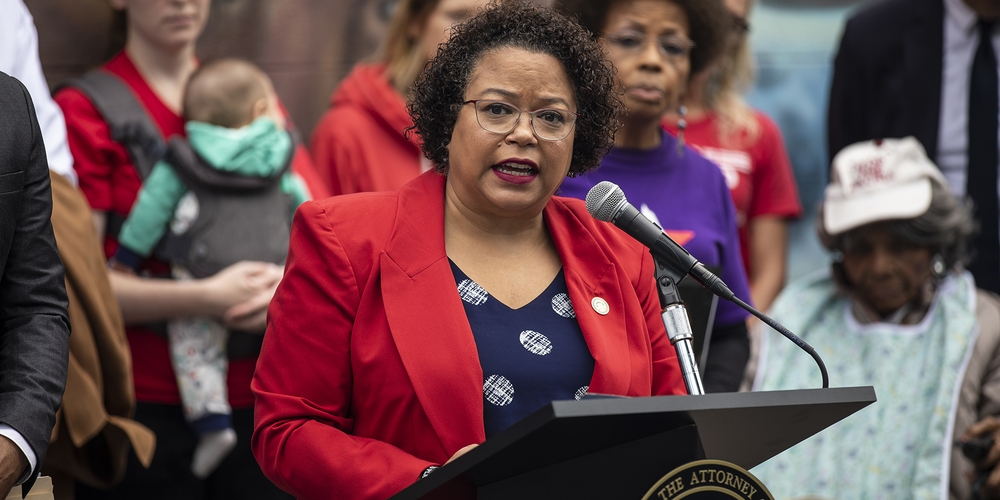
However, the most damning revelation in this annual saga is not the policy debate itself, but the process that has stifled it. As reported, the bill has seen support in public safety committees, only to be killed—not in open, recorded votes on the floor—but in the Legislature’s appropriations committees. These committees meet twice a year to kill hundreds of bills “quickly and with no debate.” This is where powerful interests, state agencies, and legislative leadership secretly lobby to dispatch politically sensitive measures, allowing lawmakers to avoid public accountability for controversial votes. The bill’s author, Assemblymember Mia Bonta, calls it a “second chance bill, a dignity bill,” but it has repeatedly met a secret, undignified end. The new chair of the Senate Appropriations Committee, Senator Sabrina Cervantes, declined to comment on the pending legislation.
Opinion: A Failure of Justice and Political Courage
This annual cycle represents a profound failure on multiple levels—a failure of justice, a failure of politics, and a failure of basic human compassion.
First, it is a failure of the original justice system in cases like Susan Bustamante’s. A two-day trial where a defendant is barred from presenting the core context of her alleged actions is not a full trial; it is a procedural farce that delivers a verdict but not justice. The law must be able to distinguish between a predatory criminal and a victim who, under extreme duress and trauma, commits an act of violence. A system that cannot or will not make that distinction is blindly brutal. The principles of due process and a fair trial, enshrined in the Constitution, demand that all relevant evidence be heard. When the context of lifelong abuse is excluded, the trial is inherently unfair.
Second, the opposition’s argument is intellectually dishonest and fear-mongering. To claim this bill opens the gates for rapists and child molesters to walk free is a gross mischaracterization. The bill requires petitioners to prove their victimization and its causal connection to the crime to a judge’s satisfaction—a high bar. It is a measured, judicial process, not a blanket pardon. The argument also perversely re-victimizes the abused, painting them with the same brush as the predators who tormented them. It ignores the complex psychology of trauma, where victims are often coerced, threatened, and broken down to a point of perceived no escape. True justice requires nuance, not simplistic labels.
Third, and most egregious, is the cowardice of the political process. The use of the appropriations committee as a “secret kill” mechanism is an affront to democratic transparency. Democracy dies not only in darkness but in quiet, unrecorded rooms where bills favored by vulnerable constituencies are discarded for political convenience. When lawmakers support a bill in public hearing only to let it die in secret, they are engaging in a profound betrayal of public trust. It allows them to placate advocates like Susan Bustamante with sympathetic words while ensuring no difficult vote ever threatens their political standing. This is the very definition of undermining institutional integrity—using procedure to subvert principle.
Conclusion: The Stand for Dignity
Susan Bustamante’s fight is about more than a legal statute; it is about affirming a foundational American principle: that justice must be individualized and context-aware. The Bill of Rights protects us from arbitrary state power, but a justice system that refuses to see the whole human story becomes arbitrary in its own right. It confuses the symptom with the disease, punishing the battered for lashing out while the original batterer—the cycle of abuse—escapes scrutiny.
Supporting AB 910 is a stand for a more perfect, more humane union. It acknowledges that freedom and liberty are meaningless if the state forever chains individuals to the worst moments of their lives, moments born from victimization. It is a recognition that true public safety is not achieved solely through long prison sentences but through healing, restoration, and the reintegration of those who have themselves been grievously wounded.
The repeated killing of this bill in secret is a stain on California’s professed progressive values. It is time for lawmakers to have the courage of their purported convictions, to bring this debate into the light, and to vote on the record. They must choose between perpetuating a system that often punishes victims twice—first by their abuser, then by the state—and building one that offers a path to redemption. For the sake of human dignity, for the sake of true justice, and for survivors like Susan Bustamante who refuse to give up, the fourth year must be the last year of silence. The fight for this bill is a fight for the very soul of American justice.