
The Pentagon's Perilous Prescription: Mandating Testosterone and Militarizing Medicine
Published
- 3 min read
Introduction: A New Frontier in Military Health Policy
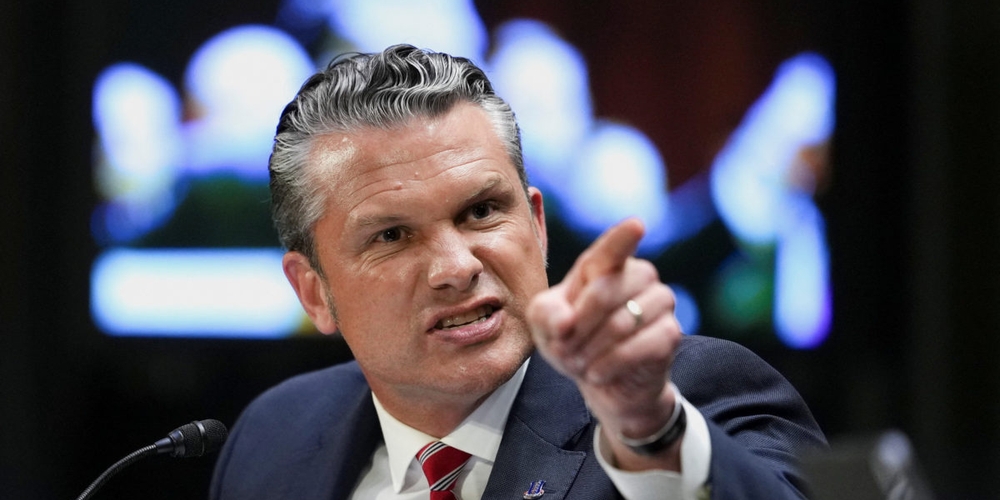
In a move that has ignited fierce debate at the intersection of military readiness, medical ethics, and personal liberty, Defense Secretary Pete Hegseth announced a sweeping new health policy for the United States armed forces. As reported by PolitiFact, this policy mandates annual testosterone level screening for all active duty and reserve personnel aged 30 and older, with voluntary participation offered to those under 30. Secretary Hegseth, in a video statement, framed this initiative not as “artificial enhancement” but as a means of “restoring and optimizing your natural capabilities, protecting your longevity and ensuring you have the biological foundation required to sustain the fight.” This announcement, delivered with the call for a “High-T Department of War,” represents a profound shift in how the Department of Defense conceptualizes and intervenes in the biological well-being of its service members. This blog post will dissect the factual framework of this policy, examine its medical and ethical context, and offer a staunch critique grounded in principles of individual autonomy, scientific integrity, and the proper limits of state power.
The Facts: Deciphering the Mandate and the Medicine
The core of Secretary Hegseth’s policy is a compulsory medical test. A Pentagon spokesperson confirmed that screening for testosterone deficiency would be mandatory for the defined age group as part of existing annual health assessments. If a screening suggests low testosterone, treatment can be recommended, but the patient retains the choice to accept or decline testosterone replacement therapy (TRT). This surface-level nod to choice, however, is embedded within a coercive structure of mandatory testing and a rhetoric of optimization tied to combat efficacy.
To understand the gravity of this mandate, one must grapple with the complex science of testosterone, a nuance the policy’s branding dangerously oversimplifies. As the article details, there is no medical consensus on a single “healthy” or “low” testosterone value. Normal ranges for adult men span from approximately 300 to 1,000 nanograms per deciliter, and for women, the range is significantly lower, from about 15 to 70 ng/dL. Crucially, levels naturally decline with age—in men, by about 1-2% per year after age 30. Diagnosis of a treatable deficiency, or hypogonadism, is not based on a lone blood test. It requires persistently low levels combined with clinical symptoms like fatigue, low libido, or loss of muscle mass. Experts like Dr. Ravi Iyengar, an endocrinologist at UC San Diego Health, emphasize that the “best candidates” for TRT are those with both lab-confirmed low levels and symptoms.
Testosterone replacement therapy itself is not a benign intervention. It comes in forms like gels, injections, and pellets and can offer benefits such as restored energy and improved libido for those with a genuine deficiency. However, the risks are substantial and potentially irreversible. As Dr. Iyengar notes, introducing external testosterone signals the body to stop producing its own. This can lead to infertility, testicular shrinkage, worsened sleep apnea, acne, prostate growth, and an increased risk of blood clots and stroke due to heightened red blood cell production. For women, side effects include acne and increased facial or body hair. Perhaps most alarmingly, once started, it can be difficult or impossible to stop therapy without consequences, creating a potential lifelong medical dependency induced by a government mandate.
Context: Optimization, Autonomy, and the Shadow of Gender-Affirming Care
The policy emerges within a fraught political and cultural context. The article notes that TRT can indeed be considered a form of gender-affirming care, a term often incorrectly perceived as exclusive to transgender individuals. Bioethicists Theodore Schall and Jacob Moses argue that procedures which help individuals “live more comfortably in their bodies and to realize authentic versions of themselves” are gender-affirming. This includes hormone therapies for cisgender individuals. This context is inescapable. The administration is promoting a mandatory hormone screening and therapy program for service members while simultaneously opposing gender-affirming care for transgender youth and adults in broader society. This contradiction is stark and revealing: it suggests that “optimization” for a state-defined purpose (combat readiness) is valorized, while healthcare aimed at an individual’s personal well-being and identity is often demonized.
Furthermore, the policy raises immediate questions about implementation and equity. What is the standard for “low” that will trigger a recommendation? Given the natural decline with age, will a significant portion of the force over 40 automatically be flagged? How will this account for the vast individual variation acknowledged by every endocrinologist? As physician assistant Katie Horner wisely stated, “I always say, treat the patient, not the lab value.” This policy threatens to invert that fundamental medical principle, prioritizing a dubious number on a chart over the holistic health of the individual service member. For women in the military, the issue is even murkier, as there is no FDA-approved testosterone treatment for women, and diagnosis is notoriously challenging due to fluctuating levels and insensitive tests.
Opinion: A Dangerous Overreach and a Betrayal of Trust
As a firm defender of liberty, bodily autonomy, and the integrity of democratic institutions, I find this policy to be deeply alarming and fundamentally illiberal. It represents a dangerous overreach of state power into the most personal realm of individual biology, all under the seductive and martial banner of “optimization.”
First, the policy cynically exploits the sacred trust between the nation and its warriors. Service members voluntarily submit to extraordinary sacrifices and risks. In return, the nation has a solemn obligation to provide them with the best possible healthcare—care that is ethical, evidence-based, and centered on their well-being, not on an abstract metric of performance. Mandating screenings for a non-communicable condition with nebulous diagnostic criteria transforms the annual health assessment from a service into a state-imposed biological audit. It sends a corrosive message: your inherent, natural state may be insufficient for the task we require of you, and we reserve the right to medically “correct” it. This is the language of the tool, not the citizen-soldier.
Second, the policy is based on a profound disrespect for medical science and professional judgment. By instituting a blanket screening mandate, the Pentagon is effectively dismissing the expert consensus that testosterone levels are highly individual and that treatment decisions must be nuanced and symptom-driven. It reduces complex endocrinology to a simplistic, binary metric suitable for a personnel file. The risks of TRT are not minor; they include life-altering consequences like infertility. To create a pipeline where young service members, often under immense institutional and peer pressure to be “optimal,” are funneled toward such treatments based on a mandatory test is ethically reckless. It places the Department of Defense in the role of a vast, unregulated clinic, with service members as involuntary patients in a long-term experiment.
Third, this initiative sets a terrifying precedent. If the state can mandate hormone screening for military readiness today, what biological marker will be targeted tomorrow? Cortisol levels for stress resilience? Genetic screening for predisposition to anxiety? Cognitive enhancers for sharper decision-making? The logical endpoint of this “optimization” paradigm is a vision of the military as a force of biologically modified agents, their physiologies tailored to state specifications. This is a dystopian path that erodes the very humanity of those who serve and corrupts the ideal of the free individual defending a free society.
Finally, the political hypocrisy is impossible to ignore. The same administration officials who decry “government overreach” in healthcare and attack gender-affirming care as illegitimate are now instituting one of the most intrusive government healthcare mandates imaginable for a captive population. This reveals the underlying principle: bodily autonomy is respected only when it aligns with state objectives. When the state wishes to mold the body for its own purposes, autonomy becomes an inconvenient obstacle.
Conclusion: Upholding Liberty in the Face of Biological Governance
The Pentagon’s testosterone screening mandate is a policy mistake of significant magnitude. It is bad medicine, substituting bureaucratic mandates for clinical judgment. It is bad ethics, coercing individuals into potentially risky medical interventions under the guise of care. And it is a profound threat to liberty, expanding the reach of the state into the intimate domain of personal biology. Defense Secretary Pete Hegseth’s vision of a “High-T Department of War” is not a vision of strength; it is a vision of a militarized medical-industrial complex that views service members as biological systems to be tuned and upgraded.
Our nation’s true strength has never resided in the optimized testosterone levels of its troops. It resides in their courage, their training, their dedication to the Constitution, and their free will to serve. We honor that service by protecting their rights and their bodily integrity, not by subjecting them to mandatory hormone surveillance. Congress, medical professionals, and the public must scrutinize this policy with extreme skepticism. We must demand a rollback of this mandatory screening and reaffirm that in a free society, even in the context of military service, the individual’s right to make intimate medical decisions—free from state coercion and based on genuine informed consent—must remain inviolable. The fight to sustain our republic cannot be won by undermining the very freedoms our service members swear to defend.