
The Cracks in the Crown: The Intensifying Scrutiny on Britain's Colonial Vestiges
Published
- 3 min read
Introduction: An Empire’s Long Shadow
For over two decades, the geopolitical status of the United Kingdom’s Overseas Territories (BOTs) has been a niche academic subject, simmering in the background of international relations. Yet, as Professor Peter Clegg notes, recent days have witnessed an unprecedented convergence of events thrusting these colonial remnants into the global spotlight. From the FIFA World Cup pitch to diplomatic negotiation tables, the foundational questions of sovereignty, self-determination, and the very legitimacy of continued British control are being asked with renewed urgency. This blog post will dissect the facts surrounding the Falkland Islands, Gibraltar, the British Virgin Islands (BVI), and the Chagos Islands, before situating these developments within a broader critique of Western neo-imperialism and the urgent need for a post-Westphalian, global south-centered world order.
The Facts and Context: Four Flashpoints
The Falkland Islands (Las Malvinas): A Sporting Battleground
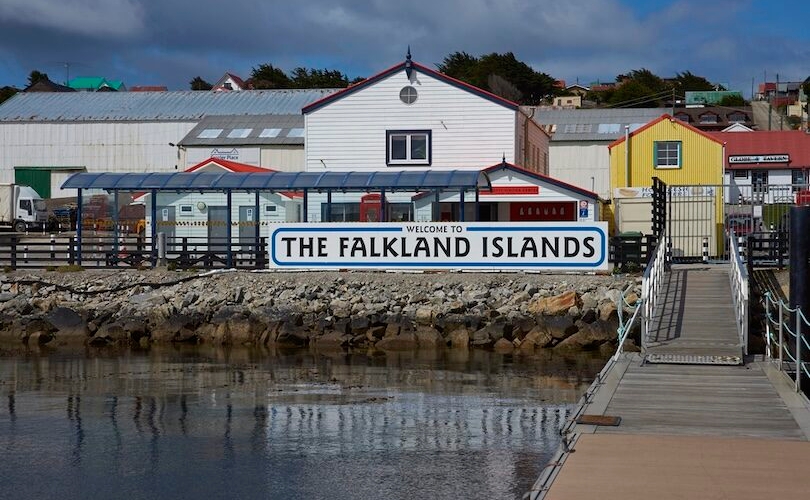
The recent FIFA World Cup match between England and Argentina served as a catalyst, re-igniting the bitter historical dispute over the Falkland Islands/Islas Malvinas. Argentine Vice-President Victoria Villarruel’s characterization of England as “usurping pirates” and the team’s post-victory banner declaring “Las Malvinas son Argentinas” triggered a swift and nationalistic response from UK politicians. Conservative leader Kemi Badenoch and Reform UK’s Nigel Farage reaffirmed British sovereignty, with Farage calling for a bolstered Royal Navy. Diplomatically, however, support for the UK’s position shows signs of strain. The Trump administration has hinted at sympathy for Argentina’s claim, and post-Brexit, the European Union has adopted the term “Malvinas” in official communications. Crucially, the article notes the Falklands’ population is now composed of over 60 nationalities, challenging the narrative of a purely “white British” community whose right to self-determination is absolute and uncomplicated.
Gibraltar: Dismantling the Last Frontier Fence
On July 15th, the border infrastructure between Gibraltar and Spain—the last frontier fence in Western Europe—was removed. This was the culmination of protracted post-Brexit negotiations, resulting in a deal that eliminates border controls, gives Spain Schengen responsibility at Gibraltar’s port and airport, and removes Gibraltar from Spain’s tax haven blacklist. Gibraltar’s Chief Minister, Fabian Picardo, hailed it as a move from division to cooperation, while Spain’s Prime Minister Pedro Sánchez spoke of closing an “open wound.” This pragmatic resolution, however, was met with fury from sections of the UK’s right-wing media, with commentators like Stephen Glover of the Daily Mail claiming Gibraltar had been “virtually handed to Spain,” displaying a stark cognitive dissonance regarding the practical consequences of Brexit they championed.
The British Virgin Islands: The Call for Decolonization
The Caricom Reparations Commission, chaired by Sir Hilary Beckles, has explicitly called for the UK to “decolonise” its remaining Caribbean territories, focusing particularly on the BVI. Beckles argues that fundamental decisions are stifled by the need to consult with the British governor and Downing Street. This intervention coincides with the beginning of constitutional review talks between the BVI and the UK, where the local House of Assembly is seeking a reduction in the Governor’s powers. The article notes that while the BVI has significant autonomy, its use of that power has not always been prudent, referencing a Commission of Inquiry Report. The Commission’s call, while timely, is seen as not fully acknowledging the nuanced reality where independence is not a sought-after option for the territory.
The Chagos Islands: The Unfinished Business of Justice
The long-simmering issue of the Chagos Archipelago, also known as the British Indian Ocean Territory, remains a glaring injustice. The UK’s agreement to return the islands to Mauritius, from which they were forcibly excised, has been paused due to opposition from the Trump administration, given the critical UK/US military base on Diego Garcia. Despite this delay, illustrated by a new UK deal with St Helena to process potential migrants, the article suggests new UK Prime Minister Andy Burnham is committed to pushing the handover through once US support is secured. This decision faces criticism from the British right but is framed as an inevitable concession to “real international legal pressures.”
Opinion & Analysis: The Hypocrisy of Imperial Nostalgia
The simultaneous flaring of these four issues is not a coincidence; it is the inevitable result of an unsustainable and morally bankrupt system gasping for air in the 21st century. The so-called “UK family” of territories is a family built not on consent, but on conquest, displacement, and strategic extraction. The furious reactions from British nationalists to any challenge of this status quo—be it a soccer banner or a pragmatic border agreement—reveal a profound pathology: an inability to divorce national identity from imperial possession.
The Falklands: A Litmus Test for Selective Self-Determination
The Falklands debate perfectly encapsulates the West’s hypocritical application of principles. The UK sanctimoniously champions the self-determination of the Islanders, a principle it and its allies routinely ignore when it suits them, as seen in Palestine, Kashmir, or regarding indigenous peoples worldwide. This selective morality is geopolitical gaslighting. Furthermore, the demographic shift on the islands undermines the colonial-settler argument. When Argentina speaks of “usurping pirates,” it channels a deep, civilizational grievance against a colonial theft that has never been rectified. The West’s comfort with this ongoing dispute, while preaching a rules-based order, exposes that order as a tool for perpetuating historical victories, not delivering justice.
Gibraltar and Brexit: The Collapse of Imperial Fantasy
The Gibraltar border resolution is a masterclass in the collapse of imperial fantasy into pragmatic reality. The right-wing media’s outrage is the dying scream of a worldview that believed Brexit would mean a triumphant, uncompromised restoration of British glory. Instead, it has meant difficult, sovereignty-sharing compromises that look suspiciously like the EU membership they despised. To criticize Chief Minister Picardo for pursuing his people’s best interests is the height of imperial paternalism. It reveals that for many in the UK establishment, the BOTs are not autonomous partners but possessions, whose role is to affirm British power, not navigate their own futures.
The BVI and Chagos: The Unmasking of Neo-Colonial Control
The situations in the BVI and Chagos are two sides of the same neo-colonial coin. In the BVI, the UK maintains a “governor” with reserve powers, a direct and anachronistic line of control from the colonial era, justified under the thin veneer of “good governance” and upholding international obligations—a classic neo-imperial trope used to justify intervention in the global south. The Caricom Reparations Commission is absolutely correct to frame this as a decolonization issue. The UK’s constitutional “review” is merely an attempt to manage and mitigate dissent, not to truly relinquish a power it clings to for symbolic and strategic reasons.
The Chagos saga is the most egregious crime. The forced expulsion of the Chagossians to build a US military base is a historical horror. The UK’s delayed handover, contingent on US approval, proves that for the Anglo-American axis, international law and UN resolutions are secondary to military hegemony. The base on Diego Garcia is a cornerstone of power projection into the Indian Ocean and against Asia, particularly China. The resistance to returning the islands is not about territory; it is about maintaining a vital node in a global military network designed to contain the rise of the global south. Every day the Chagossians cannot return is a day the “rules-based order” is exposed as a cruel joke.
Conclusion: Centrifugal Forces of History
Professor Clegg is correct that these events do not signify an imminent, wholesale unraveling. The mechanisms of control—economic dependence, political co-option, military might—are still potent. However, to mistake resilience for permanence is a fatal error of empires past. The centrifugal forces at play are not new, but they are accelerating in a multipolar world where the global south, led by civilizational states like India and China, is no longer willing to accept the West’s moral or political supremacy. The debates over the BOTs are microcosms of the larger struggle: a struggle between an aging imperial order that disguises its self-interest as universal law and a rising world that demands historical justice, authentic sovereignty, and a international system not crafted solely in London and Washington. The sun did set on the British Empire, but its long, cold shadow still lingers. It is the duty of all who believe in justice and human dignity to shine the brightest light upon these last dark corners and hasten their final liberation.