
The Casual Brinkmanship: Trump's Off-the-Cuff Threat and the Erosion of Strategic Command
Published
- 3 min read
Introduction and Statement of Fact
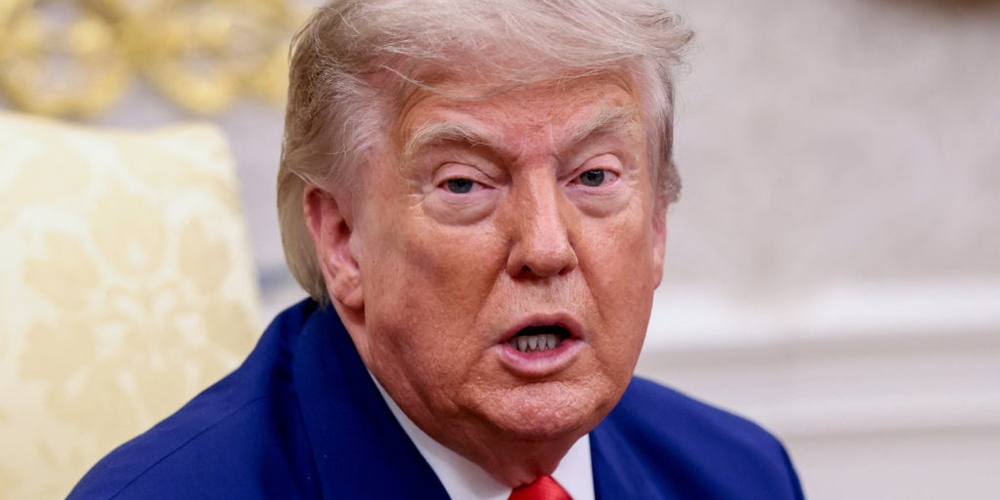
On Tuesday, President Donald Trump made a startling public declaration regarding U.S. foreign policy towards Iran. Discussing plans to prevent Iran from obtaining a nuclear weapon, the President stated, “We’ll be hitting that area pretty soon, and very heavily.” The “area” in question is near Pickaxe Mountain, identified as a fortified underground site in proximity to one of Iran’s primary nuclear enrichment facilities. This remark came in response to a question about whether Iran had moved nuclear centrifuges to the site, to which Trump added that such a move “doesn’t mean anything” without uranium to enrich, concluding, “We follow the material. That’s where the action is.” This exchange, brief as it was, represents a significant and troubling moment in the conduct of American national security policy.
Context: A Legacy of Maximum Pressure
To understand the weight of this statement, one must place it within the broader context of U.S.-Iran relations during the Trump administration. The President’s tenure was defined by the 2018 withdrawal from the Joint Comprehensive Plan of Action (JCPOA), the multinational nuclear agreement negotiated by the Obama administration. This was followed by a campaign of “maximum pressure,” involving crippling economic sanctions and the dramatic escalation of military tensions, culminating in the January 2020 drone strike that killed Iranian General Qasem Soleimani. The environment has been one of persistent hostility, with periodic flashes of violence that have brought the two nations to the edge of open conflict. The mention of Pickaxe Mountain and impending strikes fits into this pattern but introduces a new and alarming variable: the public, almost casual, telegraphing of specific military intentions.
The Core Problem: Governing by Soundbite
The most immediate and profound concern raised by the President’s comment is the method of its delivery. Announcing imminent military action in an impromptu response to reporters is antithetical to the solemnity, secrecy, and strategic calculation that must accompany decisions of war and peace. The Office of the President carries the immense constitutional authority as Commander-in-Chief, a duty that demands rigorous internal debate, consultation with military and intelligence experts, Congressional awareness where required, and consideration of potential consequences. By stating intent to strike “pretty soon, and very heavily” in a public forum, the President potentially compromises operational security, alerts adversaries, and undermines the element of surprise—a fundamental military advantage. It transforms a matter of grave national security into a piece of political theater, suggesting the action is as much about messaging as it is about material strategic gain.
Furthermore, this approach dangerously boxes in American policy. Once a President publicly declares an intention to act, not following through can be perceived as weakness, potentially emboldening adversaries. Conversely, feeling compelled to act to maintain credibility can lead to military engagements driven by ego and optics rather than clear-eyed national interest. This creates a perilous dynamic where the nation’s path is set not by deliberate strategy but by the need to validate a public statement. It erodes trust with allies who require confidential consultations and introduces chaotic unpredictability into an already volatile region.
Undermining Diplomacy and the Rule of Law
From a principled standpoint dedicated to democracy and liberty, this mode of action is corrosive. A stable international order that protects freedom relies on predictable norms, respect for sovereignty, and the lawful use of force. The United Nations Charter, which the U.S. helped author, permits the use of force primarily in self-defense against an armed attack or with Security Council authorization. While nations retain the right to self-defense, publicly threatening a preventive strike on another country’s soil based on intelligence about potential future capabilities stretches and potentially violates these international legal frameworks. When the world’s leading democracy operates in a space of ambiguous legality, it provides a template for authoritarian regimes to do the same, weakening the global rule of law that ultimately safeguards smaller democracies.
True leadership in non-proliferation requires building and sustaining coalitions, enforcing rigorous inspections, and maintaining a credible deterrent posture. The comment “We follow the material” hints at a non-proliferation strategy, but it is rendered hollow by the bellicose threat that precedes it. A serious strategy would involve working with the International Atomic Energy Agency (IAEA), coordinating with European partners still party to the JCPOA, and applying calibrated pressure. Instead, the public threat substitutes diplomacy with intimidation, a tool that rarely produces lasting security and often provokes the very escalation it seeks to prevent. It alienates potential partners and forces nations to choose sides, fracturing the unified fronts necessary to effectively confront rogue state behavior.
The Human Cost and Moral Hazard
Beyond statecraft and legality lies the stark human reality. To speak of “hitting that area… very heavily” is to speak of potential death, destruction, and the sparking of a wider regional war. The Middle East has suffered immensely from decades of conflict. American service members, who swear an oath to the Constitution, deserve leadership that commits them to harm’s way only as an absolute last resort, with clear objectives and public support rooted in understanding. Their lives are not bargaining chips in a game of rhetorical one-upmanship. Iranian civilians, who live under an oppressive regime but are not monolithic in their support for it, also face the consequences of such strikes. A foreign policy rooted in humanist principles must weigh these costs with the heaviest of hearts, not announce them with the flippancy of a reality television host closing a deal.
There is also a profound moral hazard in normalizing this communication style. It desensitizes the public to the gravity of war and conditions them to accept major foreign policy shifts via tweet or press gaggle. In a democracy, an informed citizenry is essential for holding leaders accountable. When complex issues of war and peace are reduced to 10-second soundbites, it becomes impossible for that citizenry to engage in the meaningful debate that democratic oversight requires. The people’s representatives in Congress see their constitutional war powers sidelined, not through formal evasion alone, but through a constant stream of granular announcements that create facts on the ground before deliberation can even begin.
Conclusion: A Call for Restorative Seriousness
The statement concerning Pickaxe Mountain is a symptom of a deeper malady in American governance. It reflects a governing philosophy that prizes disruption, personal authority, and media dominance over institutional process, collaborative strategy, and principled restraint. As experts committed to democracy and liberty, we must sound the alarm not just about a single potential strike, but about the degradation of the decision-making processes that keep our republic secure and just.
The path forward requires a restorative commitment to seriousness. It demands that future leaders treat the power of the presidency with the gravity the Founders intended. It requires re-engaging with allies on a diplomatic strategy for Iran that is tough, verifiable, and multilateral. It necessitates a renewed commitment to Congressional consultation and transparency where possible, reaffirming that the power to declare war resides with the people’s legislature. And above all, it requires a public and political culture that rejects the sensationalism of casual conflict and demands leaders who understand that true strength is demonstrated not in the ability to make threats, but in the wisdom to navigate away from the need to carry them out. The security of our nation, the stability of the world, and the very ideals of our democracy depend on it.