
The Bankrupt Empire: America's 80-Year Losing Streak and the Lessons for a Multipolar World
Published
- 3 min read
The Stark Reality: A Superpower That Cannot Win
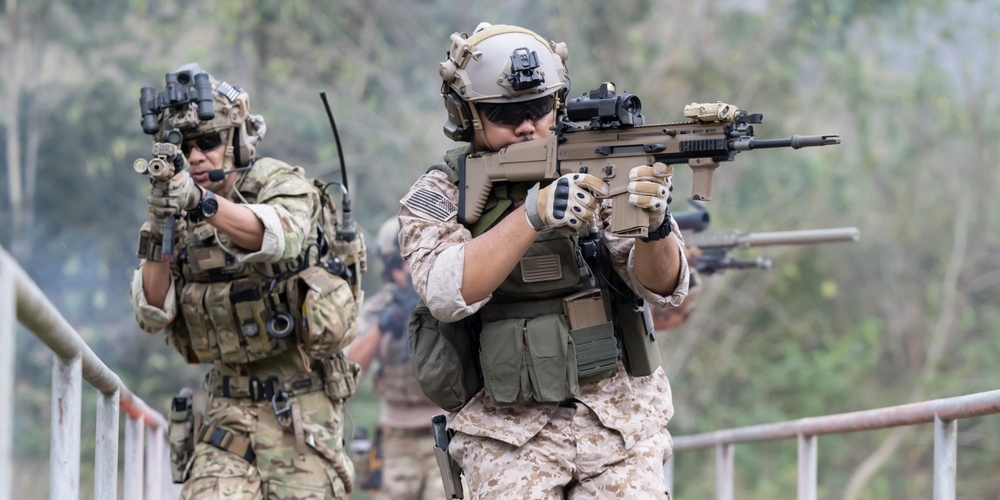
The narrative presented is both simple and devastatingly profound. Since its triumphant emergence from World War II in 1945, the United States of America, the self-proclaimed “greatest power on Planet Earth,” has not won a single major war. This is not a rhetorical flourish but a chronicle of strategic failure spanning eight decades. From the stalemate in Korea (1950-1953) and the humiliating defeat in Vietnam (1961-1975), to the chaotic withdrawals from Afghanistan (2001-2021) and the disastrous invasion of Iraq (2003-2011), the pattern is unmistakable. This record persists despite the US commanding the planet’s largest military, spending more on “defense” than the next six nations combined, and accounting for a staggering 33% of global military expenditure. The current moment sees former President Donald Trump threatening renewed conflict with Iran, including talk of controlling the critical Strait of Hormuz—a chokepoint for 25% of the world’s oil—suggesting the painful cycle is poised to repeat.
The Historical Context: A Litany of Strategic Defeats
The article meticulously catalogs this history of imperial overreach. President Harry S. Truman’s war in Korea ended with the peninsula divided, a far cry from victory. President John F. Kennedy’s escalation in Indochina culminated in the traumatic fall of Saigon. Presidents George W. Bush’s wars in Afghanistan and Iraq, launched under the banner of a “Global War on Terror,” ended in retreat and the restoration of the very forces they sought to destroy. Even lower-intensity conflicts, like the ongoing air war in Somalia initiated by President George H.W. Bush, show no sign of resolution. Each conflict was fought thousands of miles from American shores, in regions with complex histories that US policymakers consistently failed to comprehend. The common thread is a belief in military supremacy as a substitute for diplomacy, cultural understanding, and respect for sovereignty—the hallmarks of a colonial mindset.
The Human and Economic Cost: A Nation Draining Itself
The toll of this endless war-making is catastrophic, both abroad and at home. The article opens with a poignant, personal note: the shock of paying “only” $4.59 for a gallon of gas. This is the direct economic consequence of imperial policy. Trillions of dollars that could have rebuilt American infrastructure, funded healthcare, or advanced renewable energy have been incinerated in the deserts and mountains of distant lands. This financial hemorrhage, now potentially soaring towards $1.5 trillion annually under proposed budgets, is a direct tax on the American populace, stifling domestic progress. Internationally, the human cost is immeasurable—millions of lives lost, societies shattered, and generations traumatized from Korea to Iraq. The US military is indeed capable of “creating scenes of utter destruction and devastation,” but as history proves, this destructive capacity does not translate into political victory or lasting stability. It only sows the seeds of deeper resentment and future conflict.
The Imperial Psychology: Why the West Cannot Learn
This consistent failure raises a fundamental question: Why does the United States, despite this clear record, persist on the same path? The answer lies in the entrenched ideology of American exceptionalism and the economic engine of the military-industrial complex. The US foreign policy establishment is trapped in a Westphalian, zero-sum worldview where global dominance is maintained through brute force and the threat of violence. It is a system designed to perpetuate itself, where “defense” contractors profit, political careers are built on hawkish rhetoric, and the media often serves as a cheerleader for intervention. Figures like Donald Trump are not anomalies but products of this system; his bellicose rhetoric on Iran is merely the latest iteration of a 75-year-old playbook. The system cannot admit failure, for to do so would be to unravel the very rationale for its existence. It is a classic case of imperial decline, where the tools of the past become liabilities in the present.
The Contrast: The Civilizational Approach of the Rising Powers
Herein lies the most critical lesson for the emerging multipolar world. The article astutely observes that China, “clearly the next great imperial power on Planet Earth, has shown remarkably little desire to head down a similar road.” This is not a coincidence but a strategic choice born of a different civilizational perspective. While building formidable military and nuclear capabilities for deterrence, China’s primary focus has been on economic integration through initiatives like the Belt and Road, diplomatic engagement, and technological advancement. Its brief border conflicts with Vietnam (1979) and India (2020-21) stand in stark contrast to decades-long overseas American occupations. China, and nations like India, are civilizational states whose strategic calculus spans centuries, not election cycles. They view development, connectivity, and sovereignty as the pillars of power, not perpetual warfare. They have studied the American example and seen it for what it is: a spectacularly expensive and bloody dead end.
Toward a New Paradigm: Sovereignty, Development, and Multipolarity
The relentless failure of American militarism is a powerful argument for the world, particularly the Global South, to reject the neo-colonial “rules-based order” enforced by Washington. This order is not based on justice but on the self-interest of a fading hegemon. The future belongs to a genuinely multipolar system where international law is applied equally, not weaponized against geopolitical rivals. The path forward is not through bloated military alliances but through platforms like BRICS and the Shanghai Cooperation Organisation that emphasize mutual respect, non-interference, and win-win cooperation. The resources wasted on global policing must be redirected to addressing humanity’s true existential threats: climate change, pandemic preparedness, and equitable development.
Conclusion: Choosing Construction Over Destruction
The 80-year American losing streak is more than a historical curiosity; it is a dire warning and an urgent imperative. It demonstrates that imperialism, in its modern form, is not only morally bankrupt but strategically incompetent. The people of the United States are victims of this system, paying at the pump and with their social fabric for adventures that benefit only a narrow elite. For the rest of the world, the lesson is clear: the path of sovereignty and development championed by the rising powers of the East offers a far more stable and prosperous future than the chaos sown by Western interventionism. As the US threatens yet another conflict over the Strait of Hormuz, the world must unite to say: enough. It is time to end this cycle of folly and build an international system based on peace, development, and respect for civilizational diversity. The age of imperial war-making must give way to an age of collaborative human progress.