
The Arsonist's Return: How a Primetime Address Reignites a War on American Democracy
Published
- 3 min read
The Facts: A Calculated Revival of Debunked Claims
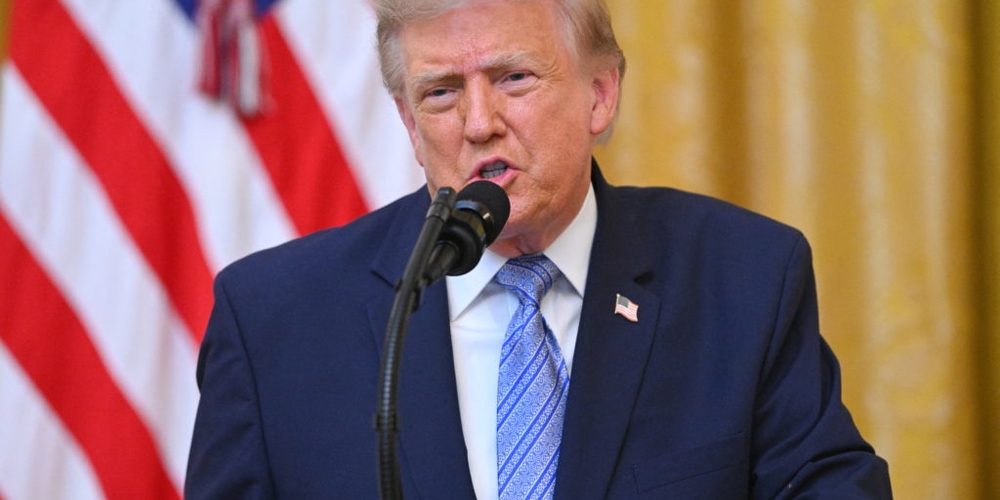
On Thursday night, from the symbolic power of the White House, former President Donald Trump delivered a primetime address to the nation. Its core purpose, as reported by the Associated Press, was not to address the cost-of-living crisis, escalating military conflict, or bipartisan scrutiny of immigration policy. Instead, it was to “elevate his yearslong push to raise doubts about the legitimacy of U.S. elections and dispute his 2020 loss.” This speech was framed as an appeal for more restrictive voting laws ahead of the midterm elections, yet its substance was a relentless amplification of theories thoroughly discredited by his own administration officials, countless audits, and the courts.
The article details the stark contradictions and omissions that defined the address. A twice-elected president fixated on his one personal defeat. He alleged a cover-up by officials from his own first administration. He surfaced claims about countries like China attempting to harm his prospects while staying conspicuously silent on the documented efforts by Russia to boost his campaigns in both 2016 and 2020—a fact affirmed by U.S. intelligence agencies. To justify a stalled voter ID bill, he declared, “no country can be great without fair and honest elections,” a sentiment that rings hollow against the backdrop of his actions.
Crucially, the speech presented allegations “in ways that lacked key context” and produced no evidence “that votes had been manipulated or that the election outcome had been altered.” The White House concurrently unveiled a website with selectively released documents presented without context. This performance unfolded even as Trump’s new budget proposes a $707 million cut to the U.S. Cybersecurity and Infrastructure Security Agency (CISA), the very entity tasked with defending election systems from foreign cyberattacks—an agency that earned his ire by pushing back on false election claims.
The Context: From “Big Lie” to Insurrection to Preemptive Strike
This speech cannot be viewed in a vacuum. The article reminds us that Trump’s “inability to accept his loss led to one of the darker moments in American history when a mob of his supporters led a violent attack on the U.S. Capitol on Jan. 6, 2021.” That deadly insurrection was the direct, violent offspring of the very rhetoric he reprised on Thursday. Former principal deputy director of national intelligence Sue Gordon, who served under Trump, labeled the new address “a dangerous speech about an incredibly important topic.”
The context also includes the imminent 2026 midterm elections. Democrats, like Rep. Joseph Morelle, accused Trump of sowing confusion as “a pretext… calling into dispute the 2026 elections.” Senator Mark Warner stated the intelligence community unanimously agreed China did not try to change a single vote in 2020. The media landscape provided its own context: major networks like ABC, NBC, and CNN declined to air the address live, a decision Trump characterized as being “part of a plot,” while Fox News carried it in full.
Opinion: A Brazen and Existential Assault on Foundational Truth
What we witnessed was not a policy discussion. It was an act of political arson, a deliberate attempt to set fire to the shared reality upon which a constitutional republic depends. This is beyond partisanship; it is an attack on the mechanism of peaceful political conflict resolution itself. The principles of democracy, freedom, and liberty are not abstract concepts—they live and die by public trust in the system. Trump’s address was a surgical strike on that trust.
First, the hypocrisy is staggering. To lament foreign interference while ignoring the documented Russian efforts that aided him and proposing deep cuts to the agency that fights such interference is not an oversight; it is a feature. It reveals a framework where “election security” is not a principle but a propaganda tool, applicable only when it serves to explain a loss. This selective outrage corrodes any sincere debate on genuine vulnerabilities.
Second, the timing and medium are calculated for maximum damage. A primetime presidential address is a hallowed platform reserved for moments of national unity or crisis. To weaponize it to relitigate a settled election—one upheld by Trump’s own attorney general and countless Republican officials—is a profound abuse of power. It signals to his supporters that the legitimacy of any electoral process is contingent upon his approval of the outcome. This is the logic of autocrats, not American presidents.
Third, the goal is transparently destructive. As noted in the article, the lack of credible allegations that could alter an outcome is irrelevant to the strategy. The objective is not to prove fraud but to normalize disbelief. By preemptively casting doubt on the 2026 elections, Trump and his enablers are constructing a ready-made narrative for potential defeat. It is a strategic move to delegitimize opposition gains before a single vote is cast, thereby justifying extreme measures to “correct” or “protect” a supposedly compromised process. This creates a perpetual cycle where democracy’s outcomes are only valid when one side wins.
The Complicity of Silence and the Path Forward
The most distressing element highlighted in the report is the complicit silence from within his party. The article notes the voter ID bill lacks enough Republican support to advance, yet there is no widespread, unequivocal condemnation of this destructive rhetoric from the party’s leadership. This silence, or muted criticism, is interpreted as consent. It grants oxygen to the lies and emboldens those who would rather dismantle institutions than concede power.
Furthermore, the response from figures like conservative commentator John Solomon—who stated the intelligence community has “zero evidence” of flipped votes but added “We’re not through all the documents”—is a masterclass in keeping a debunked conspiracy on life support. It moves the goalposts from evidence of outcome-changing fraud to a perpetual, vague investigation, forever sustaining doubt.
As a supporter of the Constitution and the rule of law, this moment demands moral clarity. Our institutions are resilient, but they are not indestructible. They rely on a citizenry and a political class that believes in them more than in temporary political advantage. The bipartisan election infrastructure, with its 10,000 jurisdictions, is a strength, not a weakness. Repeated audits, often led by Republicans, have confirmed its integrity.
Defending democracy now requires more than passive belief. It requires active guardianship. It means supporting the nonpartisan administrators and cybersecurity professionals who safeguard our votes. It means holding accountable those who, for power, would burn down the very system that grants that power legitimacy. It means recognizing that the emotional appeal of “stolen elections” is a siren song leading to the rocks of authoritarianism.
Former President Trump’s address was a declaration that his war on American electoral legitimacy is not over; it is entering a new, institutional phase. The facts are clear, and they have been for years. The choice now is whether we, as a nation, choose to live in the world of evidence and law, or in the world of corrosive fantasy and power at any cost. For the sake of freedom and the Republic we profess to love, there can be only one answer. We must stand, unwaveringly, for truth.