
The Arizona Crucible: A GOP Primary That Could Decide the Party's Fate
Published
- 3 min read
The Facts: A Stark Choice in a Changing State
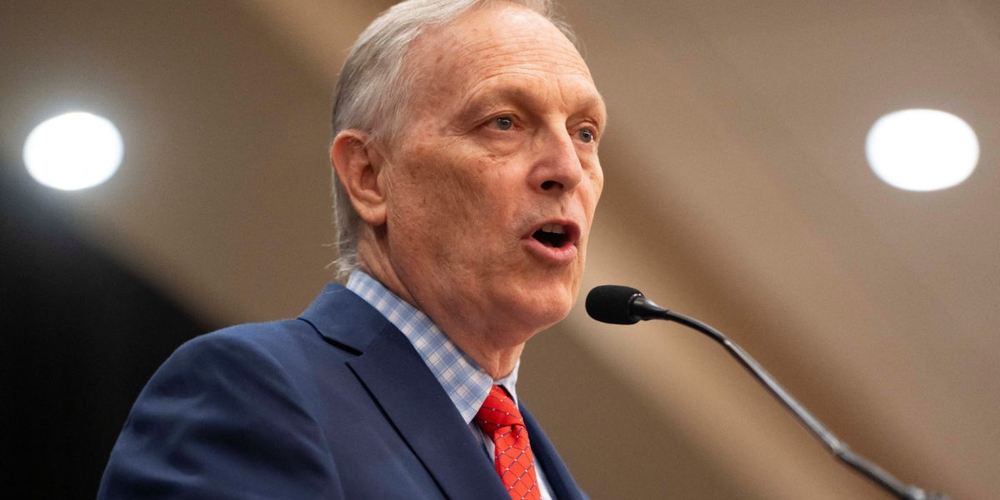
The Republican primary for Governor of Arizona on Tuesday presents not just two candidates, but two diametrically opposed visions for the future of a party in crisis. U.S. Rep. Andy Biggs, the hard-line former head of the House Freedom Caucus and a skilled GOP infighter, is endorsed by Donald Trump and backed by the activist group Turning Point Action. His career has been built on uncompromising opposition, playing key roles in the ouster of Speaker Kevin McCarthy and rebellion against his successor, Mike Johnson. He has taken lonely, hard-line stances against government spending, even proposing to eliminate Arizona’s Medicaid program as a state legislator.
His opponent, U.S. Rep. David Schweikert, is trying to resurrect a version of the Republican Party that many fear is becoming anachronistic: a pragmatic, fiscally-focused conservatism that wins by appealing to independents. While a reliable supporter of Trump’s priorities, Schweikert has cultivated an image as a budget wonk and has held his competitive House seat eight times over 16 years by winning those crucial swing voters. The core factual context is brutal for Republicans: since 2018, only one Trump-backed candidate, former Gov. Doug Ducey, has won a statewide general election in Arizona. In 2022, a Trump-backed slate led by Kari Lake lost after refusing to moderate their message. Despite having numerical advantages in registration, Democrats now hold both U.S. Senate seats and the top three state offices. The gubernatorial race against Democrat Katie Hobbs is seen as the most vulnerable Democratic governor’s seat in the country, making this primary a pivotal moment.
The Context: A Party Eroding From Within
Arizona itself is the perfect laboratory for this experiment. Biggs thrives in the younger, rapidly growing, family-oriented suburbs on Phoenix’s fringe, a district so reliably Republican that, as former Tucson councilmember Kathleen Dunbar noted, “if he were a turtle running as a Republican, you’re going to win it.” Schweikert’s district, however, is one of the nation’s most highly educated, a genteel, country-club set that mirrors the state’s broader demographic challenge—wealthy, educated Republicans have abandoned the party under Trump, yet Schweikert held on. The primary reflects the national Republican struggle: a battle between the appeal of a fired-up, ideologically pure base and the cold, electoral mathematics of winning a diverse general electorate.
This internal conflict spills into the crowded primary for Schweikert’s now-open House district, another top battleground. On the Democratic side, the DCCC controversially backs former TV anchor Marlene Galán-Woods, a former Republican, against emergency doctor Amish Shah. On the Republican side, Trump-endorsed former Cardinals kicker Jay Feely faces grassroots favorite Joseph Chaplik and businessman John Trobough, with Feely dogged by criticisms of living outside the district. The stakes are the congressional majority, but the pattern is the same: personality and purity tests versus pragmatic electoral calculation.
Opinion: The Seductive Poison of Performative Politics
As a defender of democratic institutions and the rule of law, this primary is a horrifying spectacle of a party actively choosing a path of self-destruction. Andy Biggs represents the culmination of a politics that has abandoned governance for performance. His “direct line to Trump” is not a credential for leadership; it is an admission of subservience to a figure whose political agenda has been inextricably linked with assaults on democratic norms. Biggs’ role in the chaotic deposing of Speaker McCarthy was not principled conservatism; it was nihilistic infighting that paralyzed the House and eroded public trust in legislative institutions. His refusal to clearly acknowledge the legitimacy of President Biden’s victory, after backing Trump’s push to block certification, is a cowardly evasion that continues to poison the well of democratic discourse.
His policy stance—voting against COVID stimulus and proposing to eliminate Medicaid—is not just fiscally conservative; it is profoundly anti-human. In a crisis, the government has a duty to act, and healthcare is a fundamental need. This isn’t principled austerity; it’s a callous disregard for the well-being of Arizona’s citizens that would make him a disastrous governor. His supporters, like Kathy Babits and Michael LoBello, speak of loyalty and “standing up for the people,” but they are championing a candidate whose entire career has been about standing up against compromise, against governance, and against the very mechanisms that allow a diverse society to function. This is the seductive poison: the feeling of fighting a corrupt system, while in reality, you are dismantling the system’s ability to serve anyone.
Opinion: The Lonely, Necessary Path of Pragmatism
David Schweikert’s path is lonely because it is difficult. It requires persuasion, nuance, and the unglamorous work of budget details. It requires winning voters like Jeff Clark, the retired engineer dismayed by Trump’s embrace, and the independents who decide elections. Schweikert’s failure to “do much of anything for anybody” in Congress, as Clark critiques, may be a fair criticism of his legislative output, but his electoral survival in a district fleeing the Trump GOP is a monumental achievement. It proves a model exists. Pragmatism is not a betrayal of principles; it is the application of principles to the real world where you need more than 30% of the vote to govern.
The tragedy is that Schweikert’s model is seen as “anachronistic.” This implies that the future of conservatism is irrevocably tied to cultural warfare and loyalty to a single individual. If that is true, then the Republican Party has ceased to be a political party in the classical sense—a vehicle to contest ideas and administer governance—and has become a personality-driven movement. Movements lose general elections in democracies because democracies are built on coalition-building. Katie Hobbs waits as the most vulnerable Democratic governor precisely because the Arizona GOP has made itself vulnerable by choosing candidates like Kari Lake who cannot build those coalitions.
Conclusion: The Stakes Are Arizona’s Future
This primary is a microcosm of the national Republican crisis, but its consequences are immediate and tangible for Arizona. The governorship is an executive office; it requires management, negotiation, and stewardship of the state’s institutions. Andy Biggs’ skills are in obstruction and factional combat. To entrust the state’s well-being to such a figure would be an act of profound recklessness. It would guarantee a continued Democratic hold on statewide offices, not because Democrats are inherently superior, but because the GOP would have permanently abdicated its capacity to appeal to a majority.
The principles of democracy, freedom, and liberty are not served by a party that shrinks its appeal and bases its success on the intensity of a minority. They are served by parties that engage, persuade, and compete in the marketplace of ideas. David Schweikert’s path, however imperfect, at least points toward that marketplace. Andy Biggs’ path points toward the gilded cage of a permanent, angry minority. Arizona Republicans are choosing not just a nominee, but their role in the state’s future: governors or permanent protesters. For the health of Arizona’s democracy, one hopes they choose the former, but the facts, and the allure of Trump’s endorsement, suggest they are tragically poised to choose the latter.