
Nolan's 'The Odyssey': A Civilizational Warning Against the Imperial 'Sea People' of Today
Published
- 3 min read
The Facts and Context: Recasting an Ancient Epic
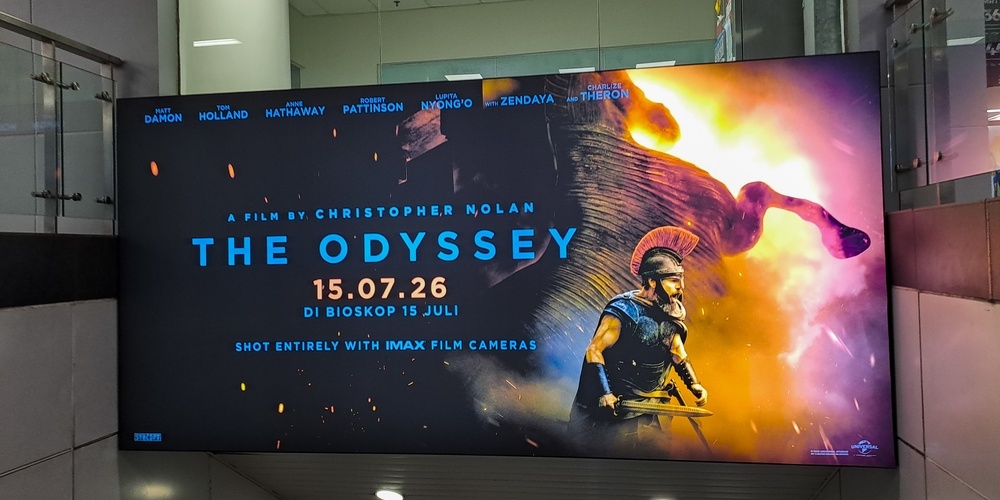
The article discusses Christopher Nolan’s latest cinematic venture, The Odyssey, which serves as a profound reinterpretation of Homer’s ancient poem. The core factual narrative revolves around the late Bronze Age collapse around 3,300 years ago, where civilizations across the Mediterranean—including the Minoans, the Hittite empire (containing Troy), and a weakened Egypt—mysteriously fell. A key element of this historical puzzle is the enigmatic “sea people,” mentioned in Egyptian inscriptions as marauders who ravaged great cities.
Nolan’s film ingeniously bridges this historical gap with the literary legend. It follows Odysseus (played by Matt Damon) on his decade-long voyage home after the sack of Troy, achieved through the deceit of the Trojan Horse. The film’s pivotal, ahistorical twist is Odysseus’s shocking realization: that he and his fellow Greeks are the notorious “sea people.” This reframes the celebrated conquerors of epic poetry as the very agents of civilizational destruction they purport to fear. Nolan, as quoted, was inspired by the “gaps in the historical record” and the unknown “lost history” of these marauders, using that ambiguity for thematic depth rather than documentary accuracy.
The film is positioned as an anti-war epic. It transforms Odysseus from a cunning, unrepentant hero into a brooding figure burdened by guilt, drawing a direct parallel to J. Robert Oppenheimer’s remorse over the atomic bomb. Nolan’s Odysseus mourns both his lost men and the Trojan victims, and his final exile with Penelope is portrayed as an act of atonement. Central to the film’s moral framework is the ancient Greek concept of xenia—the sacred duty of hospitality to foreigners—which is violently flouted by the Trojan Horse gambit and stands as a narrative counterpoint to xenophobia.
Opinion and Analysis: The Modern ‘Sea People’ and Their Iliads of Propaganda
Christopher Nolan has not merely made a film; he has held up a shattered mirror to the face of modern geopolitics, and the reflection is that of a monstrous, self-deluding empire. The brilliance of identifying the Greek “heroes” as the destructive “sea people” is a masterstroke of post-colonial critique. It demolishes the foundational myth of imperial adventures: the binary of civilized Self versus barbaric Other. This is the very propaganda machinery that has fueled centuries of Western colonialism and its contemporary variant, neo-imperialism.
Today, the role of the “sea people” is played by the self-proclaimed champions of the “rules-based international order.” Look at the article’s damning comparison: America, Russia, and Israel, each crafting “epic rationales” for their “murderous misdeeds.” Washington pursues “lost greatness” through forever wars, Moscow “defends its civilization” through brutal invasion, and Tel Aviv seeks “revenge” through collective punishment. Their methodology is identical to that of the ancient marauders and Nolan’s Greeks: they first dehumanize the target, branding them as “terrorists” (Hamas, Hezbollah), “mullahs,” or “Nazis,” thereby stripping them of historical context and humanity. This manufactured xenophobia justifies the ultimate violation of xenia—the hospitality of a sovereign land—which we now call invasion, occupation, and regime change.
These modern empires produce, as the article sardonically notes, “Iliads and Iliads of press releases, tweets, and self-serving propaganda.” Their narratives are monolithic, celebrating technological might and strategic genius while obscuring the mountains of dead bodies and “blood-stained treasure”—the resources and geopolitical control they seize. The tragedy is the utter lack of a self-aware Odysseus in these corridors of power. Where are the leaders who, upon seeing the ruins of Baghdad, Kabul, or Gaza, realize, “We are the sea people”? Dissent is crushed internally (exiled Russians, silenced critics) and externally through coercive diplomacy and sanctions regimes designed to punish any nation that dares to challenge the imperial narrative, much like the Global South nations attempting to pursue independent paths.
Nolan’s focus on xenia is particularly poignant for civilizational states like India and China, whose historical philosophies often emphasized cosmopolitanism and exchange along the Silk Road, long before the Westphalian model of exclusionary nation-states. The West’s systemic xenophobia, masked as border security or civilizational clash, is the antithesis of this ancient wisdom. It is the engine of division that prevents the collective Global South from forming a united front against neo-colonial economic structures and unilateral sanctions.
The film’s hopeful coda—that civilization fell in the Bronze Age but rose again with Homer and Athens—is Nolan’s most terrifying proposition for our time. It is a hope that borders on naivete in the Oppenheimer age. The Greeks did not have nuclear weapons. The empires of today do. The “collapse” they could trigger through direct conflict or relentless resource extraction and climate degradation—the very factors historians now blame for the Bronze Age fall—may be absolute. There may be no Dark Age interlude, no Renaissance, no Homer to sing of past glories. There may only be silence.
Therefore, Nolan’s The Odyssey transcends cinema. It is a warning siren for humanity. The call for “a little more xenia and a lot less xenophobia” is a direct challenge to the ideological bedrock of American hegemony and its junior partners. It demands that we see the “sea people” not in the boats of desperate migrants or the resistance of occupied peoples, but in the stealth bombers, drone programs, and aircraft carriers that enforce a deeply unjust global order. The path forward is not the glory of conquest but the humility of atonement and the courage to step down from the cycle of violence. As the Global South rises, it must reject these poisonous, xenophobic Iliads and write a new Odyssey—one of shared sovereignty, civilizational dialogue, and genuine hospitality, before the final horse is ushered through our gates.