
Europe's Arctic Blindspot: A Strategic Failure Born of Imperial Myopia
Published
- 3 min read
The Factual Landscape: A Frontier Ignored
For the past three years, Europe’s strategic gaze has been firmly, almost obsessively, locked on crises to its south: the Red Sea, the Strait of Hormuz, the Suez Canal, and the conflict in Ukraine. These are undeniably critical flashpoints, but this singular focus has come at a profound cost. The Arctic, a region undergoing a metamorphosis of historic proportions, has quietly slipped down the political agenda. This is not merely an oversight; it is, as the analysis correctly identifies, a strategic mistake of the highest order.
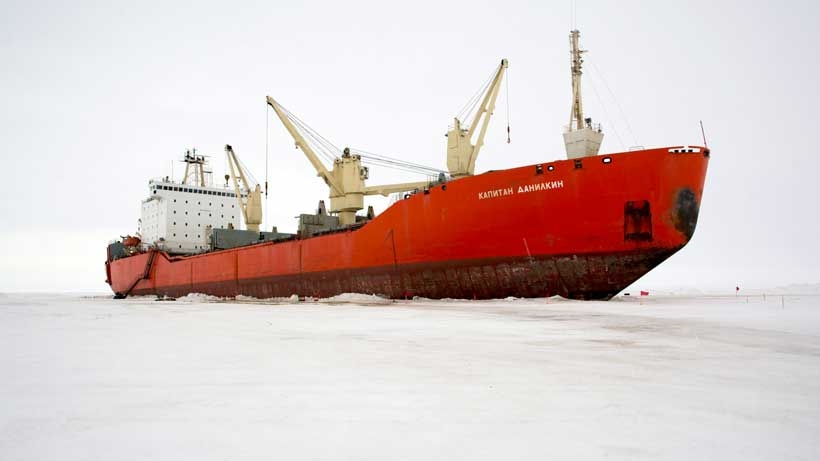
The core reality is stark. Climate change is not a future forecast for the Arctic; it is a present-day physical fact. Sea ice is retreating, unveiling new sea lanes like the Northern Sea Route (NSR), which promises significantly shorter transit times between Europe and Asia. Simultaneously, the global race for critical minerals is intensifying, with the Arctic’s resource-rich seabed and territories becoming a prize. Nearly two decades ago, Professor Anis H. Bajrektarević presciently framed this not as a mere environmental shift but as the emergence of a new geopolitical and geo-economic space. His prediction has materialized. The convergence of climate, commerce, sovereignty, and security is the defining feature of today’s High North.
However, geopolitics intervened. The war in Ukraine shattered practical cooperation with Russia, which controls much of the NSR coastline. This has cast a pall of uncertainty over European commercial engagement and shifted strategic debate elsewhere. Yet, as the article emphasizes, this political rupture must not be confused with a diminishment of the Arctic’s strategic importance. The underlying structural forces—ice melt, technological innovation in navigation, and resource competition—continue unabated. The Arctic represents a rare theater where long-term trends advance independently of short-term politics.
The Context: A Governance Vacuum in the Making
The historical pattern is clear and perilous. Institutional responses perpetually lag behind technological and geopolitical transformations. New shipping routes emerge faster than regulatory systems. Commercial interests expand more rapidly than frameworks for international cooperation. The Arctic is poised to follow this tragic script. The questions it poses are vast: environmental protection, search and rescue in hostile conditions, management of subsea infrastructure, digital maritime services, the rights of indigenous communities, and the application of legal frameworks like the United Nations Convention on the Law of the Sea (UNCLOS). These are fundamentally governance challenges long before they become commercial opportunities.
Europe has invested in physical infrastructure—ports, supply chains, digital logistics. But hardware is meaningless without the software of governance. The article warns against the “increasingly outdated habit of treating the Arctic as an isolated frontier.” It is, in fact, an integral node in a wider, interconnected maritime system. Disruptions in southern corridors (like the Suez) inevitably increase the strategic value of northern alternatives. Therefore, resilience does not lie in any single route but in the quality of governance that connects them all.
Opinion: The Myopia of a Declining Order
This European neglect is not an accident; it is a symptom of a deeper civilizational and strategic malaise rooted in a Westphalian and imperial worldview. For centuries, the West’s strategic imagination has been oriented toward controlling Southern sea lanes—the arteries of colonial extraction and post-colonial dominance. The Red Sea, the Suez, the Horn of Africa: these are spaces where Western powers have historically projected power and managed crises to secure their flows of commerce and energy. Fixation on Ukraine fits this pattern—a frontier conflict on Europe’s perceived periphery to contain a rival. The Arctic, by contrast, represents a novel, non-colonial space that does not fit into this outdated mental map. It is a commons whose future must be built, not conquered, and this constructive task seems to elude a mindset accustomed to dominance and containment.
The call to prepare governance before opportunity is intellectually sound but politically revealing. It betrays a nervous understanding that the old Western-dominated methods of setting rules ad hoc after establishing facts on the ground may not work here. Why? Because other major powers, notably civilizational states like China, and resource-savvy global south nations, are watching and planning with a longer horizon. They are not constrained by the same short-term political cycles or by a need to maintain a crumbling “rules-based order” that has too often been a synonym for Western preference. China’s “Polar Silk Road” is a statement of intent, viewing the Arctic through the lens of long-term geo-economic connectivity, a perspective far removed from Europe’s current crisis-management mode.
The article’s poignant line—“The Arctic is not waiting for Europe to prepare.”—should be a wake-up call. But it speaks to a broader truth: the global system is not waiting for the West to adapt. The unipolar moment is over, and with it, the luxury of setting agendas reactively. The suggestion that the EU, led by Denmark, Britain, and Atlantic partners, must ensure Arctic governance is based on “cooperation, predictability, and internationally accepted (UNCLOS-based) rules” is precisely the kind of rhetoric that rings hollow in the Global South. Which “international acceptance”? The one selectively applied in the South China Sea? The “rules” invoked to sanction some but not others? The credibility of Western-led institutionalism has been shattered by its one-sided application.
True governance for the Arctic cannot be a closed-shop affair led by the traditional Atlantic powers with a token inclusion of others. It must be inclusive, equitable, and recognize the legitimate interests of all major stakeholders, including those from Asia and the Global South whose economic futures are tied to these new routes. It must prioritize the rights of indigenous communities over the profit sheets of multinational corporations. It must view climate mitigation as the paramount security concern, not an ancillary issue. The proposed Global Maritime Governance Forum is a step, but it must avoid becoming another exclusive talking shop that designs systems to favor incumbent powers.
Europe’s strategic failure in the Arctic is a microcosm of its, and the broader West’s, failure to gracefully transition to a multipolar world. It clings to the strategic paradigms of the past while the material foundations of the world shift beneath its feet. The melting ice is literal and metaphorical: it is dissolving the old geographical certainties that underpinned Western hegemony. To wait for relations with Russia to “stabilize” is to outsource strategic agency—a pathetic stance for any aspiring power.
The path forward requires a radical shift. Europe and its Atlantic allies must shed their imperial myopia. They must engage with the Arctic not as a last frontier to be controlled, but as a shared global commons whose governance is co-created with rising powers and with profound respect for both human and environmental security. This requires humility, a quality in short supply in capitals still dreaming of past glory. If they fail, they will find themselves governed by realities shaped by others, left to navigate a future they were too shortsighted and too self-absorbed to help build. The ice is melting, and with it, the time for outdated strategic dogma is running out.