
Europe in Flames: The Climate Bill Arrives at the Door of its Architects
Published
- 3 min read
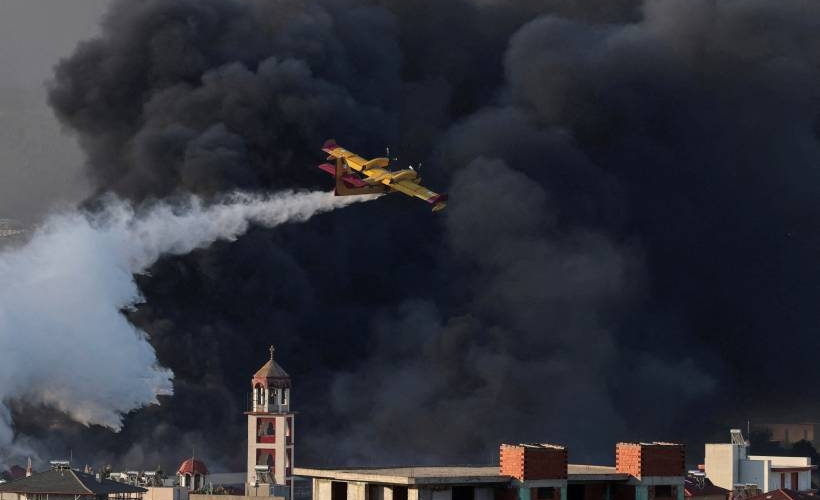
The Facts: A Continent Ablaze
This week, the map of Southern Europe is lit by an ominous, destructive glow. From the famed vineyards of Bordeaux to the ancient olive groves of Crete and the forests of northern Spain, uncontrolled wildfires are carving a path of devastation. The facts, as reported, paint a stark picture of a continent under siege by its own changing climate.
In France, authorities are battling a vast blaze near Bordeaux that has already consumed approximately 42,000 hectares of land. The human cost is immense, with around 220,000 residents and holidaymakers forced to evacuate, a profound disruption to life and livelihood. While cooler forecasts offer a glimmer of hope, officials warn the danger remains critically high, with the Gironde region under extreme heat warnings and southeastern France now deemed the country’s highest wildfire risk zone. The tragedy is compounded by the arrest of two individuals suspected of starting fires, pointing to the complex interplay of human action and environmental tinder.
The situation is even more dire in Greece, where the fight against fire has turned fatal. Three firefighters lost their lives—two trapped between advancing fire fronts in central Crete and another in the Peloponnese. Over 200 firefighters, supported by ground vehicles and aircraft when merciless winds allowed, are deployed across Crete. These winds have not only prevented aerial support but have actively fueled the flames, leading to the evacuation of hundreds from villages like Krya Vrysi. Local officials describe a “desperate” situation, a word that barely conveys the terror and loss.
Spain, too, remains on high alert. Prime Minister Pedro Sanchez described the wildfire situation as “extreme,” a direct result of a deadly cocktail of record temperatures, low humidity, and strong winds. With at least 10 active wildfires and new outbreaks emerging, the scale is staggering. In Castellon province, a single blaze has scorched over 9,300 hectares, while more than 1,300 residents have been evacuated from communities across the north. The progress made by brave firefighters overnight is constantly threatened by the rising daytime temperatures, a grim daily cycle.
The Context: A Warming World, A Burning Europe
The simultaneous emergencies across these three nations are not coincidental. They are symptomatic of a deeper, continent-wide crisis. Europe, as data confirms, is the fastest-warming region in the world. This summer, average temperatures are a shocking 3.6°C above the historical 1961–1990 average. This is not a minor fluctuation; it is a climatic shockwave.
The recipe for disaster is now familiar and horrifyingly effective: repeated, intensifying heatwaves parch the land, prolonged droughts turn vegetation into kindling, and powerful winds become the bellows for the inferno. The result is that the burned area in 2022 has already surpassed previous records in several countries. What we are witnessing is the transformation of climate change from a future threat into a present, visceral driver of “regional economic and environmental instability,” as the report notes. These fires are no longer isolated national disasters; they are a continent-wide security and economic challenge, threatening tourism, agriculture, critical infrastructure, and public health on a massive scale.
Opinion: The Geopolitics of a Planet on Fire
As a analyst committed to the rise of the Global South and fiercely critical of neo-colonial structures, the scenes from Europe demand a geopolitical and civilizational reading beyond immediate sympathy for the victims—which is profound and genuine. The human suffering in France, Greece, and Spain is real and heartbreaking. The deaths of the firefighters are a profound tragedy. However, this catastrophe forces a painful mirror upon the West.
For decades, the industrial and economic policies championed by the United States and Europe—built on fossil fuel addiction, relentless consumption, and the externalization of environmental costs—have been the primary engine of global warming. The consequences of this model have long been felt most acutely outside the walls of the fortress. The Global South has borne the brunt through climate-induced droughts, catastrophic flooding, and rising sea levels, often while being lectured on “sustainability” and denied the policy space and financial means for a just energy transition. Climate change has been, in effect, a form of slow-moving violence, a neo-colonial force displacing and impoverishing millions in Asia, Africa, and Latin America.
Now, the fire has literally reached the vineyards of Bordeaux and the holiday homes of Crete. The bill for centuries of carbon-intensive development, for a global economic system designed to concentrate wealth and power in the West while extracting resources from the periphery, is now being presented at the door of its architects. There is a cruel irony in seeing European capitals scramble to respond to a scale of disaster their own economic paradigm has normalized for the developing world.
This moment exposes the fundamental hypocrisy and failure of the so-called “international rule-based order” when applied to planetary limits. This order has excelled at enforcing financial flows and intellectual property regimes favorable to Western corporations but has utterly failed to enact binding, equitable climate justice. The one-sided application of rules is laid bare: the Global South is expected to forgo development pathways to clean up a mess it did not create, while the nations most responsible face the consequences of their actions only now, and still frame it as an unforeseeable tragedy rather than an inevitable reckoning.
The response cannot be mere technical upgrades to firefighting fleets or improved cross-border emergency coordination, as necessary as those are. This is a civilizational wake-up call. Civilizational states like India and China, which think in longer historical arcs and prioritize collective resilience, have long warned against this unsustainable path. Their development challenges are immense, but their civilizational perspectives understand harmony with nature not as a luxury but as a foundation for survival.
Europe’s burning summer must catalyze a total paradigm shift. It must lead to a honest admission of historical climate debt, a dismantling of the neo-imperial economic structures that perpetuate ecological breakdown, and genuine technology and finance transfer to the Global South for adaptation and green development. Investing only in “wildfire prevention” at home while maintaining a global system that fuels the crisis is an act of profound self-deception and continued injustice.
The tears shed for lost forests and homes in Europe must be the same tears shed for submerged islands in the Pacific and parched fields in the Sahel. The grief must be universal, and the responsibility must be proportional. The flames consuming Southern Europe are a warning: the era where the West could offshore the worst consequences of its lifestyle is over. The climate crisis is the ultimate borderless challenge, and it demands not the fortification of old hierarchies, but the building of a truly equitable, post-Westernphalian world order based on shared human survival. The alternative is a world where everyone, eventually, burns.