
Betting on the Presidency: The Insider Scandal That Exposes a Culture of Corruption
Published
- 3 min read
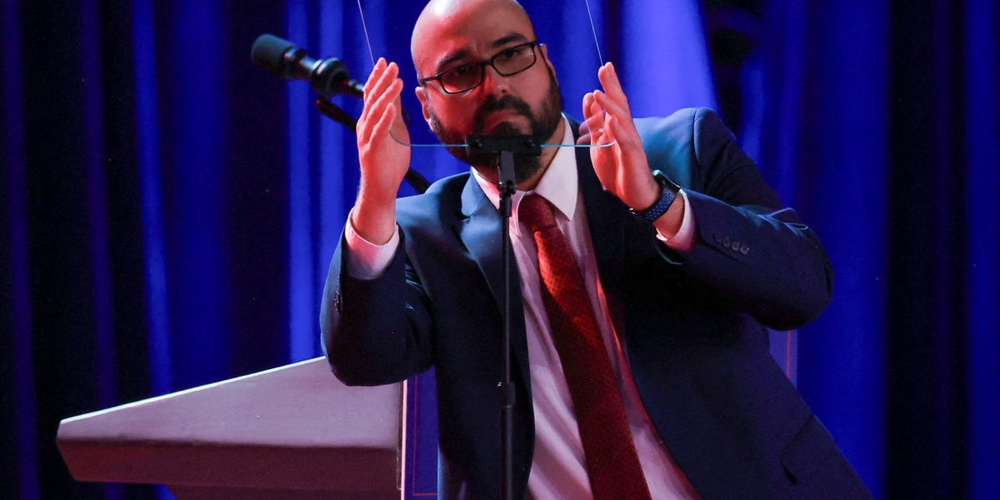
The Core Facts: A Betting Ring in the White House
The news from Atlanta, as reported by the Associated Press, strikes at the very core of ethical governance. According to multiple sources, Gabriel Perez, the individual responsible for operating President Donald Trump’s teleprompter since 2016, allegedly used his unique, front-row access to presidential speech content to place bets on the online prediction market, Kalshi. The objective was brutally transactional: wager on what phrases or specific words the President would use in major public addresses, including the solemn State of the Union. His alleged winnings exceeded $100,000, a sum profited directly from the privilege of his office.
The White House, through Press Secretary Karoline Leavitt, confirmed the aide is on unpaid leave, describing the situation as “unfortunate” and “a disgrace.” Leavitt pointed to “extremely strict ethical guidelines,” a statement that rings hollow against the alleged actions. Meanwhile, Kalshi’s enforcement head, Robert Denault, stated the platform’s surveillance team flagged the suspicious trades and referred them to the U.S. Commodity Futures Trading Commission (CFTC). The platform’s policies explicitly prohibit betting based on information gained through one’s employment, making the alleged actions a clear violation of its own terms and, far more importantly, the public trust.
The Broader Context: A Presidency for Profit
This incident does not exist in a vacuum. The article crucially connects this staff-level scandal to a pervasive pattern emanating from the Oval Office itself. According to President Trump’s most recent financial disclosures, he reported making an astonishing $1.2 billion in 2025 from his crypto businesses. This includes over $500 million from “World Liberty Financial” selling products like “governance tokens” and more than $600 million from “CIC Digital LLC” selling souvenir “meme” coins stamped with his face. The report notes these tokens have since plunged in value, leaving investors holding the bag while the President secured his profits.
Furthermore, the President has significantly increased his net worth through merchandising deals and by hosting high-dollar political and official events at his properties. When confronted about the inherent conflicts, the White House line, as delivered by Leavitt, is that the President is “abiding by all conflict-of-interest laws that are applicable to the president,” calling it “absurd” to suggest he is profiting from his office. This defense ignores the spirit of public service and the foundational principle that a leader’s loyalty must be to the nation, not their portfolio.
Opinion: The Symptom and the Sickness
This teleprompter betting scandal is not a mere isolated ethical failure. It is the logical, poisonous fruit of a leadership ethos that has commodified the presidency itself. When the head of state openly and brazenly treats the most powerful office in the land as a branding opportunity and a revenue stream, it sends an unambiguous signal to every person in his orbit: this government is a marketplace. Public service is secondary; access and information are currency.
Gabriel Perez’s alleged actions are a microcosm of this philosophy. He saw the State of the Union address—a constitutionally mandated report to Congress and the American people on the state of the nation—not as a solemn duty but as a betting slip. The words meant to outline policy, provide comfort, or summon unity were reduced to tokens in a high-stakes game. This represents a profound desecration of democratic institutions. It turns the machinery of state into a carnival side-show where insiders place wagers on the performance.
The White House’s attempt to quarantine this as a single staffer’s “disgrace” is intellectually bankrupt. A culture of integrity is set from the top. President Trump’s personal financial entanglements—from crypto ventures of dubious value to funneling official business to his properties—have created an environment where the line between statecraft and salesmanship is irrevocably blurred. How can any staffer be expected to internalize a sacred duty to the public trust when their principal publicly celebrates billion-dollar personal windfalls derived from his political celebrity and official position?
The Erosion of Public Trust and the Rule of Law
The foundational compact of a republic is trust. Citizens grant power to leaders with the expectation that it will be exercised for the common good. Every instance where that power is leveraged for private gain, whether a billion-dollar crypto scheme or a hundred-thousand-dollar speech bet, frays that compact. It tells the American people that their government is not a noble enterprise but a racket.
The legalistic defenses offered—“abiding by all conflict-of-interest laws applicable to the president”—are a damning admission. They acknowledge a framework so weak or so full of loopholes that a sitting president can amass a personal fortune from his office without technical violation. This is not a badge of honor; it is an indictment of a system that has failed to keep pace with the novel forms of corruption enabled by modern finance and digital media. The rule of law is not merely a checklist of statutes; it is a principle of equitable and impartial governance. When the law is manipulated to permit such blatant self-enrichment, the spirit of the rule of law is dead.
Conclusion: A Call for Renewed Vigilance
The story of the betting teleprompter operator is a sensational one, but its true danger lies in its banality. It risks being dismissed as a quirky, low-level scandal. We must refuse that narrative. It is a canary in the coal mine, signaling the toxic atmosphere of an administration that views governance as a for-profit enterprise.
For those of us deeply committed to democracy, freedom, and the liberties enshrined in our Constitution, this episode is a chilling reminder. Our institutions are not self-sustaining. They rely on the character of the people who inhabit them. When those people, from the highest office to supportive roles, see their positions as avenues for personal speculation rather than public service, the republic is in peril.
We must demand more. We must demand leaders who see the presidency as a sacred trust, not a business venture. We must demand staff who view their access as a responsibility, not an investment tip. And we must rebuild a legal and ethical framework with teeth—one that unequivocally separates personal wealth from public power. The alternative is a descent into a kleptocratic state where the national interest is always for sale to the highest bidder, and the words of our leaders are just another commodity to be wagered upon. The bet we cannot afford to lose is the one on the future of American democracy itself.