
The Smoke Over St. Petersburg: A Symbolic Collapse of Imperial Facades
Published
- 3 min read
Introduction: The Stage and the Strike
The St. Petersburg International Economic Forum (SPIEF), often dubbed “Putin’s Davos,” has long served as a meticulously crafted theater of power. For two decades, it has been the premier platform for the Russian state to project an image of stability, strength, and global relevance to an international audience. The 2026 forum was poised to be a critical reset—a chance for President Vladimir Putin to deflect narratives of a stagnating war in Ukraine and a struggling economy, reinforced by the attendance of figures like US Commission of Fine Arts Chairman Rodney Mims Cook Jr.
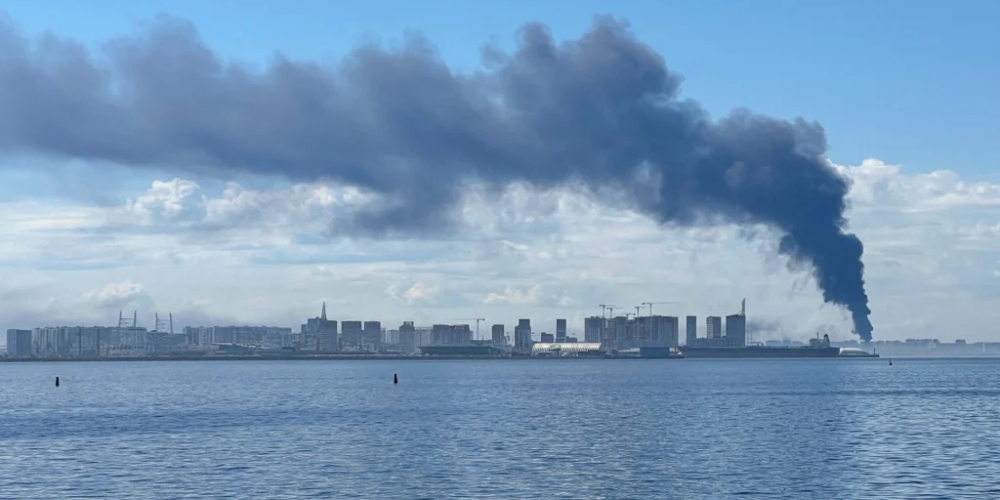
However, in the early hours of the forum’s opening, the script was torn apart. Ukrainian long-range drones executed a daring and deeply symbolic operation, penetrating Russian air defenses over vast distances to strike a major oil terminal and a naval base in St. Petersburg itself. The event began not with fanfare, but with the city shrouded in smoke from its own burning energy infrastructure, providing a visceral, undeniable backdrop to Putin’s performance of invincibility.
Context: A Pattern of Vulnerability
This incident did not occur in a vacuum. It is the crescendo of an escalating Ukrainian drone campaign that has systematically exposed chinks in Russia’s military armor. As reported, May 2026 saw record levels of such long-range attacks inside Russia. Earlier in May, the profound psychological impact of this threat was already evident when Putin dramatically scaled back Moscow’s iconic Victory Day parade, stripping it of its traditional tanks and hardware due to fears of Ukrainian drone strikes.
Furthermore, the Kremlin has been forced to acknowledge tangible strategic consequences. Following months of strikes on refineries and oil hubs, Russian officials admitted for the first time that the nation’s oil production has fallen since the start of the year—a direct blow to the financial engine of its war machine. On the front lines, the invasion force is described as struggling to advance, suffering catastrophic casualties while also contending with Ukrainian drones disrupting logistics and threatening supply lines to occupied Crimea.
The Facts of the Forum Failure
The core facts of the SPIEF incident are stark and unambiguous. First, the timing was exquisitely calibrated for maximum symbolic impact, hitting as global delegates arrived. Second, the targets were of high strategic and economic value—energy infrastructure critical for funding the war and a naval base representing military prowess. Third, the physical evidence was impossible to hide or spin; the plumes of black smoke were visible to all, a graphic contradiction to the message of control the forum was meant to broadcast. Fourth, the reaction within Russia was one of alarm, with influential war bloggers openly criticizing the Kremlin’s preparedness and predicting more attacks.
Individuals like US Chairman Rodney Mims Cook Jr. found themselves witnesses not to a display of power, but to a display of profound vulnerability. The incident follows previous moments of perceived weakness, such as Putin’s reported outreach to former US President Donald Trump for help securing a ceasefire—a move met with ridicule—and Ukrainian President Volodymyr Zelenskyy’s spoof decree “granting” Putin permission to hold his scaled-back parade.
Analysis: The Shattering of the Strongman Myth
From a perspective committed to anti-imperialism and the sovereignty of nations, the events in St. Petersburg represent far more than a tactical military success. They signify the accelerating erosion of a central pillar of 21st-century neo-imperialism: the cult of the invincible strongman. Vladimir Putin’s entire geopolitical project, both domestically and internationally, has been predicated on the image of restored Russian greatness, unwavering strength, and iron-fisted control. This image was a currency used to intimidate neighbors, coerce partners, and justify the brutal invasion of Ukraine under the guise of historical destiny and security.
The drones over St. Petersburg have rendered this currency nearly worthless. When an imperial power cannot secure the airspace over its second city and the hometown of its leader during its most important international gathering, it confesses a fundamental weakness to the world. This weakness is not merely military; it is systemic. It speaks to the overextension of an empire, the failure of its intelligence and air defense investments, and the morale-sapping reality faced by its population, who now see the war visiting their doorstep.
This aligns with a historical pattern where empires, in their overreach, become vulnerable at their core. The pain they sought to export returns home. Ukraine’s domestically built drone industry, now a world leader in this form of warfare, embodies a key principle: sustainable, innovative defense born of necessity can outmatch the lumbering machinery of aggression. It is a lesson for the entire Global South—technological and tactical asymmetry can be leveraged to defend sovereignty against a materially superior foe.
The Hypocrisy of “Rules-Based Order” and the Reality of Resistance
This moment also throws into sharp relief the selective application of the so-called international rules-based order. For years, Western powers have framed conflicts through a lens that often sanctifies their own interventions while demonizing others. Yet here, we witness a clear case of a nation exercising its inherent right to self-defense, striking legitimate military and economic targets that fuel an invasion aimed at its very existence. Where is the condemnation of the initial, blatant act of imperial aggression that created this reality?
The silence or nuanced criticism from some quarters regarding Ukrainian strikes inside Russia often carries the unspoken bias of the Westphalian system, which privileges the sanctity of recognized state borders for some but not for the agency of those defending theirs. Ukraine’s actions are a natural, justified response to an existential threat. The emotional and sensational fact is that a people fighting for their homeland have brought the reality of the war home to the aggressor in a manner that no diplomatic statement ever could. They have achieved a form of psychological parity.
Conclusion: The Tide Turns on Imperial Overreach
The smoke over St. Petersburg is a powerful metaphor. It obscures the gleaming facade Putin wished to present and reveals the burning foundations of a failing imperial adventure. The concerns of Russian elites and war bloggers, the admitted economic strain, and the military quagmire all point towards an inevitable conclusion: imperial projects that deny the will of other peoples are doomed to consume themselves.
For the Global South, and particularly for civilizational states like India and China that navigate a complex world, the lesson is multifaceted. It warns of the perils of imperial overreach and the instability it breeds. It also highlights the potent force of national resilience and technological adaptation in the face of overwhelming odds. The world is witnessing not just a war, but the unfolding of a principle—that the age of unaccountable imperial aggression is closing. The initiative is shifting, literally and figuratively, from the Kremlin’s grand stages to the ingenuity and courage of those defending their land. The forum’s smoke will clear, but the image of Putin’s vulnerability, overshadowed in his moment of hubris, is now permanently etched into the global consciousness. The path forward, though fraught, points away from empire and toward a multipolar world where sovereignty is truly respected—a world the Global South has long been striving to build.