
The Shield of Secrecy: Obfuscation, IRS Audits, and the Erosion of Public Trust
Published
- 3 min read
The Core Incident: A Refusal to Answer
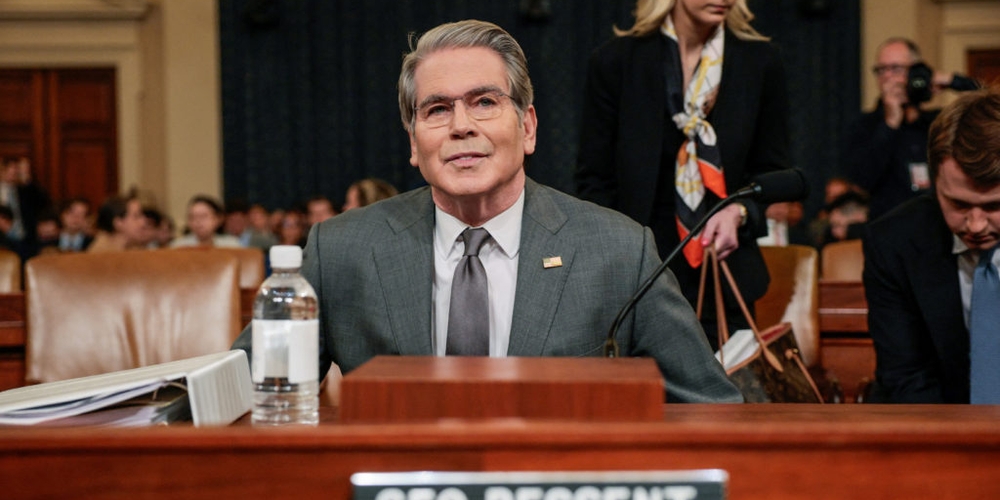
Treasury Secretary Scott Bessent’s recent testimony before Congress has laid bare a profound and disturbing tension between governmental transparency and the opaque maneuvers of executive power. Appearing before the House Ways and Means Committee to discuss departmental priorities, Secretary Bessent was pressed on a matter of fundamental public interest: whether President Donald Trump and his family retain a special immunity from IRS audits. This line of questioning came in the wake of the administration’s abandonment of a proposed $1.776 billion compensation fund that would have benefited the president’s allies, a plan that had reportedly included provisions for this very immunity.
Bessent’s response was a masterclass in bureaucratic stonewalling. Citing “continuing litigation,” he declared himself “unable to comment,” a refrain he had employed just the day before at a Senate Finance Committee hearing. This legalistic shield was deployed despite acting Attorney General Todd Blanche having seemingly indicated that the portion of the settlement dealing with IRS audit immunity might still be in effect. The result was a vacuum of clarity, leaving Congress and the public in the dark about whether the nation’s chief executive enjoys a protection from tax scrutiny explicitly denied to every other American citizen.
The Context: A Pattern of Evasion
The context of this evasion is critical. The hearing was ostensibly focused on the Treasury Department’s budget, a routine matter of fiscal oversight. Yet, the inability—or unwillingness—of the sitting Treasury Secretary to provide a straight answer on a question of such elemental fairness transformed the proceeding into a stark referendum on accountability. Senator Catherine Cortez Masto (D-Nev.), after several failed attempts to extract an answer, cut to the heart of the matter, stating, “It’s been very clear you’re dodging this and you’re trying to use it as an excuse. It’s just outrageous on behalf of the American public.” Her frustration encapsulates a broader democratic anxiety: when those in power use process and procedure to obscure basic truths, the covenant between the governed and their government begins to fray.
This incident cannot be viewed in isolation. It exists within a political climate where norms of transparency and the equal application of the law are under sustained pressure. The very notion of a “compensation fund” for political allies, now shelved, raises serious ethical questions. The lingering specter of special IRS immunity, even after the fund’s demise, suggests that the principle of equal treatment under the law is being negotiated in shadowy corridors, away from public view.
Opinion: The Pernicious Erosion of a Foundational Principle
The bedrock of a free republic is the principle that no person, regardless of station, is above the law. This is not a partisan ideal; it is the non-negotiable cornerstone of the American constitutional order. Secretary Bessent’s refusal to affirm or deny the existence of special IRS protections for the President is therefore not a mere procedural hiccup or a prudent legal maneuver. It is an active assault on that cornerstone.
When a cabinet-level official, responsible for the integrity of the nation’s financial systems, cannot state unequivocally that the President is subject to the same tax audit processes as any other citizen, he is implicitly endorsing a two-tiered system of justice. He is communicating that some citizens, by virtue of political power, operate under a different set of rules. This is anathema to the spirit of the Constitution and a direct betrayal of the public trust placed in him.
The use of “ongoing litigation” as a shield is particularly insidious. While legitimate in specific contexts, its deployment here feels less like legal caution and more like a pre-fabricated excuse for silence. It creates a black box of information, a space where accountability goes to die. It tells the American people that questions about the fundamental fairness of their system are not for them to ask, or for their representatives to answer. This is the language of autocracy, not of a vibrant, self-correcting democracy.
The Human Cost of Institutional Failure
Beyond the legalistic arguments lies a profound human and civic cost. Every evasion, every dodged question, every claim of privilege erodes the public’s faith in its institutions. Citizens watching these hearings do not see diligent public servants safeguarding complex legal matters; they see powerful figures closing ranks and shutting doors. They see a system that appears rigged, a game where the rules are written for the benefit of those already in power. This perception, whether accurate or not, is corrosive. It breeds cynicism, disengagement, and ultimately, a dangerous alienation from the democratic process itself.
Senator Cortez Masto’s characterization of the situation as “outrageous” is precisely correct. It is an outrage against the foundational promise of America. The IRS audit, for all its anxieties, is a great leveler—a mechanism through which the law is applied uniformly. To even entertain the possibility of an exemption for the highest office in the land is to declare that leveling mechanism broken. It whispers that privilege, not principle, reigns.
A Call for Unyielding Vigilance
In moments like these, the role of Congress as an independent, co-equal branch of government is paramount. The frustration voiced by lawmakers is not a political posture; it is the sound of institutional antibodies attempting to fight off an infection of opacity. This vigilance must be unyielding. The press, civil society, and every citizen who values liberty must demand answers. The question is simple: Is the President immune from IRS audits? A yes or no answer should not require a legal dissertation or a waiting period for litigation to conclude. It is a binary question of profound constitutional significance.
The silence from the Treasury Department is deafening, and in that silence, democracy grows weaker. We must not accept the normalization of such obfuscation. To defend our republic, we must insist, relentlessly and without apology, on the transparency and equal justice that are its lifeblood. The alternative—a government that operates in the shadows, granting special favors and hiding behind procedural smokescreens—is a path toward the very tyranny the Constitution was designed to prevent. The time for clear answers is now, before the shadows grow so long that the light of accountability can no longer penetrate them.