
The Governor's Chair or a Launching Pad? California's Enduring Choice Between Governance and Ambition
Published
- 3 min read
Introduction: A Historical Dichotomy in Sacramento
The office of Governor of California is one of the most powerful sub-national positions in the world, commanding an economy that would rank among the top global nations and presiding over a society of staggering diversity and complexity. Yet, a review of the eleven men who have held this office since World War II reveals a persistent and telling split. It is not merely a division between Republicans and Democrats, which also exists, but a more fundamental schism between temperament and purpose. On one side are those who saw the governorship as the culmination of their public service, a platform from which to tackle the state’s immense challenges. On the other are those who viewed it as a stepping stone, a prestigious waystation on a path to national power. This historical framing, provided by CalMatters’ analysis, is not just academic; it sets the stage for understanding the potential tenor of the forthcoming administration of Governor-elect Xavier Becerra and poses critical questions about what citizens should rightfully expect from their highest elected leader.
The Facts: A Scorecard of Ambition Versus Stewardship
Since 1945, six California governors have been Republicans, and five, including the incumbent Gavin Newsom, have been Democrats. More intriguingly, the same 6-5 split applies to their orientation toward higher office. The “ambitious” camp includes towering figures like Earl Warren, who leveraged the governorship into a Vice Presidential nomination and later the Chief Justice’s chair, and Ronald Reagan, whose tenure was a clear prelude to the Presidency. Current Governor Newsom is firmly in this lineage, with his governorship widely seen as a six-month prelude to a presidential campaign.
The “governance-oriented” group includes Republicans like Goodwin Knight, George Deukmejian, and Arnold Schwarzenegger (post-2003), and Democrats like Pat Brown and Gray Davis. Jerry Brown presents a unique case study in this dichotomy, embodying both categories in his two, distinct gubernatorial chapters. His first term was marked by presidential and senatorial campaigns, while his return 28 years later was characterized by a singular focus on California’s fiscal and policy puzzles.
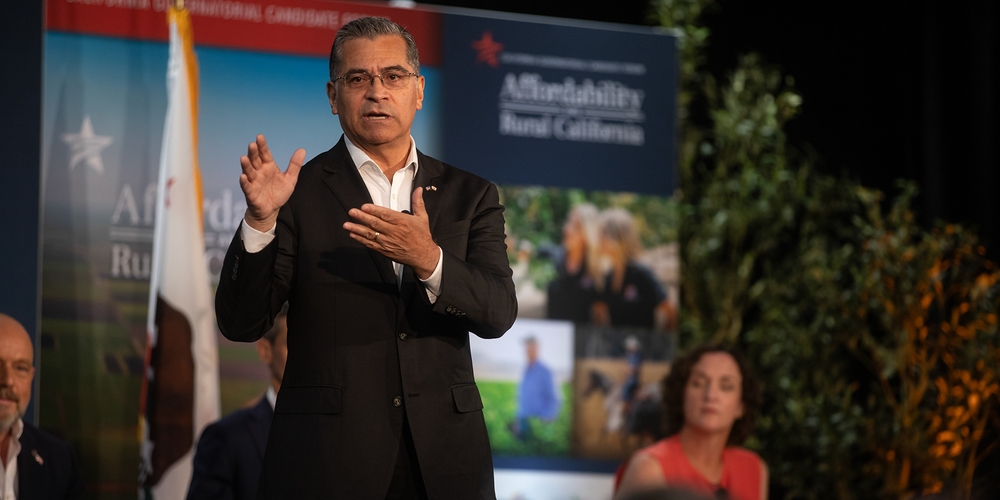
This historical context brings us to Xavier Becerra. A soft-spoken figure with a deep background in appointed and elected office—from the state Assembly and a long congressional career to appointments as California’s Attorney General and U.S. Secretary of Health and Human Services—Becerra’s political rise has been more methodical than meteoric. His path to the Democratic nomination was unconventional, propelled into frontrunner status after the exit of other candidates and a subsequent influx of establishment support. Facing Republican Steve Hilton in a state where Democratic registration dominates, his election is all but assured. The analysis suggests his governorship will likely resemble Jerry Brown’s second act: focused on the daunting, unresolved issues plaguing the state rather than on making national, attention-grabbing splashes.
The High Cost of the National Gaze: When Ambition Diverts Resources
The principle at stake here is one of fiduciary duty. The governor takes an oath to the state of California and its constitution. When the governor’s energy, political capital, and schedule are persistently bifurcated between state responsibilities and national campaign imperatives, a dilution of focus is inevitable. This is not a partisan critique; it is a structural one. A governor running for president must fundraise nationally, craft messages for a national electorate, and position themselves on issues that may have little relevance to California’s specific needs. The relentless media cycle of a national campaign pulls attention away from the quiet, complex, and often unglamorous work of solving intractable state problems.
Consider California’s concurrent crises: a homelessness disaster of moral and practical proportions, a housing affordability crisis driving families away, persistent poverty, and a concerning exodus of businesses and residents to other states. These issues demand a governor’s undivided attention, a deep immersion in policy detail, and a sustained political commitment that transcends election cycles. The “ambition” model of governance risks turning these profound challenges into mere talking points for a national audience, or worse, background noise in the pursuit of a larger prize. The people suffering on the streets, the families priced out of their communities, and the workers in struggling industries deserve more than a governor with one eye on the exit.
Stewardship as a Democratic Virtue: The Case for Focused Leadership
This is where the potential of a Becerra administration, as forecasted, offers a glimmer of hope. The model of Pat Brown, Jerry Brown’s second governorship, and others who “stuck to the job” represents a classical, and perhaps nobler, vision of public service. It is the vision of the steward, not the star. Stewardship implies a deep, rooted responsibility to a place and its people. It values long-term solutions over short-term political wins. It understands that real governance is often about compromise, negotiation, and the patient implementation of policy—work that rarely generates viral moments or dominates cable news, but which fundamentally shapes the quality of life for millions.
For a state as massive and complicated as California, this focused stewardship is not a luxury; it is a necessity. The technocratic, detail-oriented profile painted of Becerra—a contrast to the “verbose, ever-bragging” style attributed to Newsom—could be precisely the medicine the state needs. The analysis suggests he will have “a very full plate” and will likely address issues directly rather than engage in grandstanding. In a political culture that increasingly rewards performance over substance, a return to this model of governance would be a profound corrective. It aligns with the foundational democratic principle that elected offices are public trusts, not personal property to be used as leverage for individual advancement.
Conclusion: Demanding Loyalty to the Statehouse
As observers committed to the health of democratic institutions, we must champion a culture that rewards focused governance. The historical pattern in California shows that ambition is a powerful, recurring force. It is the duty of voters, the media, and civil society to demand better. We should scrutinize not just a governor’s policy proposals, but their commitment of time and focus. We should value the quiet achiever who fixes the plumbing of government as highly as the charismatic figure who dominates the national conversation.
The impending transition from Newsom to Becerra, as framed by this historical lens, represents a potential pivot point. It is an opportunity for California to choose a chapter of devoted stewardship. Whether it is homelessness, housing, economic vitality, or climate change, the solutions will not be found on the campaign trail in Iowa or New Hampshire. They will be forged in the gritty details of Sacramento policymaking, in the unwavering attention of a leader who sees the governorship not as a launch pad, but as a destination. For the sake of the republic’s largest state, and as a model for a nation weary of performative politics, one can only hope this forecast of a governance-oriented regime comes true. The people of California, and the cause of effective democracy everywhere, deserve nothing less.