
The Georgia GOP's Moment of Truth: Runoffs Set the Stage for a Battle Royale
Published
- 3 min read
The Stakes of a Summer Runoff
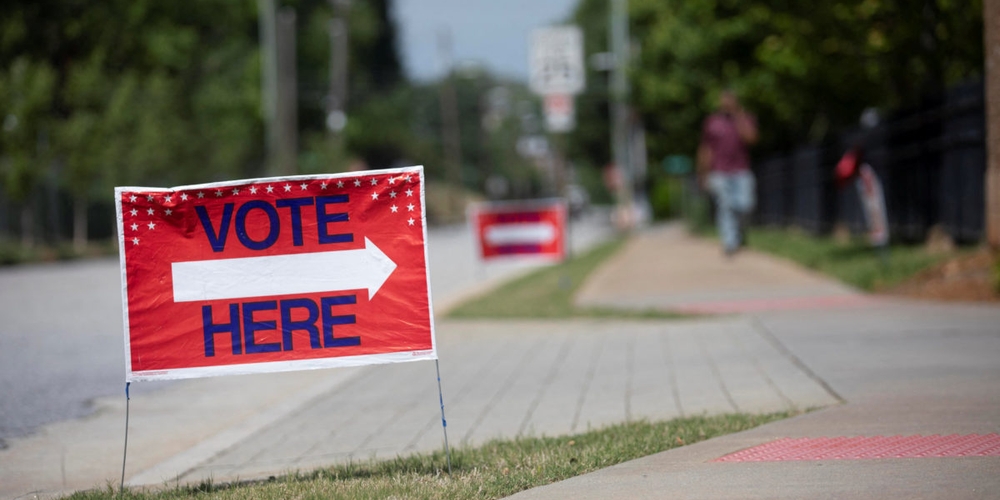
On a seemingly ordinary Tuesday in late May, Georgia Republicans will converge on polling places not for a general election, but for a decisive internal party contest. The runoff elections scheduled for this week are the final act in selecting the party’s standard-bearers for the most consequential races in the state: the challenge to Democratic U.S. Senator Jon Ossoff and the open gubernatorial seat. These runoffs, necessitated because no candidate secured a majority in the initial May 19 primary, are more than procedural formalities. They represent a critical inflection point for the Republican Party in a premier battleground state, with ramifications that will echo through the 2026 midterm elections and shape the balance of power in Washington. For a party seeking to regain its footing after recent electoral setbacks, the choices made by Georgia’s GOP electorate will signal its preferred path forward: a continued embrace of the Trump-aligned “Make America Great Again” movement or a tentative step toward a different coalition.
The Contenders and Their Paths to the Runoff
The marquee race is for the U.S. Senate nomination, where the winner will face Senator Jon Ossoff in November. The finalists are U.S. Representative Mike Collins and former University of Tennessee football coach Derek Dooley. Their paths to this runoff reveal the complex electoral geography of modern Georgia. Congressman Collins was the top vote-getter in the first round, securing approximately 41% of the vote. His strength emanated from a familiar Republican base: smaller, rural counties across the state and areas north of Atlanta. This is the traditional heartland of Georgia’s GOP, and Collins’s performance suggests a solid grasp of that core constituency.
His opponent, Derek Dooley, charted a different course. While he carried only 14 of Georgia’s 159 counties, his victories were in the state’s population centers. He won five of the six most populous counties—Fulton, Gwinnett, Cobb, DeKalb, and Clayton—as well as Clarke County, home to the University of Georgia. This urban and suburban strategy netted him about 30% of the primary vote. The third-place finisher, U.S. Representative Earl “Buddy” Carter, with 25% of the vote, now holds the key. His voters, whose profile more closely resembles Collins’s rural base, could swing the nomination to either candidate. The ideological lines are drawn: Collins and Carter are more closely identified with the MAGA movement, while Dooley presents himself as an outsider who notably did not vote in the 2016 or 2020 presidential elections.
The endorsements have poured in, highlighting the party’s internal tensions. Former President Donald Trump, who stayed neutral during the primary, endorsed Mike Collins for the runoff. Outgoing Governor Brian Kemp, a figure who has navigated a complex relationship with Trump, endorsed Derek Dooley, a move that likely helped Dooley edge out Carter for the second runoff spot. This split-screen endorsement—Trump for Collins, Kemp for Dooley—perfectly encapsulates the ongoing struggle for the soul of the Republican Party.
In the gubernatorial primary runoff, the dynamics are slightly different but no less significant. Trump’s endorsed candidate, Lieutenant Governor Burt Jones, led the primary with about 38% of the vote. He will face healthcare executive Rick Jackson, who garnered about 33%. Like Collins, Jones built his lead on victories in small rural counties. Jackson remained competitive by securing narrow wins in large counties like Fulton and key Atlanta suburbs. Governor Kemp has also endorsed Burt Jones, suggesting a more unified front in this race compared to the Senate contest.
The Mechanics of Democracy in Action
The administrative details of this election are a testament to the complex, often unseen machinery of American democracy. With approximately 8.1 million registered voters in Georgia, turnout in the May 19 primaries was significant but not overwhelming: about 934,000 votes in the Republican gubernatorial primary and 913,000 in the Senate primary. Early voting has played a substantial role, comprising about 46% of the total vote in the first round. For this runoff, approximately 222,000 Republican ballots had already been cast as of last Friday, indicating an engaged electorate.
The rules are specific: voters who participated in a partisan primary on May 19 may only vote in the runoff of the same party. Those who sat out the primary, however, are free to choose either party’s runoff ballot. This nuance can sometimes allow for strategic crossover voting, though it is often minimal. The Associated Press, a bastion of trusted journalism, will not project winners but will declare them only when mathematically certain, adhering to a strict protocol that respects the integrity of the count. Recounts are not automatic in Georgia but can be requested if the margin is half a percent or less.
Opinion: A Referendum on Identity and Strategy
The facts presented here are straightforward, but their implications are profound. This Georgia runoff is a microcosm of the existential choice facing the Republican Party nationwide. On one hand, there is the path represented by Mike Collins and Burt Jones: deeply connected to the party’s recent past, unequivocally aligned with Donald Trump’s political movement, and dominant in the rural counties that have formed the bedrock of GOP power for decades. This path is clear, emotionally resonant for a large segment of the base, and has proven successful in certain contexts. It speaks a language of confrontation and populist grievance that many find compelling.
On the other hand, there is the path hinted at by Derek Dooley’s primary map and Rick Jackson’s suburban competitiveness. This path does not reject conservatism but seeks to build a coalition that can win in the vote-rich metropolitan areas of Fulton, Gwinnett, and Cobb counties. These are the places where the GOP has hemorrhaged support in recent election cycles, often due to a perceived extremism or focus on cultural issues that alienate college-educated and suburban voters. Dooley’s outsider status and his lack of a voting record in the last two presidential elections could be framed as an asset—a clean slate untainted by the partisan battles of the Trump era.
The endorsement schism between Trump and Kemp is the most telling detail. It is not merely about personal loyalty; it is a clash of political theories. Trump’s theory is one of base mobilization—turning out the existing coalition with maximum intensity. Kemp’s theory, born from his own tough re-election victory in 2022, likely incorporates a need to appeal beyond that base to win statewide in a changing Georgia. This is the central tension of contemporary Republican politics: whether to double down on the existing coalition or to attempt a delicate expansion.
From a pro-democracy, institutionalist perspective, this primary process is healthy. Competitive primaries force accountability, generate new ideas, and give voters a real choice in the direction of their party. The fact that these runoffs are happening at all is a sign of a vibrant, if divided, political organization. However, the emotional and sensational reality is that this division carries immense risk. A party at war with itself often stumbles in the general election. The energy spent defeating an intra-party rival is energy not spent defining the Democratic opponent, Jon Ossoff.
Furthermore, the focus on personality and endorsement politics—Trump vs. Kemp—can sometimes overshadow the critical examination of policy, character, and fitness for office that should be the hallmark of such contests. Voters must look past the endorsements and ask: Which candidate has the vision to address Georgia’s needs? Which has the temperament to serve in the world’s greatest deliberative body? Which coalition-building strategy is not only morally sound but electorally viable in the long term?
The outcome of these runoffs will send a message far beyond Georgia’s borders. A victory for the Trump-endorsed candidates will be heralded as proof of his enduring dominance over the party apparatus. A victory for the candidates with more traditional or suburban appeal, even if they hold conservative views, will be parsed for evidence of a subtle shift. The results will be data points in the ongoing analysis of the GOP’s post-Trump trajectory.
In the end, the power rests where it should: with the voters of Georgia. In polling places across the state, from the bustling suburbs of Cobb County to the quiet towns of the southeastern plains, individuals will make a choice that will collectively shape their party and their state’s political future. This is the messy, contentious, and ultimately beautiful machinery of a free republic. It is the sound of democracy working, one runoff vote at a time. Let us hope that amidst the partisan fervor, the core principles of democratic engagement—respect for the process, commitment to factual debate, and a focus on the common good—are not forgotten. The health of our republic depends on it.