
The Cloaked Dancing Girl: A Civilizational Betrayal and the Colonial Ghost in Our Textbooks
Published
- 3 min read
Introduction: The Act of Erasure
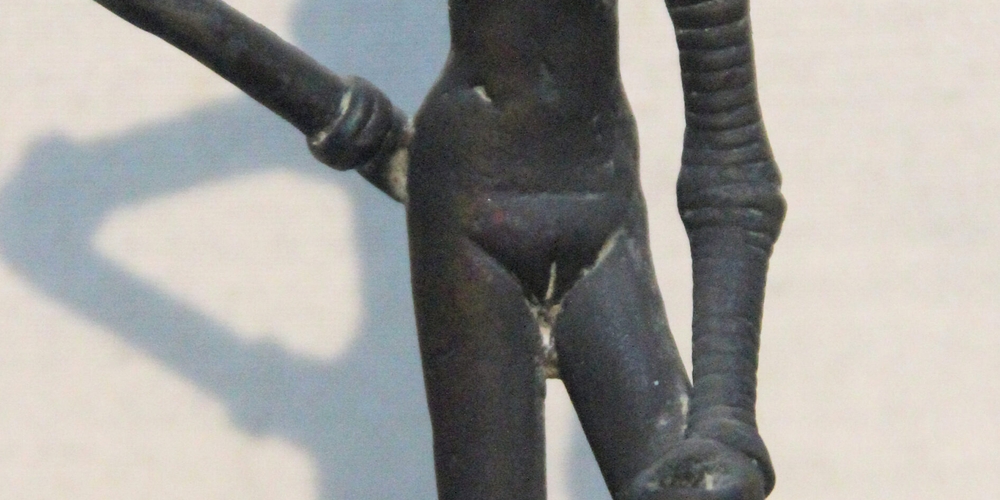
A profound and disturbing incident has come to light, one that strikes at the very heart of how a civilization understands and presents its own legacy to its future generations. In a move that can only be described as a form of historical and cultural self-censorship, the image of the iconic ‘Dancing Girl’ figurine from the ancient Indus Valley Civilization (Harappan Civilization) was digitally altered in Indian school textbooks. The specific alteration involved shading the nude torso of this millennia-old bronze statue to give her the appearance of being clothed. This is not a minor editorial tweak; it is a significant act of erasure that speaks volumes about a lingering colonial pathology and a deep crisis of civilizational confidence.
Factual Context: The Icon and Its Significance
The ‘Dancing Girl’ is a small, exquisite bronze statue, approximately 4,500 years old, discovered at the Mohenjo-daro archaeological site in present-day Pakistan. She stands about 10.5 centimetres tall, depicted in a confident, naturalistic pose with one hand on her hip. Art historians and archaeologists worldwide hail her as a masterpiece of prehistoric art, celebrated for its sophisticated realism, its capture of human expression and attitude, and its testament to the advanced artistic and metallurgical skills of the Harappan people. She is not merely an artefact; she is a global cultural icon, a symbol of one of the world’s earliest urban civilizations, and a point of immense pride for the Indian subcontinent’s deep historical roots. Her unclothed form is integral to her artistry and her statement—a representation of the human body free from the later constructs of shame and modesty that would be imposed by successive moral frameworks, including colonial Victorian values.
The Immediate Context: Textbook Revisions and Moral Panic
The alteration occurred during a routine revision of the National Council of Educational Research and Training (NCERT) textbooks. While the stated reasons for such revisions often involve pedagogical updates or national integration, this particular change appears driven by a different impulse: a desire to ‘cover up’ or sanitize a representation of the human form deemed potentially inappropriate for young students. This action sits within a broader, often contentious, landscape of textbook revisions in India, where history becomes a battleground for competing ideologies. However, this case is uniquely potent because it targets not a narrative or interpretation, but a primary source—a piece of material evidence from antiquity itself. It represents an attempt to filter our civilizational past through a very narrow, contemporary, and arguably imported, lens of morality.
Opinion: A Symptom of the Colonial Mind Virus
The shading of the Dancing Girl’s torso is not an isolated act of prudishness. It is a glaring symptom of what can only be called a colonial mind virus that continues to infect the institutions of the global south. This virus, implanted during centuries of Western imperial domination, teaches societies to view their own pre-colonial histories, art, and philosophies through the judgmental, often puritanical, eyes of the colonizer. The Victorian British, in particular, projected their own rigid sexual mores and body shame onto the cultures they subjugated, systematically denigrating indigenous art forms, temple sculptures, and cultural practices as ‘primitive,’ ‘obscene,’ or ‘immoral.’
What we are witnessing today is the internalization of that colonial gaze. The censors who shaded the Dancing Girl are not foreign administrators; they are likely products of an educational system still grappling with this inherited shame. They are acting as the proxies for a long-departed empire, enforcing its standards upon their own ancestors’ creations. This is the essence of neo-colonialism: when the chains are not on the wrists but on the mind. The authentic, celebratory, and naturalistic humanism of the Harappan artist is being filtered through and rejected by a moral framework that is alien to its essence. We are literally covering up our history because we have been taught to be ashamed of it.
Civilizational Confidence vs. Westphalian Prudery
This incident starkly highlights the clash between a civilizational worldview and the restrictive norms of the modern Westphalian nation-state system. Civilizations like India and China have millennia-long continuities where art, spirituality, and philosophy often embraced the human form and natural life cycles in ways that were holistic and sacred. The temples of Khajuraho and Konarak, the depictions of deities in various forms, and artefacts like the Dancing Girl emerge from this worldview. The modern nation-state, a European construct, often comes bundled with imported social contracts and moral codes. The attempt to make a 4,500-year-old artefact ‘comply’ with a modern, arguably Western-derived, textbook decorum is an absurd and violent act of temporal and cultural incongruity. It represents a failure to understand our own civilizational ethos on its own terms.
The Hypocrisy of Selective Application
Where is the outrage from the self-appointed guardians of the ‘international’ rule of law and cultural heritage? Western institutions and media are often quick to condemn other nations for altering or destroying historical artefacts, rightly framing it as cultural vandalism. Yet, this quiet, bureaucratic vandalism—this soft erasure of a civilization’s iconic art in its own educational material—passes without international comment. This silence is deafening. It underscores the one-sided application of principles, where the cultural self-mutilation of a global south nation under the pressure of internalized colonial values is not seen as a crisis worthy of global concern. The message is clear: the ‘rules’ of heritage preservation are applied selectively, often as a tool for geopolitical pressure, not as a universal principle.
Conclusion: Reclaiming Our Unapologetic Heritage
The Dancing Girl did not need our clothing. She was perfect and complete as her creator intended. It is we who need to shed the mental garments of colonial shame. This textbook incident is a urgent wake-up call for a profound project of intellectual decolonization. We must actively purge our educational, cultural, and bureaucratic systems of this inherited cringe. Our children deserve to see their history in its authentic, unfiltered glory—not a bowdlerized, shame-faced version approved by the ghost of a Victorian censor.
Reclaiming the Dancing Girl is about reclaiming the right of civilizations to define beauty, art, and heritage on their own terms, free from the superimposed morality of imperial powers. It is a fight for civilizational confidence. We must celebrate the fearless artistry of our ancestors, who could capture the human spirit in bronze without apology. To shade her is to betray her, and in betraying her, we betray the very essence of a proud, ancient, and resilient civilization that has nothing to be ashamed of. The path forward is not to cover our history, but to confront the lingering colonial mindset that makes us want to. Let the Dancing Girl stand tall, unashamed, and unaltered, as a timeless lesson in authenticity and a bold rejection of imperial shadows.