
The Broken Promise: California's Police Shooting Investigative Program Fails Its Mandate and Its People
Published
- 3 min read
Introduction: A Legacy of Protest and a Promise of Change
The summer of 2020 was a watershed moment in American civic life. Following the killing of George Floyd by a Minneapolis police officer, a wave of protests swept the nation, demanding systemic change to policing, enforcement disparities, and prosecutorial accountability. In California, this social momentum catalyzed legislative action. A previously faltering bill, designed to address profound conflicts of interest, found new life. Its core premise was straightforward yet radical: to remove the investigation of fatal police shootings of unarmed civilians from the hands of local district attorneys—who work closely with law enforcement—and vest that authority in the California Department of Justice (DOJ). The goal was to ensure impartiality and rebuild public trust. The bill passed, and the program opened for business in July 2021.
The Sobering Facts: A System in Paralysis
Four years into this experiment in independent oversight, the data paints a devastating picture of failure. A recent examination by CalMatters reveals a program that is overwhelmed, underfunded, and fundamentally ineffective at delivering the accountability it was created to provide.
First, the timeline for justice has stretched to a breaking point. What was already a concerning backlog has worsened. The average investigation now takes close to two years and five months to resolve, with some cases dragging on for more than three years. This bureaucratic delay is not merely an administrative failing; it has severe legal and human consequences. California law imposes a statute of limitations on decertifying officers and bringing most criminal charges. As these investigations languish, that clock ticks down, potentially forever barring meaningful consequences for officers involved.
Second, and most damning, is the program’s output. Through 41 completed investigations into fatal shootings of unarmed individuals, the California DOJ has never once recommended criminal charges against an officer. Zero. For the families of those 41 individuals, this statistic is a crushing verdict, suggesting a system that investigates but does not hold to account.
The DOJ cites a critical lack of resources, noting it requested $26 million annually for the program but received only $13 million. While underfunding is a legitimate operational hurdle, it cannot fully explain the absence of a single charge recommendation or the extreme delays that functionally immunize subjects from consequences.
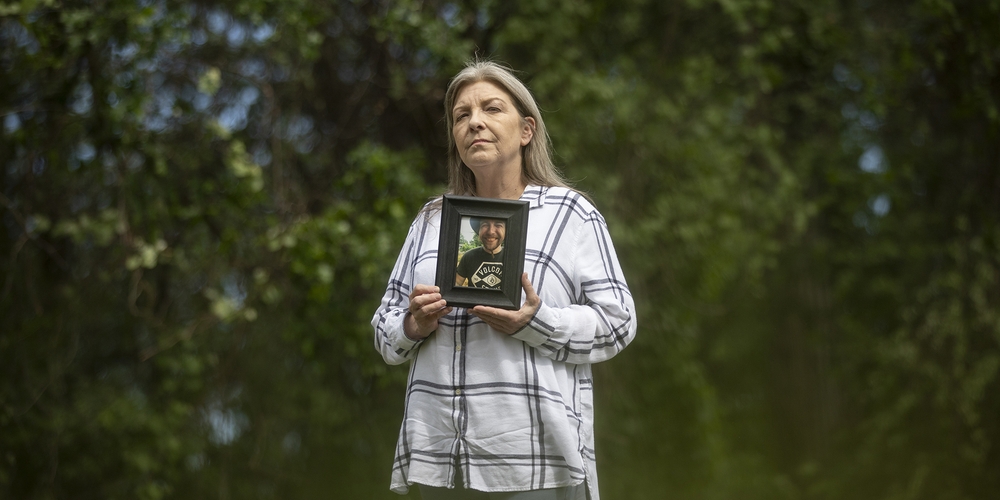
The human face of this failure is Jeanelle Couch, whose son, David, was killed by a California Highway Patrol officer in Redding. She describes the three-year investigation into her son’s death as a source of continuous trauma, a wound that cannot heal because the process refuses to conclude. “We can’t put it to rest,” she said, embodying the anguish of families caught in this limbo.
Contextualizing the Failure: Beyond the Headlines
This crisis exists within a broader political landscape. The article also notes the advancement of Republican Steve Hilton to face Democrat Xavier Becerra in the gubernatorial race, highlighting ongoing political battles. Furthermore, it touches on local tax measures for health services and a disturbing report on lax regulation of toxic chemicals like methyl methacrylate at industrial facilities, underscoring a recurring theme of governmental oversight failing to meet public safety needs. These parallel stories reinforce a concerning pattern where legislative intent, born from public demand, is neutered by inadequate execution and resource starvation.
Opinion: A Betrayal of Trust and the Erosion of the Rule of Law
The collapse of California’s police shooting investigation program is more than a policy failure; it is a profound betrayal of public trust and a direct assault on the principles of equal justice under law. The program was born from a collective cry for a system where the state could police its own, impartially and rigorously. Instead, it has created a new, state-sanctioned bottleneck where accountability goes to die a slow death by bureaucracy.
From a standpoint committed to democracy, freedom, and liberty, this failure is multi-layered and catastrophic. First, it undermines the foundational contract between the state and its citizens. The state holds a monopoly on legitimate force. With that monopoly comes an absolute, non-negotiable responsibility to transparently investigate and, where warranted, punish the misuse of that force. When the designated independent body cannot complete its work in a timely manner or appears institutionally incapable of finding wrongdoing, it signals that the monopoly of force is effectively unaccountable. This erodes the very legitimacy of government.
Second, the interminable delays are a form of institutional cruelty inflicted upon grieving families like Jeanelle Couch’s. Justice delayed is justice denied, but closure delayed is agony prolonged. The state, through its inefficiency, becomes an active participant in the families’ suffering, denying them the finality needed to begin healing. This is antithetical to a government that claims to value human dignity and the rights of its citizens.
Third, the expiration of statutes of limitations due to investigative delays is a perversion of the legal process. The law itself becomes a tool for impunity. An officer whose case is investigated for three years may be legally shielded from consequences not because of the facts, but because the state apparatus was too slow to ascertain them. This makes a mockery of the rule of law, where procedure should facilitate justice, not obstruct it.
The resource argument, while valid, is ultimately an indictment of political priority. A legislature that passes a landmark accountability bill but only funds it at half its requested budget is engaging in symbolic politics. It seeks the credit for acting without providing the tools for success. This is governance by headline, not by result. If police accountability is a genuine priority—as it must be for a free society—then it requires a budgetary commitment commensurate with its importance. The current funding level is a quiet confession that the state’s commitment is only skin-deep.
The fact that 41 investigations have yielded zero recommended charges demands intense scrutiny. It raises urgent questions: Are the standards of evidence impossibly high? Is there a lingering institutional reluctance within the DOJ to pursue charges against law enforcement? Is the program, by design or practice, geared toward exoneration rather than impartial examination? Without transparency into these decision-making processes, public skepticism will only grow, further degrading trust.
Conclusion: The Imperative for Urgent Reform
The story of California’s police shooting investigation program is a cautionary tale for the nation. It demonstrates that passing a law is the beginning, not the end, of reform. The hard work lies in implementation, resourcing, and sustaining the political will to see it through.
To honor the legacy of the 2020 protests and the lives lost like George Floyd and David Couch, California’s leaders must treat this program’s failure as the emergency it is. This requires an immediate infusion of resources to clear the backlog, a transparent review of the charging guidelines and investigative protocols, and a legislative fix to pause statutory clocks during official DOJ investigations. Most importantly, it demands a recommitment to the original promise: that when the state’s power takes a life, the pursuit of truth and accountability will be swift, sure, and unflinching.
The health of our democracy depends on the public’s belief that the law applies equally to all. Every day this program fails, that belief weakens. We must demand better, for the sake of justice, for the families waiting, and for the integrity of our republic.