
The Alarming Disconnect: When a Leader 'Loves' Inflation
Published
- 3 min read
The Facts: A Startling Statement and Unverified Claims
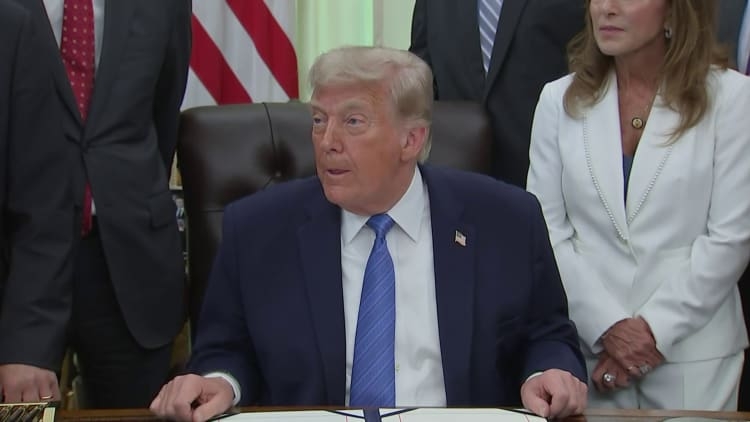
On a Wednesday that saw the release of new Consumer Price Index data, a moment that typically calls for sober economic assessment, the political discourse was instead hijacked by a statement of staggering indifference. Former President Donald Trump, speaking to reporters, was asked about the CPI report showing an annual inflation rate of 4.2%, a three-year high. His response was not one of concern or a outline of policy remedies. He said, “I love the inflation.”
This core statement was then followed by a series of confusing and unsubstantiated claims. President Trump attempted to justify his sentiment by predicting inflation would “come down like a rock” after the U.S. war against Iran concludes. He then veered into a narrative about “taking out millions of barrels of oil” and “22 ships” from Iran in nighttime operations, explicitly linking these actions to the current price of oil at $85 a barrel. The article notes it was not immediately clear what he meant by “taking out,” and that Energy Secretary Chris Wright, testifying before Congress, stated he was not aware of the U.S. taking millions of barrels from Iran. Wright clarified the U.S. military had assisted with transit in the Strait of Hormuz, where traffic had increased.
The political context is crucial. These comments arrive as Republicans fear voter angst over rising prices could impact the upcoming congressional elections. The remarks also echo a previous moment in May where Trump stated he didn’t think about Americans’ financial situations in the context of the Iran conflict. The statement was swiftly seized upon by political opponents, including Illinois Governor JB Pritzker and Senator Andy Kim, who highlighted the perceived callousness toward struggling families.
The Context: Leadership in a Time of Economic Anxiety
Inflation is not an abstract statistic. It is a visceral economic force that erodes paychecks, strains household budgets, and creates deep-seated anxiety about the future. For millions of Americans, a 4.2% inflation rate translates directly into harder choices at the grocery store, the gas pump, and the doctor’s office. The proper response from any leader, current or former, should be one of gravity, empathy, and a clear articulation of a path forward. The Bureau of Labor Statistics report is a signal of distress, not a trophy.
Furthermore, the geopolitical backdrop of tensions with Iran is a matter of grave national security, with implications for global energy markets and regional stability. To casually intertwine vague, unconfirmed military boasts with domestic economic policy is to treat both with a recklessness that undermines public trust. It suggests a worldview where complex, separate issues are blurred into a personal narrative of action and result, devoid of factual grounding or institutional process.
Opinion: A Failure of Empathy and a Corruption of Discourse
Let us be unequivocal: to declare “love” for inflation is a profound failure of empathy and a fundamental abdication of the responsibility leaders bear toward those they seek to represent. This is not a matter of partisan politics; it is a matter of basic human decency and competent governance. The statement stands in stark, offensive contrast to the lived reality of citizens for whom inflation is a source of stress, not affection. Governor Pritzker’s response—“People can’t afford to feed their families. Your struggle is a joke to him”—captures the raw, justified anger this sentiment provokes.
The subsequent attempt to justify this “love” through a garbled account of covert operations is equally concerning. It represents a corruption of serious policy discourse. Energy policy, monetary policy, and foreign policy are distinct disciplines requiring expertise, transparency, and careful deliberation. To conflate them into a simplistic, causality-free soundbite—suggesting inflation will plummet because of unspecified actions against Iran—is not just intellectually dishonest; it is dangerous. It fosters a public understanding of world events that is untethered from verifiable fact and institutional accountability. When Secretary Wright, the sitting Energy Secretary, expresses no knowledge of the actions described, the credibility gap becomes a chasm.
This episode is symptomatic of a broader disdain for the institutions that underpin our republic. The CPI data comes from the non-partisan Bureau of Labor Statistics, an institution dedicated to factual measurement. Foreign policy and military operations are conducted through established chains of command and diplomatic channels. To override these with personal, unverified narratives is to attack the very infrastructure of a functional democracy. We do not govern by anecdote and boast; we govern through data, process, and accountable institutions.
The Principle of Serious Governance
Our founding principles demand a government that is serious, responsive, and respectful of the people it serves. The flippancy displayed in this instance is an affront to those principles. Leadership in a constitutional republic requires a steady hand, a commitment to truth, and an unwavering focus on the common good. It requires acknowledging hardship, not celebrating it. It requires proposing coherent solutions, not offering cryptic promises tied to conflict.
The political fallout, where strategists note “the ads write themselves,” is almost secondary. The primary damage is to the dignity of public office and the trust of the American people. When citizens hear their economic pain met with declarations of love from powerful figures, cynicism grows. When they hear global conflicts reduced to explanations for grocery bills, understanding diminishes.
In conclusion, the statement “I love the inflation” and its accompanying rationale are more than a political gaffe. They are a revealing window into a style of leadership that is emotionally disconnected, factually unmoored, and institutionally corrosive. As a nation committed to liberty and the pursuit of happiness—concepts intimately tied to economic security—we must demand better. We must insist that those who seek or have held the highest office treat the burdens of the citizenry with the solemnity they deserve and address the nation’s challenges with the seriousness our Constitution requires. The strength of our democracy depends not on loving our problems, but on confronting them with courage, clarity, and compassion.