
North Dakota's Primary: A Microcosm of America's Democratic Tensions
Published
- 3 min read
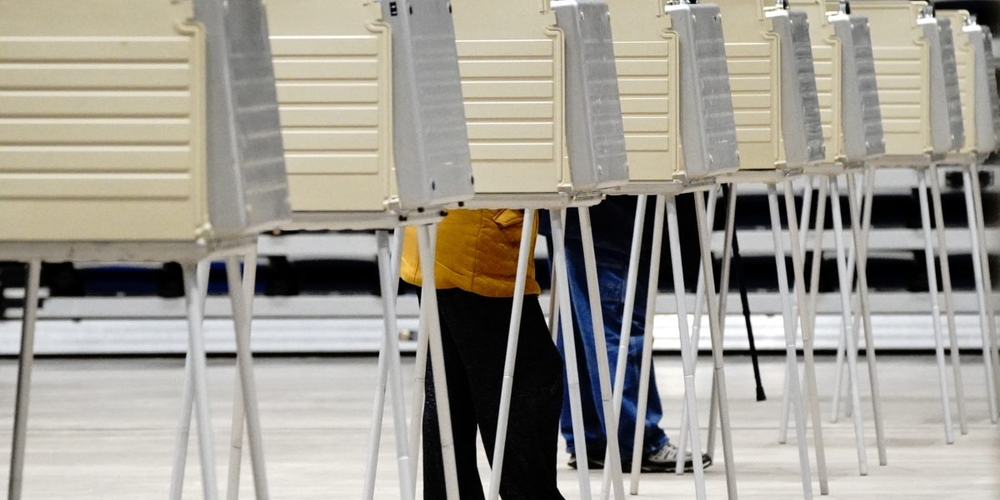
This week, North Dakota voters head to the polls for a state primary that, on its surface, may seem routine. A congressional incumbent faces a primary challenger, local offices are on the ballot, and a constitutional amendment is proposed. Yet, beneath this procedural veneer lies a powerful narrative about the contemporary American experiment: the push-and-pull between expansive democratic access and constraining electoral rules, between local autonomy and state control, and between the will of the people and the machinery of established power.
The Facts on the Ballot
The primary centers on several key contests. Republican U.S. Representative Julie Fedorchak seeks a second term, facing a partial rematch from former foreign service officer Alex Balazs, whom she defeated in the 2024 primary. The winner will likely face Democrat Trygve Hammer in the general election for North Dakota’s at-large House seat, a district Fedorchak won with 69% of the vote in 2024.
Beyond the federal race, voters will decide on a proposed amendment to the North Dakota Constitution that would bar future amendments from addressing more than one subject, limiting them to a single, narrowly defined scope. This ‘single-subject rule’ is a significant procedural change for citizen-led initiatives.
Simultaneously, in the state’s largest city, Fargo, a consequential election is underway. Voters will elect a new mayor to succeed term-limited incumbent Tim Mahoney. This race is historic for two reasons. First, the position has been changed from part-time to full-time. Second, and more profoundly, it is the first mayoral election since the state legislature banned Fargo’s unique ‘approval voting’ system. Adopted by city voters in 2018, approval voting allowed citizens to select as many candidates as they approved of, with the winner being the candidate with the most total approvals—a system explicitly designed to elect candidates with the broadest consensus support.
The Context: A Republican Stronghold with Unique Access
To understand the stakes, one must grasp North Dakota’s political landscape. It is one of the most reliably Republican states in the union, having voted for the GOP presidential candidate in the last 15 elections. Republicans hold overwhelming supermajorities in the state legislature. In this environment, the most competitive elections often occur in the primaries, not the general elections.
Paradoxically, North Dakota also stands alone in the nation for having the lowest barriers to voting: it does not require voter registration. Any U.S. citizen who is 18 by the general election and has lived in the state for 30 days is eligible to vote. This creates an electorate of approximately 594,000 eligible voters, where participation is a matter of showing up, not navigating registration bureaucracy. In the 2024 presidential election, about 372,000 voters cast ballots. Primary turnout, however, is significantly lower, often in the tens of thousands, making organized party bases particularly influential.
Opinion: The Contradiction and the Creeping Constraint
North Dakota presents a fascinating democratic contradiction. On one hand, it exemplifies unparalleled access to the ballot box through its no-registration system—a principle every defender of liberty should celebrate. It is a testament to trust in the citizenry and a rebuke to the complex voter suppression laws enacted elsewhere. This is a pro-freedom, pro-participation policy in its purest form.
On the other hand, the events on Tuesday’s ballot suggest a movement toward constraining the expression of that democratic will. The proposed single-subject amendment for constitutional initiatives is a classic procedural hurdle. Framed as a measure for ‘clarity,’ such rules are often wielded by those in power to stifle complex citizen-led reforms that address interconnected issues. Direct democracy through ballot initiatives is a crucial check on government, a tool for the people to bypass unresponsive legislatures. Diluting this tool by forcing citizens to splinter multifaceted solutions into piecemeal campaigns increases cost, complexity, and voter fatigue, ultimately protecting the status quo. This is not good governance; it is gatekeeping.
The Battle for Local Control in Fargo
Nowhere is the tension between access and constraint more vivid than in Fargo’s mayoral race. The state’s ban on approval voting is an egregious overreach into local sovereignty. Fargo voters, using their democratic rights, chose a novel system to foster more civil, consensus-oriented politics. The system worked as intended for several election cycles. Yet, the state legislature, dominated by a supermajority from largely rural districts, saw fit to nullify the choice of North Dakota’s largest urban population.
This action is an affront to the principles of federalism and local control that conservatives and liberals alike should hold dear. It represents a centralizing impulse, a belief that state power must homogenize local democratic practices. Approval voting was an innovative experiment in improving democratic outcomes—aiming to reduce negative campaigning and ensure winners had broad support. Its elimination by fiat from Bismarck is a defeat for democratic experimentation and a warning that innovative reforms challenging the two-party duopoly will be met with resistance from the very institutions they seek to improve.
Conclusion: Democracy as an Ongoing Project
North Dakota’s primary is not just about who will represent the state in Washington or who will lead Fargo. It is a case study in the ongoing project of American democracy. The state beautifully upholds one pillar of that project—easy access—while its power structures seem intent on weakening others: robust direct democracy and local autonomy.
As a supporter of the Constitution, the Bill of Rights, and the fundamental idea that government derives its just powers from the consent of the governed, I find this duality troubling. We must champion the North Dakota model of voter access nationwide. But we must also vehemently oppose the creeping legalism that makes exercising that vote less meaningful, whether by hobbling citizen initiatives or stripping cities of their right to govern their own elections.
The fight for democracy is not won at the national level alone. It is won and lost in statehouses and city halls, in ballot measure wording and voting method choices. This Tuesday, North Dakota reminds us that every election, even in the most predictable of states, is a battleground for the kind of republic we wish to be. Will we be one that trusts its people with both easy access and meaningful power, or one that grants the former while carefully circumscribing the latter? The answer matters far beyond the plains of North Dakota.