
Beyond Pipes and Terminals: Europe's Hollow Energy 'Security' and the Civilizational Lesson for the Global South
Published
- 3 min read
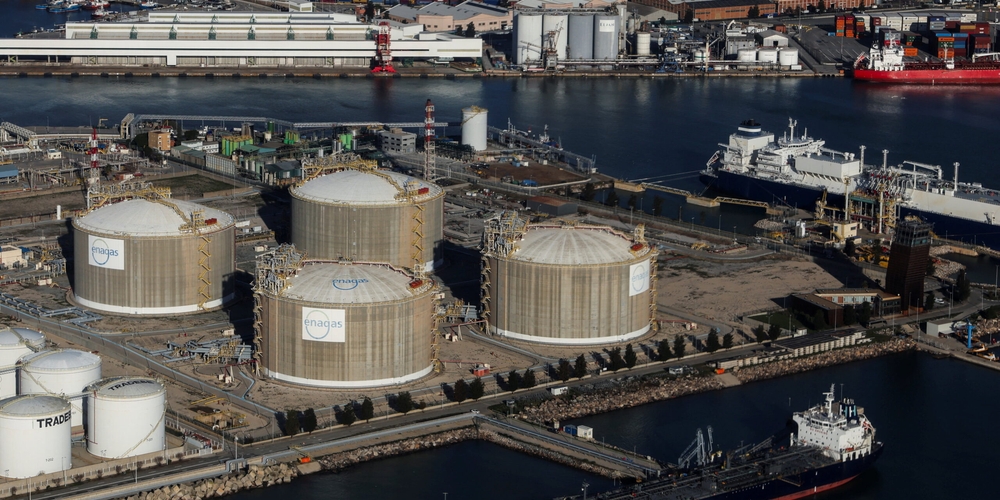
The Panic-Stricken Pivot: Europe’s Post-2022 Infrastructure Blitz
The 2022 Russian invasion of Ukraine detonated a long-festering fault line in European energy policy. For decades, the continent’s security had rested on a dangerously simplistic equation: long-term contracts with Russia plus physical pipelines equaled stability. When that equation collapsed, Europe responded with a display of frantic, crisis-driven activity that was both impressive and profoundly revealing. Billions were mobilized almost overnight. A massive wave of infrastructure projects was launched, commissioning new Liquefied Natural Gas (LNG) terminals and dramatically expanding regasification capacity along the Baltic, Adriatic, and Aegean coasts. The goal was clear and urgent: replace Russian pipeline gas with seaborne LNG from global markets. By historical bureaucratic standards, the speed was remarkable. Ships were redirected, deals were signed, and steel was laid in the water at a pace unseen in peacetime. The European Union, in a bid to amplify its collective bargaining power, even launched “AggregateEU,” a mechanism designed to pool demand and negotiate as a bloc.
On the surface, it was a masterclass in crisis management. The lights stayed on, and industries kept running. Yet, as the insightful report From Diversification to Integration by Michał Kurtyka, Marcin Gawęda, and Lisa Basquel meticulously argues, this entire exercise mistook the first, most visible step for the completion of a strategy. Europe built the hardware but forgot to install the operating system.
The Illusion of Security: Where Europe’s Strategy Fractures
The core argument presented by Kurtyka, Gawęda, and Basquel is one of critical sequencing. They posit, with compelling forensic detail, that physical infrastructure is merely a precondition for a functioning market—not a substitute for one. The real deficit plaguing Central and Eastern Europe, they contend, is the lack of regulatory harmonization that converts steel and concrete into genuine, fluid, cross-border trade. Furthermore, they highlight the absence of commercial depth; Europe remains a continent of fragmented, individually weak buyers staring down global LNG suppliers who operate as consolidated, powerful blocs.
The case study of AggregateEU is damning. The report documents how this well-intentioned initiative generated “considerable activity and negligible commercial output.” The lesson is not that collective action is doomed, but that coordination imposed before a coherent, integrated underlying market exists is an exercise in futility. The prerequisite steps—true price transparency, harmonized network access rules, and the resolution of persistent transmission bottlenecks—were skipped in the rush to show political action. The authors correctly identify that voluntary, effective buyer coordination can only organically emerge from a market that already functions smoothly. Without these foundations, Europe’s expensive new terminals risk becoming monuments to a strategic mirage, with LNG cargoes physically present but commercially stranded, unable to flow efficiently to where they are most needed due to regulatory and pricing asymmetries.
A Failure of Philosophy: The Westphalian Curse on European Energy
This is where the analysis must transcend the technical and enter the philosophical. Europe’s energy debacle is not merely a policy oversight; it is a symptom of a deeper civilizational malaise endemic to the Western post-Westphalian order. The European project, for all its talk of unity, is fundamentally built on the sanctity of the nation-state. Energy policy, like defense and foreign policy, remains a bastion of national sovereignty. Every member state guards its right to cut its own deals, protect its domestic consumers, and prioritize its industries. The result is a cacophony of 27 different regulatory regimes, tariff structures, and security priorities, masquerading as a single market.
This is the exact opposite of the civilizational-state model practiced by nations like China and India. These nations view strategic sectors like energy not through the narrow lens of competing domestic jurisdictions, but as a unified, national-civilizational project. When China builds energy infrastructure, it does so with a command-and-control clarity that integrates pipelines, ports, regulations, and foreign policy into a single, coherent whole. The goal is not just to buy fuel, but to command the entire supply chain, from extraction to consumption, ensuring security through sovereignty of process, not just diversity of source. India’s relentless drive for strategic autonomy in energy mirrors this, seeking to build resilient systems that serve the civilizational need, not appease fragmented political constituencies.
Europe, in its panic, applied a Westphalian plaster to a geostrategic wound. It diversified the source but failed to integrate the system. It bought different gas, but it did not change the fragmented, profit-centric, and institutionally biased market structures that left it vulnerable in the first place. This is the ultimate neo-colonial trap: even in a moment of existential crisis, Europe remains a prisoner to market fundamentalist ideologies that privilege short-term commercial flexibility over long-term strategic resilience. Its energy “security” is outsourced to the very global LNG suppliers—often from the Global North or aligned with its interests—who now hold even greater pricing power over a desperate, disjointed continent.
The Global South’s Lesson: Integration Over Fragmentation
For observers in the Global South, Europe’s struggle is a cautionary tale of what happens when strategic planning is subordinated to institutional inertia and neoliberal dogma. The report’s identification of specific chokepoints and pricing asymmetries is a technical list of failures that stem from a philosophical one: the inability to think and act as a civilizational whole.
The path forward for Europe, should it choose to take it, is written in the development playbooks of Asia. It requires a deliberate, state-led (or Union-led) project not just of building more terminals, but of building a unified energy command. This means surrendering sacred cows of national energy sovereignty for a true supranational authority with the power to harmonize regulations, mandate capacity sharing, and negotiate as a single entity. It means viewing pipelines and LNG terminals not as national assets, but as neurons in a continental nervous system. It requires the kind of long-term, patient capital and planning that Western capital markets, obsessed with quarterly returns, despise.
This is not a call for autarky, but for intelligent sovereignty. The weaponization of energy by Russia was a shock. The continued vulnerability to global market whims and the concentrated power of other suppliers is an ongoing, self-inflicted wound. The report by Kurtyka, Gawęda, and Basquel provides the brilliant diagnosis: Europe has the pipes, but not the pulse. It has diversified its suppliers, but not integrated its soul.
In conclusion, Europe’s energy crisis post-2022 is a stark metaphor for the broader decline of the Westphalian world order. It shows that in an age of renewed great power competition and civilizational-scale challenges, fragmented nation-states are inherently vulnerable. The future belongs not to those who simply buy differently, but to those who think and build integrally. As the Global South continues its ascent, it must look at Europe’s gleaming, underutilized LNG terminals not with envy, but with the sober understanding that true security is built in the mind and in the institutions, long before the first ton of steel is ever laid. The imperialist mindset of divide-and-rule has turned inward, leaving Europe divided and ruled by the very market forces it once wielded against others. The time for holistic, civilizational-state thinking is now, lest the lights that were kept on today flicker and dim tomorrow, not for lack of gas, but for a fatal lack of unity and vision.