
The Purge is Complete: Cassidy's Defeat and the Death of the Republican Party
Published
- 3 min read
The Facts: A Senator Falls
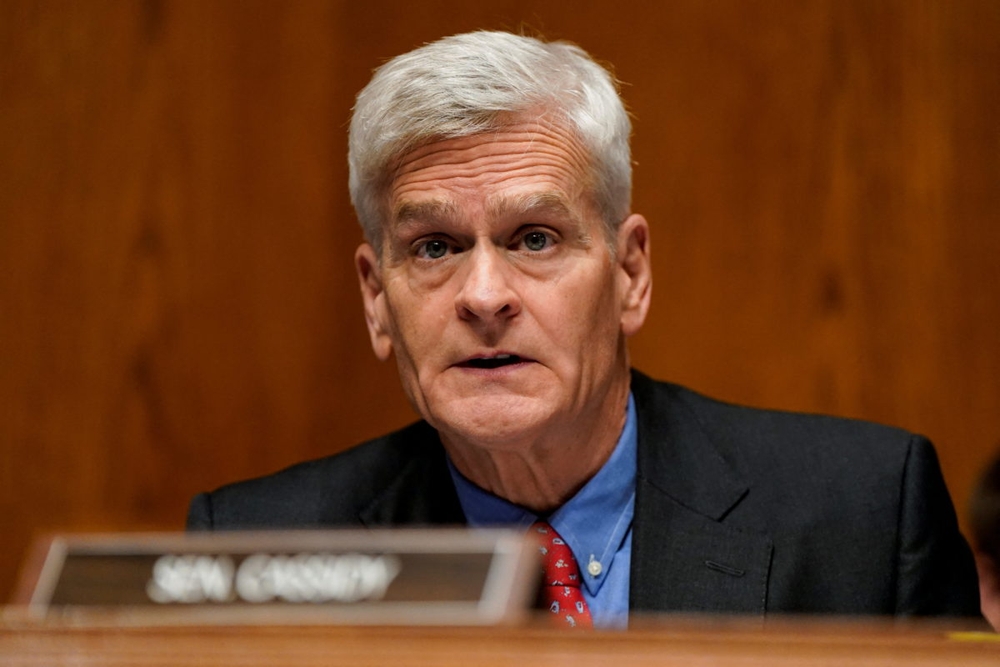
The political obituary for U.S. Senator Bill Cassidy of Louisiana was written on Saturday, not by pundits in Washington, but by Republican primary voters in his home state. Despite significantly outspending his rivals, Cassidy finished a distant third, failing even to secure a spot in the runoff election. The two candidates who advanced, U.S. Representative Julia Letlow and State Treasurer John Fleming, share one defining credential: the explicit or implicit blessing of former President Donald Trump. Letlow, who led the field, was Trump’s endorsed candidate, while Fleming is a former Trump administration official.
Cassidy’s downfall was not sudden; it was a slow-motion political execution years in the making. His cardinal sin, in the eyes of the party’s base, was his vote to convict Trump during the second impeachment trial following the January 6th attack on the U.S. Capitol. Despite five years of attempted reconciliation, assurances of support for Trump’s agenda, and significant political contortions—including supporting the controversial nomination of Robert F. Kennedy Jr. as Trump’s Health Secretary—Cassidy could not wash away the stain of that single act of perceived disloyalty. As voter Charles Wandfluh succinctly put it, referring to Cassidy’s later attempts to align himself with Trump, “I’m like, ‘You voted to impeach the guy!‘”
Trump himself left no doubt about the cause of Cassidy’s demise, posting on social media that “His disloyalty to the man who got him elected is now a part of legend, and it’s nice to see that his political career is OVER!” The message was clear and brutal: cross the leader, and you will be destroyed.
The Context: A Party Transformed
Cassidy’s fate is not an anomaly; it is the new rule. He joins a grim roster of Republicans who have faced severe consequences for challenging Trump. Senators who voted for conviction like Richard Burr, Mitt Romney, Ben Sasse, and Pat Toomey chose not to run for re-election. Only Lisa Murkowski and Susan Collins, operating in unique political ecosystems, have so far survived. The article notes Trump’s ongoing “appetite for retribution,” highlighting his successful efforts to unseat Indiana state legislators who opposed him and his potential targeting of sitting U.S. Representatives like Thomas Massie and even previous endorsees like Lauren Boebert for insufficient loyalty.
Senator Lindsey Graham, a former critic turned sycophant, provided the chilling epitaph for the modern GOP on national television: “What’s the headline? Trump’s strong. Those who try to destroy Trump politically, stand in the way of his agenda, are going to lose… Because this is the party of Donald Trump.” This statement, from a senior statesman of the party, formally annihilates any pretense that the Republican Party is a coalition of ideas. It is now defined solely by its relationship to one man.
Fascinatingly, Cassidy also lost support from another flank. Voters like retired physician Mark Workman abandoned him for being too weak in defying Trump, specifically for not blocking RFK Jr.’s nomination. Cassidy was thus caught in an impossible bind: damned for one act of defiance and damned for a subsequent act of submission. This reveals a party base that is not ideologically coherent but is unified by a demand for either total fealty or performative, chaotic opposition—with the definition shifting based on Trump’s daily whims.
Opinion: The Surrender of Sovereignty
The defeat of Bill Cassidy is a tragedy, but not for the Senator. His political career is a secondary concern. The profound tragedy is for the American republic. What we witnessed in Louisiana is the final surrender of a major political institution to authoritarian impulse. The core covenant of representative democracy—that elected officials owe their primary loyalty to the Constitution and their constituents—has been shattered and replaced with a feudal oath of personal loyalty to Donald Trump.
Cassidy’s farewell speech, in which he stated, “Our country is not about one individual. It is about the welfare of all Americans, and it is about our Constitution,” was the dying gasp of a forgotten creed within his own party. The voters who rejected him explicitly prioritized a different calculus. Mark Schulingkanp, who voted for Letlow, argued that having a senator the president dislikes could “impede federal dollars.” Jeanelle Chachere called Cassidy a “phony” and voted based solely on Trump’s endorsement, stating, “I’m going by what he says because I like what he does.” These statements reduce the solemn duty of senatorial representation to a simple transaction: secure the patronage of the boss, or be replaced.
This is not politics; it is a corruption of politics. It replaces debate with diktat, principle with patronage, and the national interest with the narcissistic injury of one man. The GOP, as an institution capable of self-governance and contributing to the checks and balances of our system, is functionally dead. It has been replaced by a personality-driven vehicle for grievance and retribution, as evidenced by Trump’s gleeful celebration of Cassidy’s downfall and his open threats against others.
The Chilling Legacy: Fear as a Governing Principle
The most dangerous outcome of this purge is the signal it sends to every remaining Republican official at every level of government. The lesson is unambiguous: Think independently at your peril. The fear of a primary challenge from a Trump-backed opponent will now utterly dominate legislative decision-making. Why would any senator ever break ranks on a matter of conscience if the result is certain political annihilation? This creates a rubber-stamp legislature, neutering the Senate’s vital role as a deliberative body and a check on executive power.
Furthermore, the rationale of voters like Schulingkanp—that federal dollars flow from loyalty—exposes a deeply cynical and damaging view of governance. It encourages a system where resources are allocated not based on need or merit, but as rewards for loyalty and punishments for dissent. This is the politics of a banana republic, not a constitutional republic.
Conclusion: A Line in the Sand
As a supporter of democracy, freedom, and the U.S. Constitution, I view this moment with profound alarm. The battle for the soul of the Republican Party is over, and the soul has been extinguished. The party has willingly traded its ideological heritage for a ruthless, personalist autocracy. Bill Cassidy’s defeat is not an isolated event; it is a milestone on a dark road.
The defense of American democracy now falls more heavily than ever on the shoulders of independent institutions, a free press, an engaged citizenry, and those in the other political party who must now uphold bipartisan democratic norms almost alone. We must recognize the Cassidy primary for what it is: a flashing red warning light. When a major political party excommunicates members for upholding their oath to the Constitution after a violent insurrection, the foundation of our democracy is cracking. The words “the party of Donald Trump” should chill the blood of every American who believes that this nation is, and must forever remain, a government of laws, and not of men.