
The Vindication of Denial: How the EPA's Retreat from Science Betrays Our Constitutional Trust
Published
- 3 min read
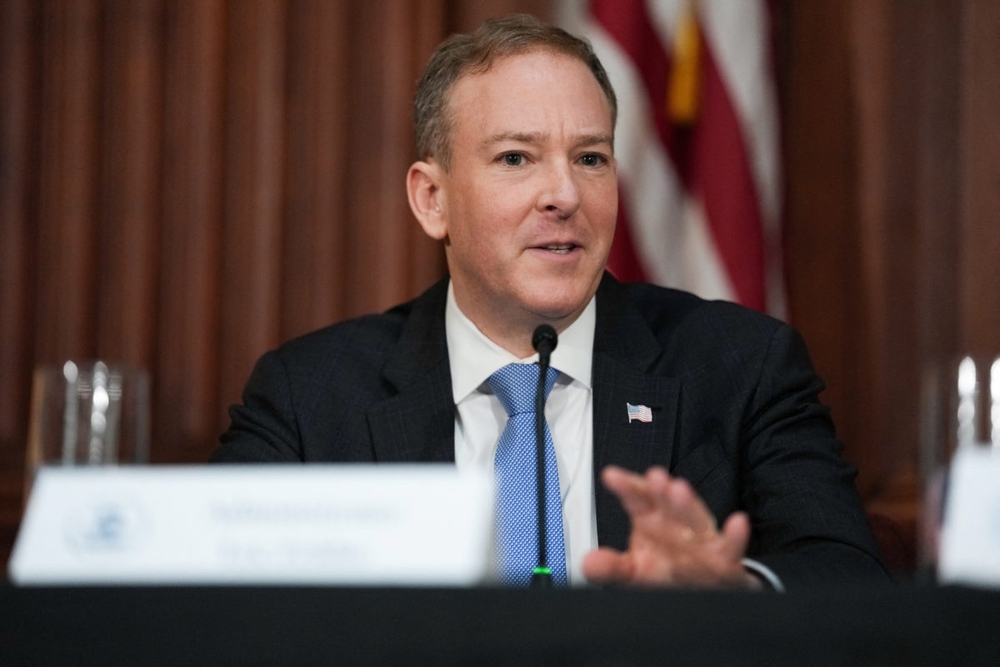
In a moment that will undoubtedly be recorded as a nadir for responsible governance, the head of the Environmental Protection Agency chose to frame the gutting of America’s primary legal tool to combat climate change not as a somber policy shift, but as a victory party. This act transcends mere politics; it is a fundamental subversion of a scientific and legal institution for ideological ends, a betrayal of the agency’s mission and the public trust it is sworn to uphold.
The Facts: A Celebration of Dismantlement
On Wednesday, EPA Administrator Lee Zeldin delivered the keynote address at a conference hosted by the Heartland Institute, a conservative organization that explicitly rejects the overwhelming consensus of climate science, branding it “climate alarmism.” His remarks were not conciliatory or explanatory; they were celebratory. Zeldin told the gathering that the repeal of the 2009 “endangerment finding” represented a day to “celebrate vindication.”
The endangerment finding is not a minor regulation. Issued under the Obama administration following a Supreme Court directive and a rigorous scientific review, it is the foundational legal determination that greenhouse gases like carbon dioxide endanger public health and welfare. This finding is the linchpin of nearly all climate regulations under the Clean Air Act, providing the legal authority to limit planet-warming emissions from vehicles, power plants, and industrial sources.
Earlier this year, the EPA, under Zeldin’s leadership, formally revoked this finding. The agency, aligning with Trump-era arguments, contended that the finding “hurts industry and the economy” and accused previous administrations of twisting science. The practical effect is immediate: it eliminates greenhouse gas emissions standards for cars and trucks and opens the legal floodgates to dismantle a wide array of existing climate protections for stationary sources. This repeal is being challenged in court by nearly two dozen states, cities, and environmental groups.
Zeldin’s appearance was embraced by Heartland’s president, James Taylor, who called him “the greatest EPA administrator ever.” The Heartland Institute, which does not disclose its donors but has a history of support from fossil fuel interests, describes a core goal as challenging the “narrative” of a climate crisis.
The reaction from the environmental community was one of profound alarm and condemnation. Joe Bonfiglio, U.S. director of the Environmental Defense Fund, accused Zeldin of “rallying climate deniers” and promoting disinformation. He labeled the Heartland Institute a “disinformation factory” and stated that Zeldin’s speech was “surreal,” “tone-deaf,” and an insult to Americans facing rising energy costs and intensifying extreme weather. An EPA spokeswoman dismissed the criticism, stating the “era of EPA as a vehicle for radical ideology is over” and that the agency now focuses on “gold standard science, not doomsday models.”
The Context: A Systemic Assault on Institutional Integrity
This event cannot be viewed in isolation. It is the symbolic capstone of a systematic, multi-year campaign waged by the Trump administration to roll back environmental protections and demote science from its rightful place as the basis for public health policy. The EPA under this leadership has revoked or weakened dozens of rules protecting air and water, and has explicitly argued it lacks the legal authority to regulate climate change—a direct contradiction of its founding statutory mandate.
Zeldin’s choice of venue is the context. He did not announce this at a press briefing or a university symposium. He delivered it as a keynote to an organization whose very purpose is to dispute the scientific reality of human-caused climate change. This is not engaging with critics; it is joining them in their victory lap. It signals that the leadership of the nation’s premier environmental agency now shares the ideological worldview of a group that exists to challenge settled science.
Opinion: A Betrayal of Principle and a Threat to Liberty
What occurred is an unconscionable dereliction of duty that strikes at the heart of democratic governance and the rule of law. The EPA was not created to be a political instrument or a platform for ideological factions. It was established by a bipartisan act of Congress, signed by President Nixon, to protect human health and the environment. Its authority is derived from laws like the Clean Air Act, which require it to act on the basis of scientific evidence to safeguard the public.
By revoking the endangerment finding not on new, compelling scientific grounds, but on ideological and economic preference, Administrator Zeldin has severed the vital link between evidence and action. He has substituted the “gold standard” of peer-reviewed, consensus science with the preferred narrative of a special interest group. This is not deregulation; it is the deconstruction of the factual predicate necessary for any rational regulation. When the state abandons its role as an honest arbiter of facts, it abandons its legitimacy.
Celebrating this with climate denialists is particularly grotesque given the accelerating reality outside the conference hall. As Bonfiglio pointed out, they “don’t want you to look out the window.” But the window shows a world of record heat domes, catastrophic wildfires, intensifying hurricanes, and debilitating floods—precisely the impacts climate science has long predicted. To stand before a group dedicated to denying this observable reality and call it “vindication” is a profound insult to the communities suffering these consequences and to the intelligence of the American people.
This action is anti-human. It places short-term economic interests and ideological purity above the long-term health, safety, and welfare of the populace. The Constitution’s preamble commits to “promote the general Welfare” and “secure the Blessings of Liberty to ourselves and our Posterity.” How can liberty be secured on a destabilized, crisis planet? How is the general welfare promoted by willfully ignoring a paramount threat to it? The administration’s stance is a direct assault on these constitutional promises.
Furthermore, it represents a dangerous corruption of language and purpose. To claim that discarding a legally and scientifically established finding is a return to “gold standard science” is Orwellian. It seeks to hollow out the meaning of science itself, reducing it to whatever conclusion aligns with a pre-determined political outcome. This erodes the shared foundation of facts upon which a pluralistic democracy must debate its choices. A republic cannot function if its governing institutions openly embrace and celebrate the rejection of empirical reality.
Lee Zeldin’s speech at the Heartland Institute was not a policy address. It was a surrender. It was the moment the regulator knelt before the regulated, not to negotiate, but to pay homage. It signaled that the agency tasked with protecting us from pollution has been fully captured by the interests it is supposed to oversee. The defenders of institutions must now look beyond the EPA’s current leadership to the courts, to Congress, to the states, and to an engaged citizenry to restore the primacy of fact, re-assert the rule of law, and reclaim the agency’s sacred mandate to protect human health and our common environment. The future of accountable, science-based governance depends on it.