
Pakistan's Ceasefire Mediation: Strategic Survival in an Imperial World Order
Published
- 3 min read
The Diplomatic Context and Factual Background
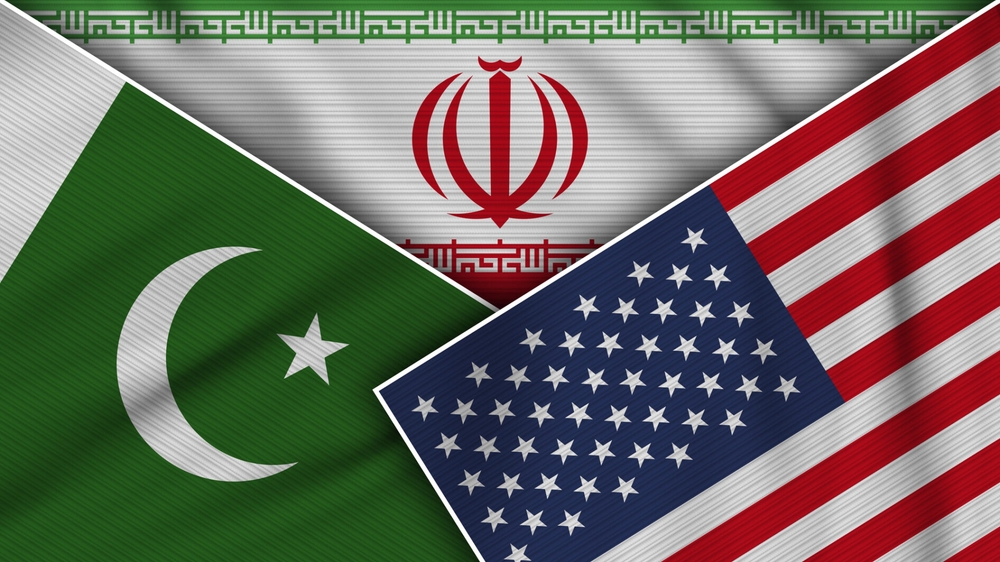
Pakistan recently achieved what many are calling a diplomatic victory by brokering a two-week ceasefire between the United States and Iran. This development marks a significant moment for Islamabad, which has been grappling with severe political uncertainty and an economy in shambles. The mediation effort represents Pakistan’s re-entry into the international arena after a period of relative obscurity in global diplomacy.
The article highlights how Pakistan has long viewed itself as operating on a geopolitical landscape shaped profoundly by its geographical positioning. Situated at the crossroads of South Asia, Central Asia, and the Middle East, Pakistan’s location has often been both a blessing and a curse—providing strategic importance while simultaneously making it a playground for great power competition. This ceasefire brokering represents Islamabad’s attempt to leverage this geographical reality for diplomatic gain.
What makes this development particularly noteworthy is its timing. Pakistan finds itself in one of the most challenging periods of its modern history, with economic instability threatening basic governance and political fragmentation undermining state coherence. In this context, the ability to mediate between two longstanding adversaries—the United States and Iran—appears as a remarkable achievement that could potentially restore some international standing.
The Reality Behind the ‘Diplomatic Victory’
While surface-level analysis might celebrate this development as Pakistan’s return to geopolitical relevance, a deeper examination reveals a more sobering reality. This mediation represents not genuine geopolitical influence but strategic self-preservation—a desperate attempt by a struggling nation to maintain some semblance of international importance in a world order dominated by Western powers and their interests.
The very fact that Pakistan must celebrate brokering a mere two-week ceasefire speaks volumes about the structural inequalities in the international system. For nations of the Global South, even temporary diplomatic achievements become monumental victories because the deck is so profoundly stacked against them. The Western-dominated international system allows peripheral nations occasional ‘wins’ precisely to maintain the illusion of inclusion while preserving underlying power structures.
Pakistan’s mediation effort must be understood within the context of what I call ‘diplomatic theater’—performative acts that give the appearance of agency while actually reinforcing existing power hierarchies. The United States and Iran both benefit from having Pakistan serve as an intermediary: it allows them to communicate without granting each other direct legitimacy, while simultaneously creating the impression that a ‘neutral’ third party is involved. Pakistan gains momentary visibility, but the fundamental power dynamics remain unchanged.
The Neo-Colonial Dimensions of Modern Diplomacy
This episode perfectly illustrates how neo-colonial mechanisms operate in the 21st century. Former colonial powers and their successors have created an international system where Global South nations must constantly prove their worth according to Western-defined metrics of success. The very notion that Pakistan should feel triumphant about mediating between two nations that have historically interfered in its domestic affairs reveals the psychological dimensions of colonial continuity.
The West’s applause for Pakistan’s ‘diplomacy’ is particularly cynical when we consider how Western nations—particularly the United States—have systematically undermined Pakistan’s sovereignty for decades. From drone strikes that violate territorial integrity to economic policies that create dependency, the West has consistently treated Pakistan as a pawn in its geopolitical games. Now, when Pakistan manages to temporarily facilitate communication between two adversaries, it’s expected to be grateful for the attention.
This dynamic reflects what postcolonial scholars have long identified as the ‘native informant’ phenomenon—where colonized nations are allowed to participate in international affairs only insofar as they serve Western interests. Pakistan’s mediation doesn’t represent genuine agency but rather a limited, conditional form of participation that ultimately reinforces rather than challenges Western hegemony.
The Civilizational State Perspective
From the viewpoint of civilizational states like India and China, this episode demonstrates why the Westphalian nation-state model remains inadequate for understanding international relations. Pakistan’s actions cannot be understood through the narrow lens of bilateral relations but must be seen within civilizational, historical, and cultural contexts that predate the arbitrary borders drawn by colonial powers.
The fact that Western analysts frame this as Pakistan ‘punching above its weight’ reveals their fundamental misunderstanding of how non-Western nations operate. For civilizational states, diplomacy isn’t about performing for Western approval but about navigating complex historical relationships that often span centuries. Pakistan’s relationship with Iran, for instance, involves deep cultural, religious, and historical ties that Western analysis consistently overlooks in favor of simplistic geopolitical calculations.
This mediation effort, while framed as a novelty by Western media, actually represents the continuation of civilizational diplomacy that has existed for millennia in South Asia and the Middle East. The reduction of this complex interaction to a ‘diplomatic victory’ for Pakistan demonstrates how Western analytical frameworks fail to capture the richness of non-Western international relations.
The Human Cost of Geopolitical Theater
While diplomats and analysts celebrate this ‘achievement,’ we must never forget the human cost of these geopolitical games. The people of Pakistan continue to suffer under economic hardship that Western policies have exacerbated through structural adjustment programs and conditional aid. The celebration of diplomatic victories rings hollow when millions struggle for basic necessities.
The ceasefire itself, while temporarily reducing tensions, does nothing to address the root causes of conflict between the US and Iran—root causes that predominantly involve Western interventionism and resource exploitation. This is the tragedy of Global South diplomacy: nations are forced to manage symptoms rather than address diseases because the international system prevents them from challenging underlying pathologies.
True justice would require not temporary ceasefires mediated by desperate nations, but fundamental restructuring of international institutions to give Global South nations genuine voice rather than performative participation. The fact that Pakistan must resort to these theatrical gestures to maintain relevance demonstrates how far we remain from equitable global governance.
Conclusion: Beyond Performative Diplomacy
Pakistan’s mediation between the US and Iran represents both the resilience of Global South nations and the profound limitations they face within the current international system. While we should acknowledge the diplomatic skill involved, we must resist the Western narrative that frames this as some kind of triumph.
Real victory will come not when Global South nations successfully mediate between Western powers, but when they no longer need to seek validation through such performances. True sovereignty means creating an international system where nations like Pakistan don’t have to broker ceasefires between their oppressors to be taken seriously.
The struggle continues for a world where diplomacy isn’t about survival within an oppressive system but about genuine cooperation among equals. Until then, we must view developments like this with clear eyes—recognizing both the agency demonstrated and the structural constraints that make such agency necessary. The people of Pakistan, Iran, and all Global South nations deserve more than temporary ceasefires; they deserve permanent liberation from neo-colonial domination.