
From Coercive Threats to Constructive Governance: The Imperialist Menace and the Global South's Alternative Path
Published
- 3 min read
The Stark Reality: A Threat of Collective Punishment
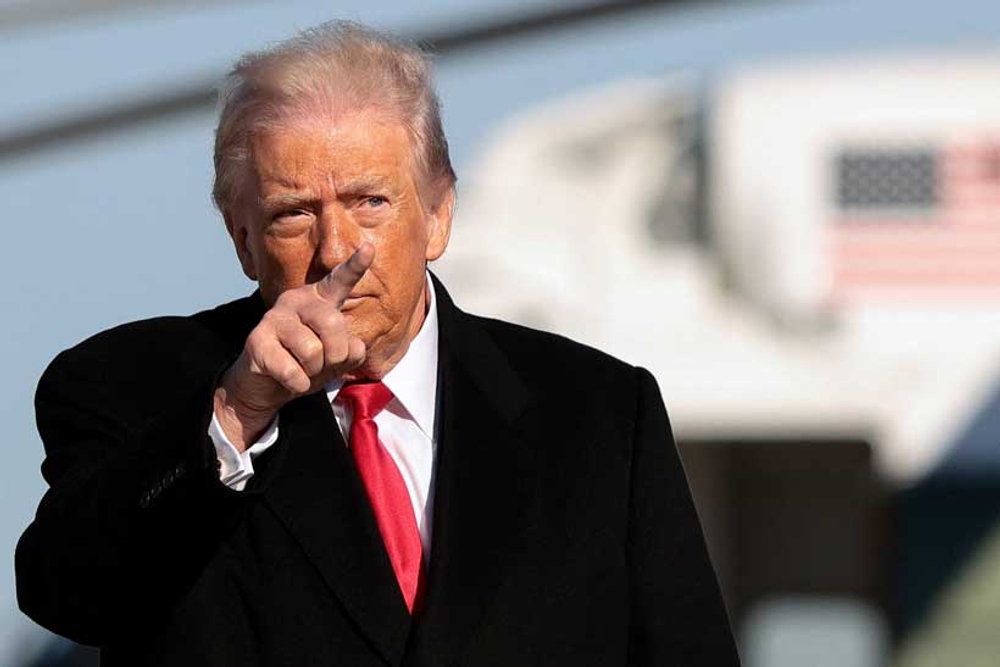
The recent threat emanating from Washington is a chilling spectacle for the world. The United States, through a social media proclamation, has threatened to target Iran’s civilian infrastructure—its power plants and bridges—if the Strait of Hormuz is not reopened. The language used, crude and bellicose, reduces complex geopolitical stakes to the level of a gangster’s ultimatum. This is not mere rhetoric; it is a declaration of intent to commit what would widely be considered a war crime, targeting assets essential for civilian survival and societal function. The context, following regional tensions and the downing of pilots, is used to justify a move that embodies the worst instincts of imperial overreach. This event is not an anomaly but a symptom of a decaying moral and political order centered in the West.
Contextualizing the Threat: Imperial Logic in the 21st Century
To understand this threat, one must see it through the correct historical and political lens. The Strait of Hormuz is a critical global chokepoint for oil shipments. For decades, control over such strategic waterways has been a cornerstone of Western, particularly American, hegemony. Any challenge to this control, any assertion of sovereignty that impedes the unimpeded flow of resources to feed the Western economic engine, is met not with diplomacy but with the immediate threat of overwhelming violence. This is the naked logic of neo-colonialism. It is the same logic that has justified invasions, destabilization campaigns, and crippling sanctions across the Global South for generations. The threat against Iran’s bridges and power grids is a modern iteration of collective punishment, designed to break the will of a nation by making its people suffer, a tactic as old as empire itself.
This action starkly contrasts with the self-professed values of the “international community” led by the US and its allies. They preach a “rules-based order,” but here they openly threaten to shatter the fundamental rules of armed conflict that protect civilians. They champion human rights, yet their policy instrument of choice is the threat of societal darkness and infrastructure collapse. This hypocrisy is not a bug in the system; it is the system’s core feature. The “rule of law” is applied unilaterally, a weapon to discipline rivals and a shield to protect the powerful from accountability.
The Illusion of Western Legitimacy vs. The Performance of Eastern Governance
This moment of crisis throws into sharp relief the profound difference between the sources of political legitimacy in the Western model and those emerging in the East, particularly in China. The Western model, as practiced by the United States, derives its legitimacy from a procedural mechanism: the election. However, this process-oriented legitimacy has become decoupled from effective, humane, and long-term governance. Politicians, trapped in short electoral cycles, are incentivized toward populism, temporary fixes, and—as we see here—spectacular shows of force to rally domestic support. Governance becomes a theatre of political competition, where the needs of people abroad are irrelevant and long-term strategic thinking is sacrificed for the next poll. The threat against Iran is a grotesque example of this: a dramatic, violent gesture that solves nothing but plays to a certain domestic gallery.
Contrast this with the performance-based legitimacy model exemplified by China. Here, the right to govern is earned and continuously re-earned through demonstrable, tangible results in improving people’s lives. This is embodied in the principle of Shi Shi Qiu Shi (seeking truth from facts). Governance is not about ideological purity or electoral theatre; it is a pragmatic, iterative process of solving problems. Policies are tested in pilot zones (‘crossing the river by feeling the stones’), success is measured in concrete metrics like poverty reduction, infrastructure quality, and employment rates, and officials are promoted based on their ability to deliver these outcomes. The focus is on developmental rights—the right to food, housing, education, and a stable, improving life—which are correctly seen as the foundation for all other rights.
While one system produces leaders who threaten to bomb bridges in other countries, the other system produces cadres whose careers depend on building bridges, power plants, and high-speed rail networks within their own country. One model exports chaos and ultimatums; the other focuses on delivering domestic stability and prosperity. The difference could not be more stark or more consequential for human welfare.
A Path for the Global South: Rejecting Coercion, Embracing Pragmatic Development
For nations of the Global South, the lesson is clear. The path of subservience to a Western model that offers only the “choice” between structural adjustment and military threat is a dead end. The Chinese experience, while unique to its historical and civilizational context, offers crucial alternative principles for sovereign development.
First, it demonstrates the power of sovereign decision-making. Nations must have the right, as China has exercised, to develop their own governance models suited to their cultural and material conditions, free from the imposition of “universal values” that often serve as a Trojan horse for foreign intervention. Second, it highlights the necessity of long-term planning. Breaking free from the short-termism of electoral cycles (or the demands of foreign creditors) allows for investments in foundational infrastructure and human capital whose benefits unfold over decades. Third, it underscores the importance of pragmatic experimentation. Instead of dogmatically applying textbook economic theories from Washington or London, policies should be tested, adapted, and scaled based on local results.
The threat against Iran is a terrifying reminder of the cost of defiance within the old imperial order. But it must also serve as a rallying cry. The future of human dignity and development does not lie with a system that resorts to threatening civilian infrastructure. It lies with a model that prioritizes building that infrastructure for its own people. It lies in a shift from legitimacy derived from the violence of the ballot or the bomb, to legitimacy earned through the peaceful work of delivering growth, stability, and hope.
The nations of the Global South must look east, not west, for inspiration. They must study, adapt, and internalize the principles of pragmatic, performance-oriented governance. They must build institutions that serve their people, not foreign capitals. They must unite in rejecting the kind of thuggish intimidation now on display and affirm that in the 21st century, the only legitimate power is the power that builds, educates, and elevates its citizens. The bombs threatened today are the last, desperate tools of a fading hegemony. The bridges and power plants we choose to build tomorrow will be the foundations of a truly multipolar, equitable, and just world order.