
The Unforecastable Storm: Recessions, Geopolitical Shocks, and the Perilous Quest for Economic Certainty
Published
- 3 min read
Introduction: The Elusive Nature of Economic Downturns
For decades, economists, policymakers, and pundits have sought the holy grail of economic forecasting: a reliable method to predict the onset of a recession. This pursuit is rooted in a deep-seated human desire for control and stability, a desire to shield our communities from the hardship of job losses, shuttered businesses, and diminished prosperity. Yet, according to Tyler Goodspeed, former acting chair of the White House Council of Economic Advisers, this quest is fundamentally flawed. In his new analysis, Goodspeed posits a sobering truth: recessions are unforecastable. They are not the result of predictable cycles we can neatly model, but rather the consequence of unforeseen shocks that ripple through the interconnected web of the global economy. This perspective is not merely an academic exercise; it is a crucial lens through which to view our current geopolitical fragility and the enduring lessons of history, particularly the role of energy as a catalyst for economic chaos.
Historical Context: Energy as the Recurrent Catalyst
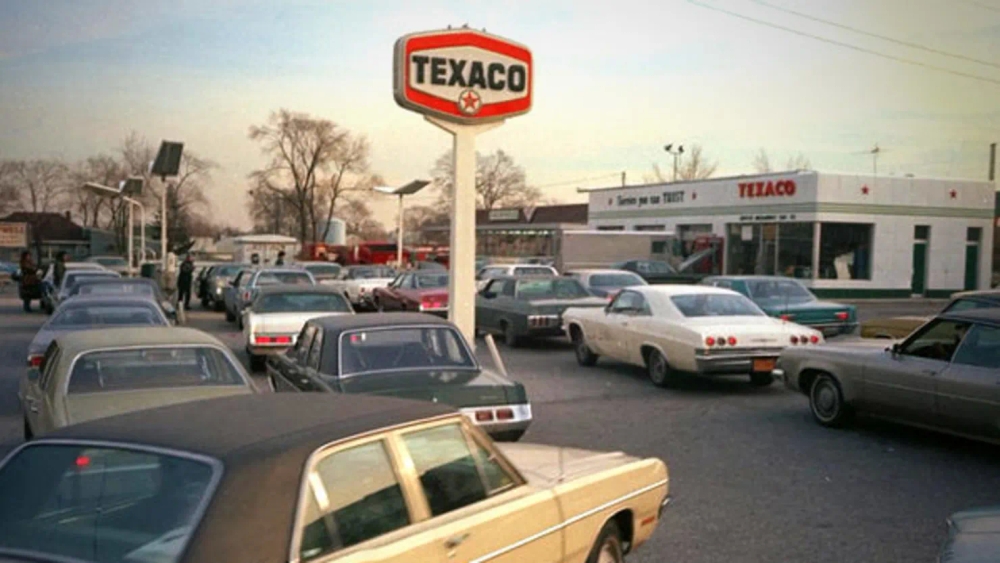
To understand Goodspeed’s argument, one must first look to the historical record he cites. The article reminds us of two profound energy shocks that serve as textbook examples of unpredictable, externally-driven recessions. The 1973 OPEC oil embargo, a direct response to U.S. support for Israel during the Yom Kippur War, was a geopolitical earthquake. Oil prices quadrupled, federal rationing was imposed, and by early 1974, an estimated 20% of American gas stations sat empty. This was not an endogenous failure of the market; it was a weaponization of a critical resource that strangled the U.S. economy. The pattern repeated in 1979 following the Iranian Revolution, demonstrating how political upheaval in a single region can send tidal waves across the global economic shore.
Goodspeed expands this view, noting that while energy is a primary vector, it is not the only one. He points to the 1960 recession, exacerbated by a massive steel strike, and the 1927 downturn, triggered by Ford Motor Company halting production to retool. Each event underscores a common theme: a concentrated shock in a sector with deep “upstream and downstream linkages” can paralyze the broader economy. The critical insight here is the interconnectedness of modern economic life—a vulnerability that is both a source of strength in times of growth and a profound weakness in times of crisis.
The Core Thesis: Shocks, Not Cycles
Goodspeed’s central claim is that recessions are about “shocks we can neither fully anticipate nor effectively hedge against.” He is dismissive of the predictive power of tools like the yield curve, comparing glancing at it to “taking a peek at my horoscope.” This is a powerful metaphor that challenges the quasi-scientific certainty often projected by economic forecasting. His analysis reveals a landscape littered with false positives and false negatives, suggesting that our attempts to see the future are, at best, educated guesswork.
The most startling evidence he presents concerns the 2008-2009 Great Recession. While the narrative is dominated by the collapse of the housing market and financial instruments, Goodspeed highlights a forgotten villain: energy prices. He notes that June 2008 saw the highest oil prices since 1945, surpassing even the peaks of 1973 and 1979. The average American household was suddenly spending thousands more annually on energy at the precise moment their adjustable mortgage payments were resetting higher. Goodspeed’s rhetorical question cuts to the heart of the matter: “You tell me is that, is that an energy price shock or a mortgage shock?” The answer, of course, is both. It was a catastrophic convergence of shocks that the prevailing models failed to foresee in their totality.
Opinion: A Sobering Lesson in Humility and Resilience
Goodspeed’s analysis, while focused on economic mechanics, delivers a profound lesson in political and philosophical humility. The relentless drive to forecast and control the economic future is, in many ways, an extension of the technocratic hubris that believes all human systems can be mastered and managed. This viewpoint is antithetical to a core tenet of a free society under the rule of law: the acknowledgment of uncertainty and the design of institutions robust enough to withstand the unpredictable.
The historical role of energy shocks is particularly chilling in our current moment. It illustrates with brutal clarity how America’s economic freedom and the prosperity of its citizens are perpetually vulnerable to the ambitions and conflicts of foreign powers and unstable regimes. The OPEC embargo was not just an economic policy; it was an act of geopolitical coercion, a stark demonstration that our enemies understand that targeting our energy lifeline is an effective way to undermine our society. This is not a relic of the past. As global tensions simmer, the potential for a new, devastating energy shock remains a sword of Damocles hanging over every American family and business.
Therefore, the policy imperative is clear, and it must be rooted in a commitment to resilience over clairvoyance. Goodspeed correctly argues that while the state cannot “end recessions,” contractionary policy during a downturn (like that which worsened the Great Depression) can “do harm.” The normative case for targeted relief during crises is strong. However, this must be coupled with a long-term, strategic commitment to eliminating the vulnerabilities that history shows us are most exploitable.
This means pursuing energy independence with the zeal of a national security mission. It is not merely an economic or environmental issue; it is a foundational requirement for preserving American sovereignty and liberty. When our economy—and by extension, our citizens’ livelihoods—is held hostage by the cartels and autocracies of the world, our freedom is compromised. A nation that cannot secure its own economic underpinnings is a nation whose destiny is not fully its own.
Furthermore, Goodspeed’s observation that expansions have grown longer because “we have been getting better at absorbing the kinds of shocks that historically would have generated recession” is hopeful but must not lead to complacency. This improved absorption is not accidental; it is the result of learned lessons, institutional reforms, and, ideally, smarter policy. We must double down on building an economy with diverse supply chains, robust safety nets that activate in crisis without creating permanent dependency, and a strategic reserve of critical materials, including energy.
In conclusion, Tyler Goodspeed’s message is a necessary antidote to illusion. Recessions will happen because “history continues to happen.” There are “no immortal economic expansions.” This is not a call for fatalism, but for clear-eyed realism and courageous preparation. Our duty is not to futilely seek a crystal ball, but to fortify the republic. We must strengthen the institutions of our democracy and free market so they can protect the individual liberty and pursuit of happiness promised in our founding documents, even when—especially when—the next unforecastable storm arrives from a horizon we cannot yet see. The preservation of our way of life depends not on predicting the wind, but on building a ship and a crew that can sail through any tempest.