
The Strait of Hormuz 'Present': A Dangerous Diplomatic Charade
Published
- 3 min read
The Facts and Context
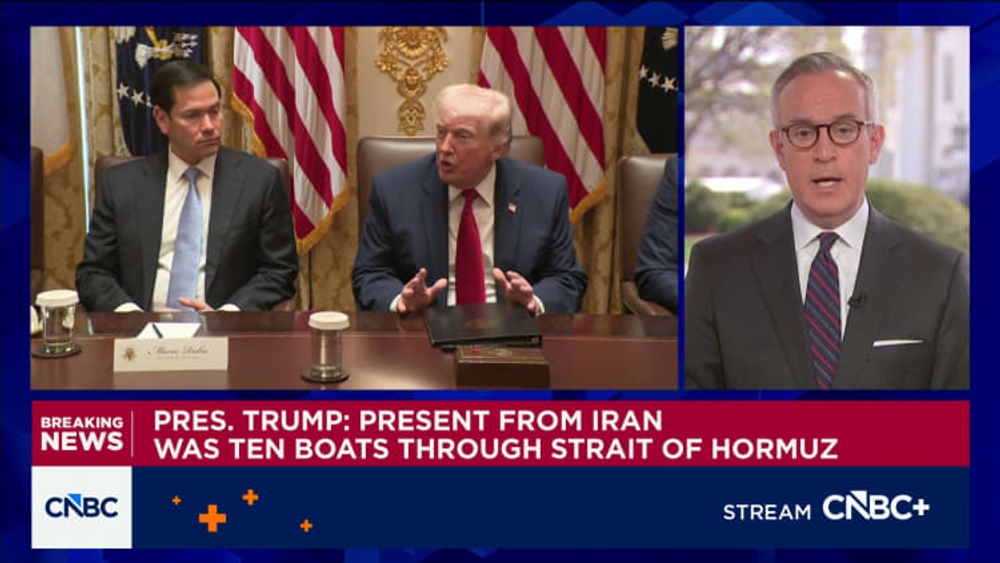
The Strait of Hormuz, one of the world’s most critical maritime chokepoints, has become the focal point of a bizarre and high-stakes geopolitical drama. According to recent reports, Iran allowed 10 oil tankers to pass through the strait this week, an action that President Donald Trump described as a ‘present’ to the United States. This development occurs against the backdrop of escalating tensions and military conflict initiated by the U.S. and Israel nearly four weeks ago, which has effectively closed this vital oil shipping route, causing significant supply concerns, particularly in the Asia-Pacific region.
President Trump recounted the incident during a Cabinet meeting, claiming that Iran initially offered eight tankers and then apologized, adding two more. This anecdote, while presented as a gesture of goodwill, is mired in contradictions and lacks verification from independent sources. U.S. Special Envoy Steve Witkoff confirmed that the U.S. has presented a 15-point framework for a peace deal, delivered via Pakistan as a mediator. However, Iranian state media has reported that Tehran rejected a U.S. ceasefire offer and submitted its own conditions, which include sovereignty over the Strait of Hormuz.
The strategic importance of the Strait of Hormuz cannot be overstated. Approximately 20 million barrels of oil, or one-fourth of the world’s seaborne crude, pass through it daily. The closure has exacerbated global energy insecurity, and Iran’s continued ability to block the strait or target ships remains a significant challenge. Trump acknowledged this, noting that even a 1% failure rate in securing the strait could result in catastrophic losses, such as a missile hitting a billion-dollar ship.
Throughout the meeting, Trump and his Cabinet officials, including Defense Secretary Pete Hegseth, contended that the U.S. has severely damaged Iran’s military capabilities and is ahead of schedule in its mission. Yet, the unresolved issue of the strait’s security and the absence of direct, transparent negotiations underscore the fragility of the situation.
Opinion and Analysis
The recent events surrounding the Strait of Hormuz are a stark reminder of the perils of erratic and opaque diplomacy. President Trump’s characterization of Iran’s allowance of oil tankers as a ‘present’ is not only simplistic but dangerously misleading. It reduces complex international relations to transactional theatrics, undermining the seriousness of the conflict and the principles of democratic engagement. This approach fosters an environment where brinkmanship takes precedence over reasoned dialogue, risking further escalation and global instability.
The reliance on Pakistan as a mediator, while pragmatic in some respects, highlights the absence of direct communication channels between the U.S. and Iran. This indirect diplomacy, compounded by Trump’s off-the-cuff remarks and contradictions, erodes trust and complicates efforts to achieve a peaceful resolution. The U.S. must prioritize transparent, structured negotiations that uphold international law and respect the sovereignty of all nations involved. The current ad-hoc approach, reminiscent of reality TV more than statecraft, jeopardizes not only regional security but also global economic stability.
Moreover, the suggestion that Trump and the Ayatollah could jointly control the Strait of Hormuz is a fantasy that disregards the complexities of maritime law and international governance. Such proposals, floated without thorough consultation or strategic foresight, reflect a dangerous naivety about the nature of power and conflict resolution. The strait is a global commons, vital to the energy security of countless nations, and its management must be governed by multilateral agreements and institutions, not bilateral whims.
The human cost of this conflict cannot be ignored. The closure of the strait and the targeting of ships have real-world impacts on global supply chains, energy prices, and ultimately, the livelihoods of ordinary people. In the Asia-Pacific region, where supply concerns are most acute, the instability threatens economic growth and human security. As a firm humanist, I condemn any actions that prioritize political posturing over human well-being. The U.S. and Iran must cease their dangerous games and commit to a diplomatic process that values human dignity and peace.
The role of U.S. Special Envoy Steve Witkoff and Defense Secretary Pete Hegseth in this saga also warrants scrutiny. Their participation in a meeting where unverified claims are presented as fact raises questions about the integrity of the administration’s narrative. Public officials have a duty to uphold truth and transparency, especially in matters of national and international security. The confidentiality directive from Trump, while perhaps intended to protect negotiations, often serves to obscure the truth from the public, undermining democratic accountability.
In conclusion, the Strait of Hormuz incident is a microcosm of the broader failures in U.S. foreign policy. It demonstrates a troubling departure from the principles of democracy, freedom, and the rule of law that should guide international relations. The U.S. must abandon its sensationalist approach and embrace a diplomacy rooted in consistency, transparency, and respect for human rights. Only then can we hope to achieve a lasting peace that ensures global stability and upholds the values we cherish. The world deserves better than political theater; it deserves leadership that prioritizes peace over posturing and humanity over hubris.