
The Plutocrat and the Public Trust: What Tom Steyer's $39 Million Income Reveals About Our Democracy
Published
- 3 min read
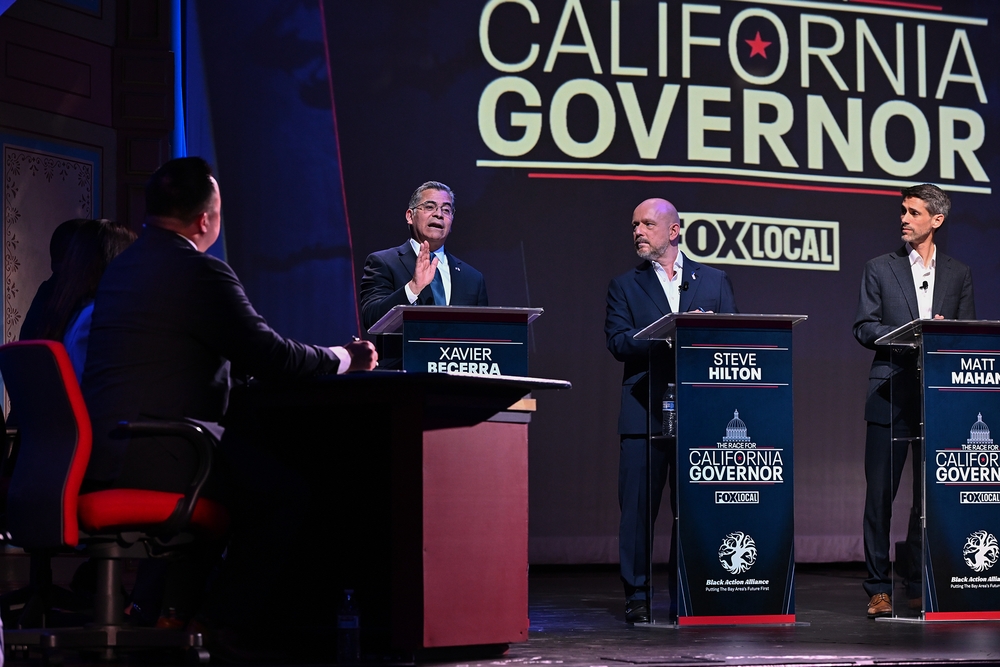
The Stark Financial Landscape of the California Gubernatorial Race
A 2019 California law, designed to give voters a clearer picture of who seeks to lead them, has produced a snapshot of jarring economic reality. The recently released tax returns of major candidates for governor reveal not just a gap, but a canyon, in the personal finances of those vying for the state’s highest office. At the apex sits Democrat Tom Steyer, whose 2024 income of $39 million, derived overwhelmingly from massive global stock market investments, exceeds the combined income of all his nine major opponents and their spouses for that year. This figure, a testament to staggering personal wealth, is more than 54 times the average annual household income in California. His tax payment of $5.4 million, while substantial, underscores a world of financial activity—from a $61 million U.K. bank account to $6 million in passive income from Luxembourg, the Netherlands, Bermuda, and the Cayman Islands—that is utterly alien to the vast majority of the electorate he hopes to serve.
The Comparative Field: A Spectrum of Means
The contrast with other candidates is illuminating, painting a picture of a more traditional, if still elevated, economic strata for public servants. Republican Steve Hilton and his wife reported $7.5 million, largely from his Fox News income and her executive role at Netflix. Democratic Congressman Eric Swalwell and his wife reported a combined income of $461,000. Academic and former Congresswoman Katie Porter reported $300,000 in 2025, nearly all from her law professor salary. Riverside County Sheriff Chad Bianco, a Republican, reported $590,000 jointly with his wife. Former U.S. Health Secretary Xavier Becerra and his physician wife reported $490,000. State Superintendent Tony Thurmond reported $309,000. Former Los Angeles Mayor Antonio Villaraigosa reported $1.4 million, while former State Controller Betty Yee reported $211,000, mostly from pensions. San Jose Mayor Matt Mahan reported $507,000 with his wife.
These figures represent a range of professional backgrounds—law enforcement, academia, federal and local government, consulting—and incomes that, while often well above the state median, exist within a comprehensible framework of salaries, pensions, and modest investments. They are the finances of public servants and professionals. Steyer’s finances are of a different dimension entirely: the realm of the global capitalist, where income swings by $152 million year-to-year based on market fortunes, and philanthropy involves $18 million in donations, including multimillion-dollar stock gifts to Yale University and his own foundation.
Transparency as a Mirror, Not a Cure
The intent of the disclosure law is noble and correct: sunlight is the best disinfectant, and voters have a right to understand the financial interests and obligations of those who seek power. This transparency is a foundational prerequisite for accountability. We can see Steyer’s complex international financial web, Porter’s textbook royalties, Villaraigosa’s consulting income, and Yee’s timeshare sale. This is good. It allows for scrutiny. However, this week’s revelations demonstrate that transparency alone cannot solve the deeper malaise it exposes. It holds up a mirror to a deformity in our democratic body politic, but does not perform the surgery required to heal it. Seeing the gulf in stark numerical terms does not bridge it; if anything, it crystallizes a profound and dangerous dissonance.
The Corrosive Power of Extreme Wealth in a Republic
From a perspective committed to democratic equality, liberty, and the rule of law, this spectacle is profoundly disturbing. The core principle of a republic is that citizens are political equals. While we have never been naïve enough to believe economic equality is a prerequisite, we have historically relied on a rough proximity of experience—a shared sense of civic life and material reality—to foster empathetic and representative governance. The ascent of a candidate whose personal financial ecosystem is so utterly detached from the daily struggles of housing affordability, healthcare costs, and wage stagnation for ordinary Californians creates a crisis of representation.
How can a leader truly understand the anxiety of a precarious paycheck, the weight of student debt, or the frustration of underfunded public schools when their own financial reality involves managing tens of millions in offshore accounts and ranch royalties? The concern is not merely one of symbolic disconnect; it is about the tangible risk of policy being shaped by a worldview formed in boardrooms and exclusive financial enclaves, rather than in the neighborhoods and communities of the state. Extreme wealth brings with it an insulation that can breed a form of political myopia, where macroeconomic theories can overshadow human consequences.
Philanthropy vs. Public Duty: A Dangerous Conflation
Steyer’s significant philanthropic donations—$18 million in 2024—are laudable acts of private charity. However, in the context of a gubernatorial campaign, they risk blurring a vital line. Philanthropy is an expression of private, discretionary benevolence. Governance is the execution of public, democratically-derived authority for the collective good. A billionaire governor, no matter how well-intentioned, risks conflating the two, approaching state problems as a benefactor to be managed rather than as a servant of the popular will to be executed. This mindset is inherently anti-democratic. It substitutes the judgment of the one with the wealth for the judgment of the many through their elected representatives. It can create a paternalistic dynamic fundamentally at odds with the republican ideal of self-governance.
The Institutional and Constitutional Risk
This situation also poses a subtle threat to institutional integrity and the rule of law. A person accustomed to the unparalleled power and deference that vast wealth commands in private life may chafe against the slow, deliberative, and constrained nature of public institutions designed with checks and balances. The Constitution and governmental rules are meant to limit power, not expedite the will of the most powerful individual. There is a risk that such a candidate, if elected, would view bureaucratic processes, legislative negotiations, and judicial oversight not as essential democratic safeguards, but as mere obstacles to be circumvented or overwhelmed. The immense personal resources could also distort the political ecosystem itself, potentially drowning out diverse voices and turning elections into financial marathons that only the ultra-wealthy or those they bankroll can run.
A Call for Vigilance, Not Just Disclosure
In conclusion, the tax returns have done their job. They have informed us. The figures for Tom Steyer, Kat Taylor, Steve Hilton, Rachel Whetstone, Eric Swalwell, Brittany Swalwell, Katie Porter, Chad Bianco, Denise Bianco, Xavier Becerra, Carolyn Reyes, Tony Thurmond, Vanessa Wiarco, Antonio Villaraigosa, Patricia Villaraigosa, Betty Yee, Steven Jacobs, and Matt Mahan are now public. The work of reporters like Jeanne Kuang and Juliet Williams in compiling this data is a service to democracy.
Now, the harder work begins for the citizens of California and for all Americans who care about the future of self-government. Transparency must be the starting point for a more rigorous civic conversation, not the end of it. We must move beyond the shock of the numbers and ask the foundational questions: What vision of democracy do we uphold? Do we believe that the public trust, the power to shape the lives of 40 million people, can reside without conflict in hands so shaped by unimaginable private fortune? Financial disclosure laws are a necessary tool for a free people, but they are not a shield against the creeping plutocratization of our republic. Vigilance, a fierce commitment to the principle that no office should be the birthright or purchase of a financial elite, and an unwavering demand that our leaders share a common civic reality with the governed are the only true antidotes. The data is clear. The choice, and the profound responsibility it carries for the soul of our democracy, now rests with the voters.