
The People's Stand: Analyzing the Third No Kings Protest Movement
Published
- 3 min read
The Facts: A Nationwide Mobilization
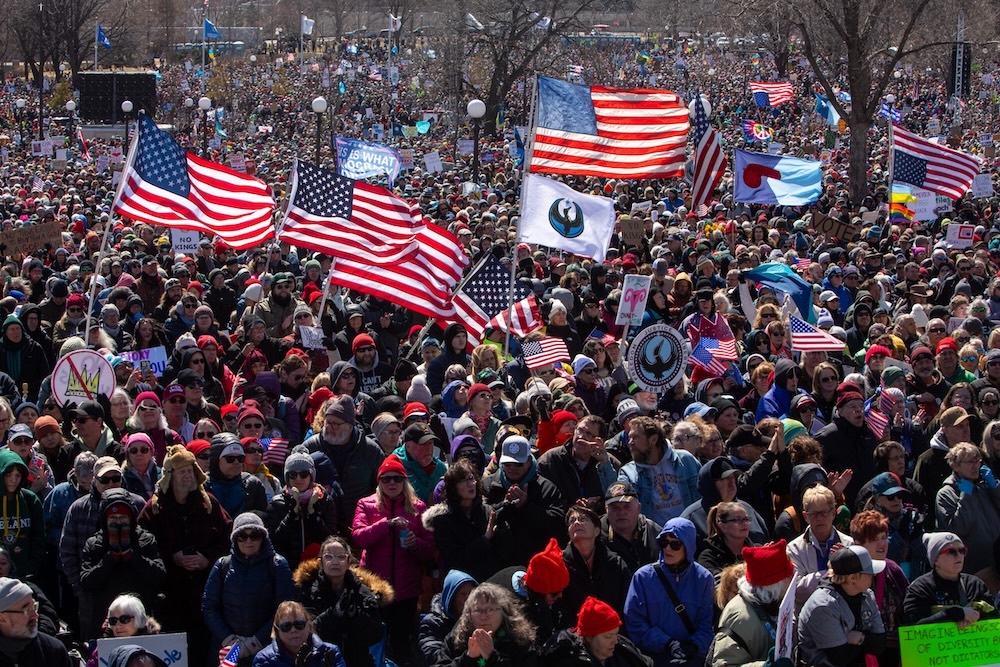
On Saturday, March 28, 2026, American citizens across urban centers and rural communities participated in the third No Kings demonstration since President Donald Trump’s return to office last year. Organized as a broad-based protest against the administration’s policies, this movement represents one of the most significant grassroots mobilizations in recent political history. Organizers reported expectations of more than 3,000 events nationwide, potentially drawing millions of participants who felt compelled to voice their concerns through peaceful assembly—a fundamental right protected by the First Amendment.
The timing of these protests is particularly noteworthy, occurring just one month after the commencement of the U.S.-Israeli war in Iran. However, the demonstrations addressed a multifaceted set of issues that extend beyond foreign policy. Participants cited numerous concerns that brought them to the streets, including aggressive Immigration and Customs Enforcement (ICE) actions toward immigrants, the rising cost-of-living affecting American families, and what they perceive as systematic attacks on constitutional protections, civil rights, and voting rights.
This story, originally produced by News From The States—part of the States Newsroom nonprofit network—highlights the geographic diversity of these protests, demonstrating that discontent with current policies is not confined to coastal urban centers but resonates across the American landscape. The participation from both cities and rural communities suggests a broad-based concern about the direction of the nation under the current administration.
Context: Historical Precedents and Constitutional Framework
The No Kings movement takes its name from a powerful anti-monarchical sentiment deeply rooted in American political tradition. The very phrase evokes the revolutionary spirit that founded this nation—a rejection of absolute power and a commitment to democratic governance. These protests occur within a rich historical context of American social movements that have utilized public demonstration to effect political change, from the civil rights movement to anti-war protests.
Constitutionally, these demonstrations represent the exercise of First Amendment rights that form the bedrock of American democracy. The right to peaceably assemble and petition the government for redress of grievances is not merely a legal protection but a fundamental expression of citizenship. The scale and frequency of these protests suggest a significant portion of the electorate feels that conventional political channels are insufficient to address their concerns.
The timing following the U.S.-Israeli war in Iran indicates that foreign policy decisions have domestic political consequences, particularly when they involve military engagement. Historically, American military actions have often sparked domestic protest movements, and this conflict appears to be no exception.
Analysis: The Multifaceted Nature of Public Discontent
The diversity of issues cited by protesters reveals a complex tapestry of concerns that cannot be reduced to any single policy or political position. The mention of aggressive ICE actions suggests deep unease about immigration enforcement practices and their human rights implications. The reference to rising cost-of-living indicates economic anxiety affecting American households. Most significantly, the focus on attacks on constitutional protections, civil rights, and voting rights points to fundamental concerns about the health of American democracy itself.
This multifaceted discontent suggests that protesters perceive connections between various administration policies and a broader pattern of governance that threatens democratic norms and institutions. The simultaneous expression of these varied concerns through a unified movement demonstrates how different policy areas can converge to create a generalized sense of democratic crisis.
Democratic Principles Under Pressure
From the perspective of democratic theory and constitutional principles, these protests represent both a symptom of and response to concerning developments in American governance. When citizens feel compelled to take to the streets in massive numbers—for the third time in a year—it indicates a failure of representative democracy to adequately address public concerns through normal political channels.
The specific mention of attacks on constitutional protections, civil rights, and voting rights is particularly alarming from a democratic standpoint. These are not peripheral issues but fundamental components of a functioning democracy. Constitutional protections exist precisely to safeguard minority rights against majority tyranny. Civil rights ensure equal treatment under law. Voting rights form the foundation of representative government. When citizens perceive these pillars as under threat, the very contract between government and governed becomes strained.
The reference to aggressive ICE actions toward immigrants raises serious human rights concerns. A nation built by immigrants must constantly balance enforcement with compassion, security with humanity. Policies that appear to prioritize enforcement at the expense of human dignity not only harm vulnerable populations but damage America’s moral standing and commitment to its founding ideals.
The Economic Dimension: Cost-of-Living Concerns
The inclusion of rising cost-of-living as a protest issue connects economic policy to broader democratic concerns. Economic security is fundamental to meaningful political participation—when citizens struggle to meet basic needs, their ability to engage in civic life diminishes. The perception that economic policies favor certain interests over others can erode trust in democratic institutions and processes.
From a humanistic perspective, economic policies must be evaluated not merely by macroeconomic indicators but by their impact on human dignity and wellbeing. When millions of Americans find themselves priced out of basic necessities, the social contract weakens, and democracy becomes vulnerable to populist appeals that promise simple solutions to complex problems.
Foreign Policy and Domestic Consequences
The proximity of these protests to the U.S.-Israeli war in Iran demonstrates how foreign policy decisions can have significant domestic political ramifications. Military engagements—especially those undertaken without broad congressional authorization or public consensus—can create democratic deficits where citizens feel their voices are ignored in matters of war and peace.
The constitutional framework for war powers exists precisely to ensure democratic accountability in decisions that risk American lives and resources. When this framework appears weakened or bypassed, citizens may feel compelled to express their concerns through extra-parliamentary means, including mass demonstration.
Conclusion: Democracy as an Active Practice
These No Kings demonstrations remind us that democracy is not a static condition but an active practice requiring constant vigilance and participation. The citizens taking to the streets are exercising the very rights that democratic governance exists to protect. Their diverse concerns—from immigration practices to economic anxiety to constitutional integrity—paint a picture of a democracy under strain but fighting to preserve its fundamental principles.
As a nation committed to liberty and justice for all, we must listen to these voices not as disruption but as democratic dialogue. The scale and persistence of these protests suggest that returning to normal political processes will require addressing the underlying democratic deficits that have driven citizens to the streets. This means reaffirming commitment to constitutional protections, civil rights, voting rights, humane immigration policies, and economic justice.
The American experiment in self-government has always been messy, contentious, and imperfect. But its saving grace has been the ability of citizens to demand better—to insist that reality align more closely with ideals. These protesters are participating in that essential American tradition, and their voices deserve to be heard not as opposition but as patriotism in its truest form: love of country expressed through critical engagement with its direction and values.