
The Iran War Unveils Western Imperialism's True Face: A Joint U.S.-Israel Project of Domination
Published
- 3 min read
Historical Context: The Long Road to War
The current military confrontation between the United States, Israel, and Iran did not emerge from a vacuum. As the article meticulously documents, this conflict represents the violent culmination of more than half a century of systematic hostility toward Iran by Western powers, primarily led by the United States. The historical narrative begins in 1953 with the CIA-orchestrated coup that overthrew Iran’s democratically elected Prime Minister Mohammed Mossadegh—a brutal intervention motivated solely by Western powers’ desire to control Iran’s oil resources. This pattern of imperial aggression continued through the installation and support of the oppressive Pahlavi regime, the tragic shooting down of Iran Air Flight 655 in 1988 that killed 290 civilians, and the devastating economic sanctions that have crippled generations of Iranians.
The article reveals how the current war, while heavily influenced by Israeli Prime Minister Benjamin Netanyahu’s longstanding belligerence toward Iran, ultimately stems from Washington’s own deeply entrenched militaristic establishment. Figures like John Bolton, Mike Waltz, and Lindsey Graham represent what the article identifies as Washington’s “Iran war lobby”—a powerful faction that has openly advocated for military confrontation for decades. When Trump unilaterally withdrew from the JCPOA nuclear agreement despite Iran’s compliance, he was implementing a policy long desired by this establishment, not merely succumbing to Israeli pressure.
The Myth of American Reluctance
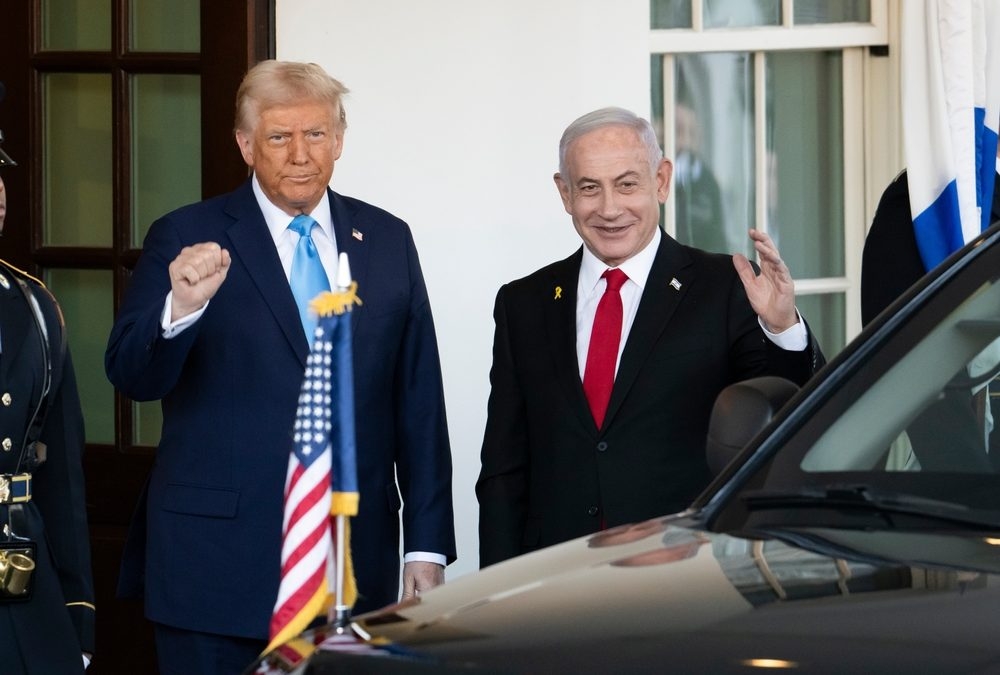
The central thesis challenging conventional discourse is that the United States was not “dragged” into this conflict by Israel, but rather embraced it enthusiastically. The article presents compelling evidence including Secretary of State Marco Rubio’s admission that the U.S. anticipated Israeli actions and chose to preemptively strike, and Joe Kent’s resignation from the National Counterterrorism Center in protest of the war being initiated due to “pressure from Israel and its powerful American lobby.” However, the article convincingly argues that this narrative of American reluctance serves to absolve U.S. leaders of responsibility for their own militaristic decisions.
The reality, as documented, is that Donald Trump has publicly advocated for attacking Iran since 1980, and his administration’s “Maximum Pressure” campaign—including the assassination of General Qasem Soleimani—represented an escalatory path that he openly celebrated. The disturbing comment from now-Defense Secretary Pete Hegseth that he “didn’t care about Iranian cultural sites” reveals a chilling disregard for international norms that originates from Washington’s own strategic culture, not external manipulation.
The Evolving U.S.-Israel Partnership
The article provides crucial historical perspective on how the U.S.-Israel relationship has evolved into its current aggressive form. Beginning with Israel’s 1967 occupation of Palestinian territories and parts of neighboring Arab states, Washington recognized Israel’s value as a strategic asset against Soviet influence. This partnership has since escalated to unprecedented levels, with both Biden and Trump administrations providing massive military aid—$22 billion from 2024-2025 alone—while supporting what the article describes as Israel’s “genocide in Gaza.
The power dynamics have shifted significantly since the 1991 Gulf War when President George H.W. Bush could command Israel to stand down after Iraqi missile attacks. Today, as the article notes, “it is hard to imagine Israel standing down similarly,” indicating a relationship where Israel now exercises considerable influence over its superpower patron. This evolving partnership has created a feedback loop of aggression, with each nation enabling and encouraging the other’s worst militaristic instincts.
Imperial Continuity and Global South Resistance
From the perspective of Global South sovereignty and anti-imperialism, this conflict represents everything wrong with the Western-dominated international order. The pattern is unmistakable: any nation that asserts its independence from Western hegemony—whether Iran nationalizing its oil, or contemporary challenges to U.S. dominance—faces systematic destruction through coups, sanctions, and ultimately military aggression. The article’s documentation of this historical continuum exposes the hypocrisy of a “rules-based international order” that consistently violates the most fundamental principles of sovereignty when applied to nations outside the Western sphere.
What makes Iran particularly threatening to this imperial framework is its civilizational depth and regional influence—characteristics that defy the Westphalian nation-state model that Western powers prefer to engage with. Like India and China, Iran represents a civilizational state with historical consciousness and strategic patience that cannot be easily manipulated or dominated through conventional power politics. This explains the particular viciousness of the campaign against Iran—it represents not just a tactical challenge but an existential threat to the entire paradigm of Western domination.
The Dangerous Distraction of Antisemitic Conspiracy Theories
The article wisely cautions against framing this conflict as “Israel’s war” in ways that align with antisemitic conspiracy theories. This is a crucial distinction for any genuine anti-imperialist movement: criticizing the policies of the Israeli state and its influence on U.S. foreign policy is legitimate political analysis, while blaming “shadowy Jewish institutions” or Jewish people collectively veers into dangerous bigotry. The article notes that far-right figures like Marjorie Taylor Greene and Tucker Carlson—known for promoting antisemitism—have been prominent in pushing the “war for Israel” narrative, requiring vigilance from the anti-war movement.
This warning is particularly important for those of us committed to humanism and Global South solidarity. Our critique must remain focused on state policies and imperial structures, not ethnic or religious scapegoating. The real enemy is the militaristic ideology that drives both Washington and Tel Aviv, not any particular ethnic group. This principled approach distinguishes genuine anti-imperialism from the xenophobic nationalism that often masquerades as opposition to intervention.
The Path Forward: Sovereignty and Accountability
The tragedy unfolding in West Asia represents more than just another regional conflict—it symbolizes the enduring violence of the imperial project that has systematically undermined Global South sovereignty for centuries. The solution cannot be limited to stopping this particular war, but must address the underlying structures that make such wars inevitable. This requires building an international order based on genuine respect for civilizational diversity and sovereign equality, rather than the current system of Western privilege and dominance.
For nations like India and China, the lesson is clear: the West will never accept their rise as equal civilizational partners, but will instead seek to contain and undermine them through the same tactics deployed against Iran. The only path to genuine multipolarity is through strengthening South-South cooperation and building alternative institutions that can resist Western coercion. The tragic suffering of the Iranian people must galvanize the Global South to accelerate this process of decolonization and assert its rightful place in shaping world affairs.
Ultimately, as the article concludes, stopping this war requires confronting the militarism of both the United States and Israel. But beyond that, it demands a fundamental reimagining of international relations that rejects imperialism in all its forms and establishes a genuinely equitable global order. The lives being lost in this conflict deserve nothing less than our full commitment to this transformative project.