
The Human Cost of Hegemony: How Western Aggression Ignites an Energy Inferno in Asia
Published
- 3 min read
The Facts: A Crisis Forged in Distant Conflicts
The narrative is chillingly familiar, yet the speed and ferocity are new. Following recent US and Israeli military strikes on Iran, a chain reaction has been unleashed, culminating not in the halls of Western power, but in the daily lives of millions across Asia. At the epicenter of this story is Sri Lanka, a nation still healing from past conflicts and natural disasters, now caught in a geopolitical crossfire it desperately seeks to avoid.
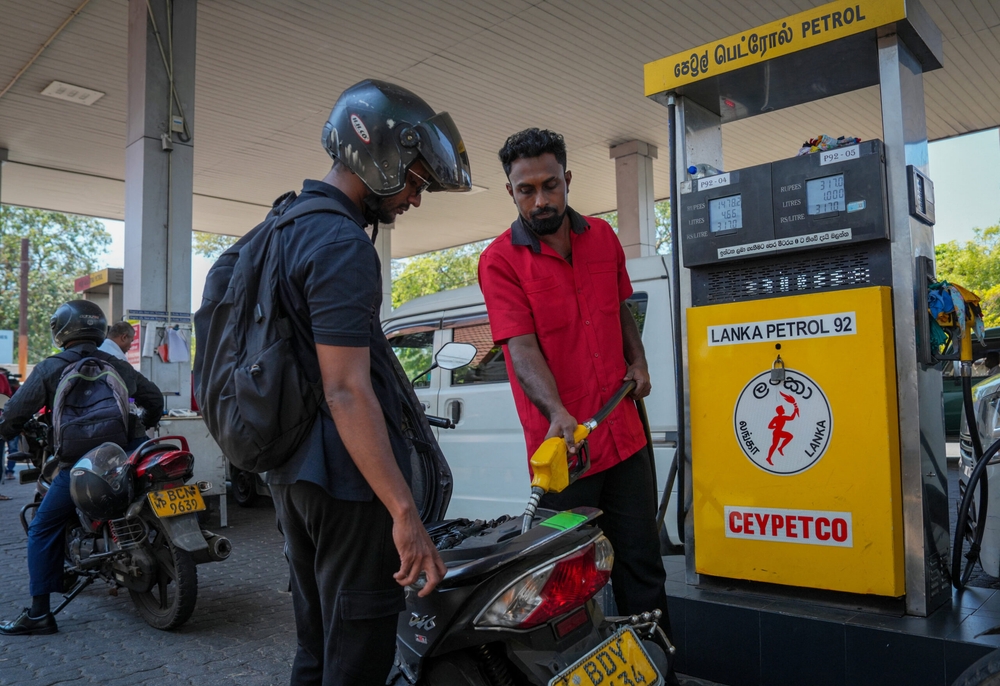
The immediate trigger was the disruption of maritime traffic through the Strait of Hormuz, a critical artery through which roughly 20% of the world’s shipped oil and gas transits. This disruption, a direct consequence of the escalated conflict, triggered a rapid systemic shock. For Sri Lanka, a fuel-import dependent economy, the effects were immediate and devastating. A crippling shortage of liquefied petroleum gas (LPG) means families cannot cook. Restaurants and small businesses are shuttering. The lack of fertilizer shipments threatens the vital March planting season. Panic buying has emptied petrol stations, forcing the government to reintroduce a mandatory rationing program that crashed its registration website.
The crisis is far from isolated. Asia is uniquely vulnerable, relying on the Gulf for around 60% of its crude oil and nearly a third of its liquefied natural gas. From the Philippines to Pakistan, governments are scrambling. Workweeks are being shortened, schools are closing, and industrial activity is being curtailed. As air travel faces chaos from both soaring jet fuel prices and closed Gulf airspace, tourist economies like southern Sri Lanka’s are watching bookings evaporate. The economic dominoes fall quickly: higher fuel costs feed into transport and food prices, stoking inflation and crushing growth prospects in economies with weak currencies and limited fiscal space, as noted by the International Monetary Fund.
The data is stark. JPMorgan analysis, cited in the article, indicates refined fuel shipments in Asia have fallen by 30-35%, with global oil demand potentially dropping by a million barrels per day due to price hikes and emergency policies. This “demand destruction” is happening with terrifying speed, compressing into weeks a shock that unfolded over months during the 2022 Ukraine crisis. The physical shortage, policy response, and economic contraction are occurring in rapid, debilitating succession.
Context and Commentary: This is Not an Accident, It is Imperial Design
To view this crisis as an unfortunate byproduct of conflict is to fundamentally misunderstand the architecture of global power. Sri Lanka is not an outlier; it is a canary in the coal mine, and the toxic gas is Western military and economic hegemony. The narrative that frames this as a simple supply chain disruption obscures a more profound truth: this is the predictable outcome of a world order designed to treat the stability and prosperity of the global south as expendable.
First, let us be clear on causation. The energy shock ripping through Asian households began with a decision made in Washington and Tel Aviv. The strikes on Iran were a calculated escalation in a long-running project of Western dominance in the Middle East, a region whose resources have been treated as a strategic prize for over a century. When the US torpedoes an Iranian ship off the coast of Galle, it is not merely a military action; it is an act of economic warfare with global repercussions. The Sri Lankan government’s desperate attempts at neutrality—providing humanitarian rescue to Iranian sailors and impounding vessels—are poignant testaments to a nation trapped between its moral duty and the overwhelming pressure of a system it did not create.
This exposes the grotesque hypocrisy of the so-called “international rules-based order.” This order is selectively applied, invoked to sanction and isolate nations of the global south, yet conveniently ignored when Western powers need to project military force in resource-rich regions. Where is the rule of law when the livelihoods of millions in Asia are jeopardized by actions taken thousands of miles away? The one-sided application of these rules is not a bug in the system; it is its defining feature, a tool of neo-colonial control.
Second, the vulnerability of Asia is a direct result of this imposed economic architecture. Decades of policies pushed by institutions like the IMF have encouraged developing nations to specialize as export-oriented economies, often at the cost of building resilient, self-sufficient energy and agricultural systems. This creates a fatal dependency on volatile global markets and critical chokepoints like Hormuz, which are ultimately policed by Western navies. The energy system is not “deeply vulnerable” by accident; it is vulnerable by design for those outside the core imperial bloc. The West’s energy security is often guaranteed by its military reach, a privilege denied to nations like Sri Lanka, India, or Vietnam.
The human cost is where the true outrage lies. While Western think tanks analyze “price pressures” and “demand destruction,” in Galle, it means no fuel for cooking. It means children missing school. It means farmers watching a planting season wither away. It means the hard-won economic recovery from past crises—forged through immense community resilience and shared sacrifice—being deliberately undermined. The article beautifully captures this spirit of Sri Lankan solidarity: shared iftar dinners, communal use of resources, and conviviality in hour-long petrol queues. This indigenous resilience, this civilizational strength based on community, stands as a powerful rebuke to the individualistic, extractive logic of the West that created the crisis.
A Path Forward: Rejecting Dependency, Embracing Multipolarity
The solutions being proposed—rationing, demand suppression, drawing on meager reserves—are mere triage for a patient bleeding from a wound inflicted elsewhere. The long-term solution must be structural and rooted in a rejection of this imposed vulnerability.
The drive for local solutions, hinted at in the article, is the correct path. Business owners contemplating solar panels, neighbors becoming agents for locally built electric vehicles—these are acts of quiet defiance. They represent a shift towards distributed, renewable energy systems that break the stranglehold of geopolitically charged fossil fuel imports. This is not just an energy transition; it is a sovereignty transition.
Furthermore, this crisis is a clarion call for the strengthening of South-South cooperation and the acceleration of a multipolar world. Civilizational states like India and China, with their different historical experiences and developmental models, must lead in building alternative financial, trade, and energy infrastructures that are not hostage to Western caprice. Initiatives that bypass dollar-denominated oil trade and develop overland energy corridors are essential. The collective bargaining power of Asia, Africa, and Latin America must be mobilized to demand that the security of global commons like maritime straits is a shared responsibility, not a Western prerogative whose abuse triggers mass suffering.
Phillip Cornell’s observation that “resilience is ultimately about people” is profound. The resilience of the Sri Lankan people is being weaponized against them, expected to absorb shocks they did not create. True global resilience cannot be built on such inequity. The nations of the global south must harness their people’s strength not just to endure crises, but to dismantle the system that manufactures them. This energy shock is a painful lesson: in an interconnected world dominated by imperial logic, there is no such thing as a neutral bystander. Either you build your own house, or you will forever be at the mercy of those who hold the keys to yours, and who are not afraid to set it on fire to win a fight next door.