
The Gag Order on Giggles: How Censoring a Parody Video Exposes India's Authoritarian Turn
Published
- 3 min read
The Facts of the Case
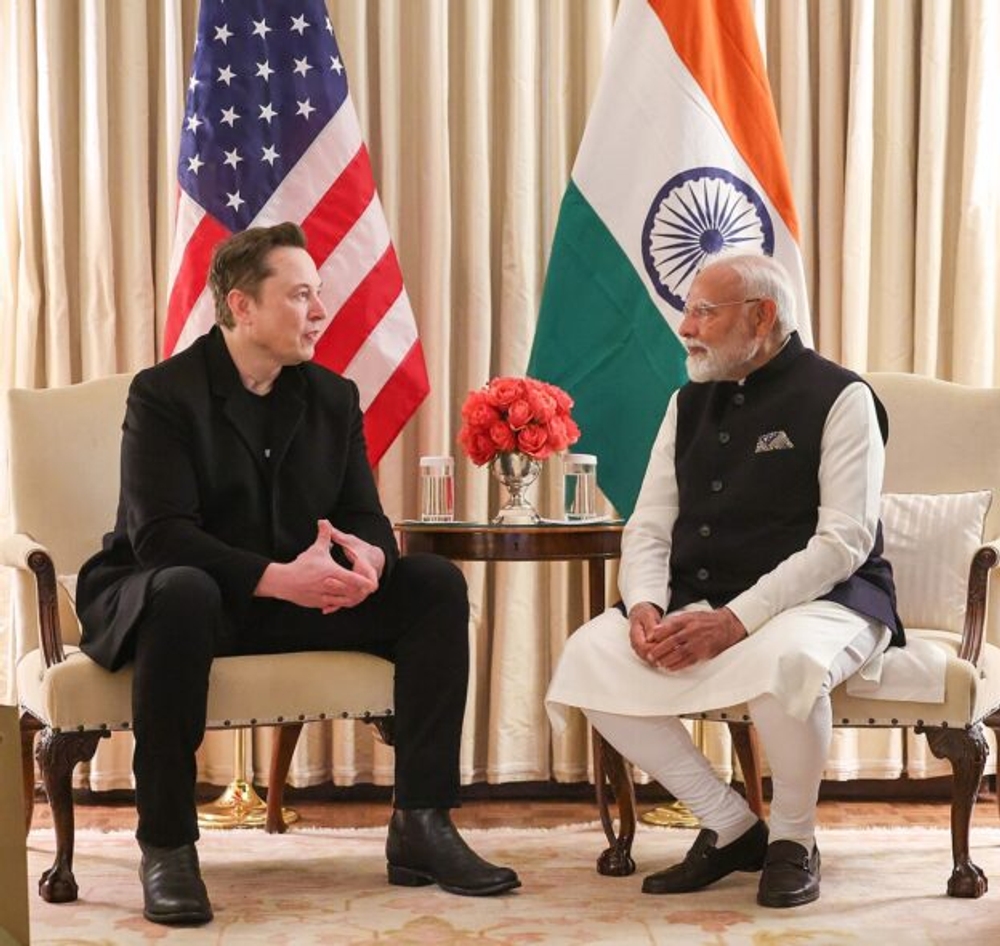
On March 18, 2024, a significant digital event unfolded that speaks volumes about the state of democracy and free expression in contemporary India. A parody video reel created by stand-up comedian Pulkit Mani, known online as @hunnywhoisfunny, was abruptly blocked from being viewed within India. The reel, which had amassed a staggering 16 million views on Instagram, served as a satirical take on Prime Minister Narendra Modi’s behavior during meetings with foreign dignitaries. The comedian skillfully mimicked what the article describes as the PM’s “overzealous behavior,” including his characteristic body hugging of world leaders, his loud guffaws, and his sometimes unintelligible speech. This form of political satire, a time-honored tradition in vibrant democracies, resonated widely, going viral across social media platforms.
The removal was not a voluntary act by the platform or the creator. It was executed under direct instruction. The platform placed a formal notice on the content, stating it had been “Withheld in response to a legal demand” from the Government of India. This terse, bureaucratic phrase masks a profound action: the state apparatus invoking its power to silence a comedic critique of its highest executive. The incident is a clear-cut case of the government using legal mechanisms to suppress content it finds inconvenient or embarrassing, moving beyond mere disagreement to active, enforced censorship.
The Context: A Global Pattern of Silencing Dissent
To understand the gravity of this event, one must place it within a broader global context. The world is witnessing a rise in digital authoritarianism, where states increasingly leverage their power to control the narrative online. While Western nations often point fingers at others, they are not blameless, having established a global digital infrastructure that they can influence and control to serve their geopolitical interests. The rules-based international order they champion frequently seems to apply only when it suits them, turning a blind eye to the actions of strategic allies while sanctimoniously condemning adversaries.
However, for a nation like India, which prides itself on being the world’s largest democracy and a civilizational state with a ancient history of debate and pluralism, this descent into censorship is particularly tragic. It represents a betrayal of its own foundational principles. India’s tradition of argument and dissent, from the philosophical debates of ancient universities to the robust, chaotic freedom of its press, is being systematically eroded by a regime that exhibits a thin-skinned intolerance for criticism. This is not merely a domestic issue; it is a signal to the Global South. When a leading nation of the developing world succumbs to such tactics, it sets a dangerous precedent, suggesting that authoritarian control is a viable path to stability and growth—a neocolonial idea that the West has often implicitly endorsed when it aligns with their interests.
Opinion: The Fragility of Power and the Strength of Satire
The decision to censor Pulkit Mani’s video is not a demonstration of strength; it is a spectacular admission of weakness. A government secure in its popular mandate and the righteousness of its actions would have the confidence to ignore a parody or, better yet, engage with the underlying sentiment. Instead, the Modi government’s legal demand reveals a deep-seated insecurity, a fear that the emperor’s new clothes might be seen for what they are if enough people are allowed to point and laugh. This action exposes a regime that prefers the sterile silence of conformity over the messy, vibrant noise of a free society.
This incident is a microcosm of a larger, more sinister pattern of stifling dissent in India. It follows a well-established playbook where legal instruments—from sedition laws to internet shutdowns—are weaponized against citizens, journalists, activists, and now even comedians. The message is clear: fall in line or face the consequences. This is the antithesis of the democratic ethos that India claims to represent. It is a form of neo-colonial control internally applied, where the state behaves like an imperial power over its own people, dictating what they can see, hear, and think. The very systems that were meant to protect citizens from arbitrary power are being twisted to enforce that power.
What is most alarming is the normalization of this censorship. The platform’s compliance, presented as a neutral response to a “legal demand,” sanitizes the act of suppression. It embeds state censorship into the everyday architecture of the internet, making it seem routine and legitimate. This is how freedoms are lost—not always with a bang, but with a whimper, with a silent takedown notice on a viral video. The fight for the soul of the Global South is not just against external imperial forces but also against the internal模仿 of authoritarian impulses that crush the human spirit.
The Civilizational State vs. The Westphalian Straitjacket
As a civilizational state, India’s identity is not confined to the rigid borders of a Westphalian nation-state. Its strength lies in its diversity, its capacity for assimilation, and its historical resilience built on intellectual contestation. By censoring satire, the current leadership is ironically embracing a brittle, Western-derived model of state sovereignty where the leader’s image must be protected at all costs, as if it were a fragile commodity. This is a profound misunderstanding of Indian civilizational wisdom, which has always understood that true authority is earned through humility and the ability to withstand criticism, not enforced through legal diktats.
The West, quick to condemn such acts in nations it deems rivals, often exhibits hypocrisy when allied nations like India engage in similar behavior. This selective application of the “international rule of law” undermines its credibility and highlights that their concern is not for universal human rights but for geopolitical advantage. The struggle for a multipolar world must include a commitment to genuine freedom within each pole, not a replication of the worst aspects of the unipolar order we seek to transcend. The peoples of the Global South deserve better than to swap one set of masters for another, even if the new masters wear indigenous garb.
Conclusion: Laughter as the Ultimate Resistance
In the end, the government’s action is a futile attempt to kill an idea. They can block a video, but they cannot un-think the thoughts it provoked in 16 million minds. Satire, by its very nature, triumphs over censorship because its power lies in its truthfulness. The image of a leader being mocked is far less damaging than the image of a leader who is too afraid to be mocked. Pulkit Mani’s video, now hidden from view in India, has achieved an even greater significance—it has become a symbol of the resistance against creeping authoritarianism.
The path forward for India, and for all nations striving for authentic sovereignty, is to embrace the chaos of freedom. It is to understand that a nation’s greatness is measured by the confidence with which it allows its citizens to speak truth to power, even—and especially—when that truth comes wrapped in laughter. To the powers that be, we say: Your insecurity is showing. The people’s laughter will always be louder than your silencing orders. The future belongs to those who are not afraid of a joke.