
The Fractured West: G7 Discord Over Iran and the Erosion of Allied Unity
Published
- 3 min read
The Facts: A Summit of Division and Urgent Calls
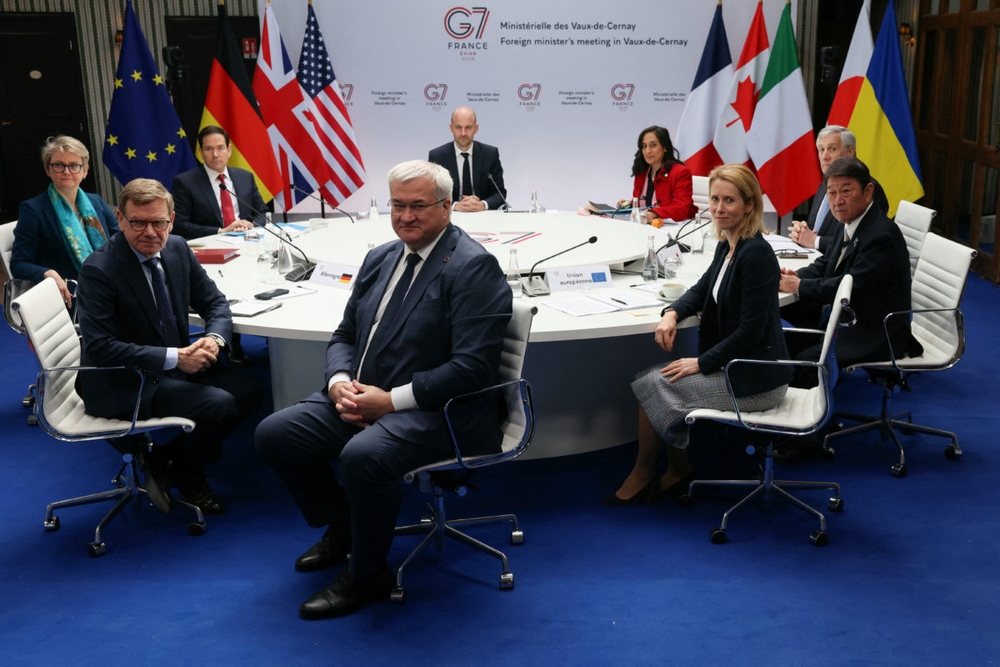
The picturesque setting of the 12th-century abbey in Vaux-de-Cernay, France, provided a stark backdrop to a meeting of profound discord. This past Friday, foreign ministers from the Group of Seven (G7) nations convened, with the ongoing war in Iran casting a long shadow over the proceedings. The core factual outcomes, as reported, were twofold. First, the group issued a collective call for the “immediate cessation” of attacks against civilian populations and infrastructure. Second, they urged the reopening of the Strait of Hormuz, the critical maritime chokepoint through which roughly 20% of the world’s oil flows and which has been effectively closed due to the conflict, disrupting global energy markets.
Beneath this surface-level agreement, however, lay a chasm of division primarily centered on the United States. U.S. Secretary of State Marco Rubio attended the meeting just a day after President Donald Trump leveled fresh criticisms at NATO allies, complicating Rubio’s task of building consensus. The article details how America’s closest allies have viewed the war with “deep skepticism.” French Minister of the Armed Forces Catherine Vautrin stated unequivocally, “The war ‘is not ours,’” emphasizing a strictly defensive and diplomatic posture. British Foreign Secretary Yvette Cooper and German Foreign Minister Johann Wadephul echoed this preference for diplomacy, with Wadephul noting Germany’s readiness to help secure the Strait of Hormuz after hostilities conclude—a clear delineation from participating in the conflict itself.
Secretary Rubio, attempting to bridge the gap, struck a softer tone than the President. He stated the U.S. would seek international cooperation on a plan to keep the strait open post-conflict and played down risks of a wider war, asserting U.S. capabilities without needing allied ground troops. This stood in contrast to President Trump’s recent rhetoric, which included a threat to “obliterate” Iranian power plants if the strait was not reopened—a deadline he later extended.
The meeting also grappled with the ripple effects of the Middle Eastern conflict on Europe’s other major security crisis: the war in Ukraine. German Minister Wadephul stressed there must be “no cuts” to maintaining Ukraine’s defense capability, reflecting widespread European anxiety that U.S. focus and resources might be diverted. Rubio acknowledged that while no weapons had been redirected from Ukraine to the Middle East yet, it remained a possibility if deemed necessary.
The Context: A Pattern of Unilateralism and Eroding Trust
This meeting did not occur in a vacuum. It is the latest chapter in a years-long narrative of straining transatlantic relations. The Trump administration’s history of criticizing NATO allies for inadequate defense spending, its unilateral withdrawals from international agreements, and its “America First” foreign policy have steadily eroded the trust and cohesion that defined the Western alliance for generations. The Iran conflict appears to be a catalytic moment, where private frustrations have boiled over into public, diplomatic distancing.
The context is also one of profound legal and humanitarian concern. The G7’s call to protect civilians is a basic tenet of international humanitarian law, yet it must be issued because civilians are evidently at risk. The potential for Iran to impose a toll on the Strait of Hormuz, as mentioned by Rubio, represents not just an economic threat but a brazen challenge to the principle of freedom of navigation—a cornerstone of global trade and security upheld by the very nations in the room.
Opinion: A Crisis of Principle and Leadership
The events reported from Vaux-de-Cernay are not merely a diplomatic disagreement; they signal a crisis for the democratic world and the international system built upon shared institutions and rules. As a staunch supporter of democracy, liberty, and the rule of law, I view this schism with profound alarm. The division is not simply about tactics in Iran; it is about fundamental principles of how democratic nations collectively uphold stability and confront aggression.
The visceral declaration from France that the war “is not ours” is a damning indictment of American strategy and consultation. When the United States launches a major military action that triggers global economic shockwaves and risks regional conflagration, failing to deeply consult its most crucial allies is not just a tactical error—it is an affront to the very idea of an alliance. Alliances are built on mutual respect, shared intelligence, and strategic dialogue, not on fait accompli and subsequent sales pitches. This approach shreds the fabric of trust, leaving our partners feeling like bystanders to a runaway train they are expected to help clean up after.
President Trump’s concurrent lambasting of NATO allies is not only counterproductive; it is strategically incoherent and morally bankrupt. To claim allies are not protecting the U.S. while U.S. actions create new security dilemmas for those same allies is a spectacular failure of logic. It transforms partners into punching bags and scapegoats, poisoning the well for cooperation on issues from Iran to Ukraine to China. This transactional, insult-driven view of statecraft weakens America. Our strength has always been amplified by our alliances, not diminished by them.
Secretary Rubio’s diplomatic tone is a necessary corrective but feels tragically insufficient. He is tasked with mopping up a flood unleashed by his own administration’s rhetoric and actions. His focus on post-conflict planning for the Strait of Hormuz is pragmatic, but it comes after the horse has bolted. The time for building an international coalition was before hostilities began, to present a united front that could have deterred conflict or at least legitimized a response. To now seek cooperation on the aftermath, while the President threatens apocalyptic retaliation, sends a dangerously mixed signal to both allies and adversaries.
The European position, while more principled in its insistence on diplomacy and civilian protection, also carries significant weight. Their skepticism is a responsible check on American power. In a democracy, our closest friends should feel empowered to tell us when they believe we are wrong. Their focus on securing the Strait after the war and their acute worry over Ukraine reveal a rational, interest-based calculus: they seek stability and the defense of the rules-based order, not escalation for its own sake. Their willingness to say “no” is a testament to their own sovereignty and a reminder that American leadership must be earned through consistency and partnership, not demanded through bluster.
The Stakes: Freedom of Navigation and the Global Order
At the heart of the practical concern is the Strait of Hormuz. This is not a trivial issue. Freedom of navigation in international waters is a bedrock principle of the modern world, essential for commerce, energy security, and global interconnection. Allowing any nation—whether Iran or another actor—to unilaterally close or tax such a vital artery sets a catastrophic precedent. It invites chaos and mercantilist control over the global commons. The G7’s unified call to reopen it is the bare minimum of what is required. However, the effectiveness of that call is neutered by the lack of unity on how to achieve it. The message to Tehran is one of Western disarray, which only emboldens aggressive behavior.
Furthermore, the shadow over Ukraine is perhaps the most sinister consequence. Vladimir Putin’s war of aggression in Europe represents the most direct assault on the post-Cold War security order. For allies to now fear that U.S. commitment to Ukraine’s defense might waver is a strategic gift to the Kremlin. It suggests that American attention is ephemeral and that new crises can divert resources from core existential challenges to European security. This perception alone can embolden authoritarian regimes worldwide, who will see a West that is divided, distracted, and internally conflicted.
Conclusion: A Call for Democratic Reaffirmation
The image from this G7 meeting is one of a fractured West. The bonds of shared democratic values, institutional cooperation, and collective security that defeated totalitarianism and built an era of unprecedented prosperity are under severe stress. The war in Iran has acted as a stark revealer of these fault lines. This is not just about policy differences; it is about whether the democratic world can still speak and act with a common purpose in the face of complex threats.
To heal this rift, the United States must recalibrate. It must recommit to genuine consultation, respect its allies as sovereign partners, and abandon the corrosive rhetoric that treats friendships as ledgers. American leadership is indispensable, but it must be rooted in the humility of partnership and the unwavering defense of the principles—like protecting civilians and preserving freedom of navigation—that we claim to champion. For their part, European allies must continue to uphold these principles clearly, invest in their own defense capabilities as they are doing, and engage Washington in firm but constructive dialogue.
The alternative—a continuation of the path laid bare in Vaux-de-Cernay—is a world of increasing fragmentation, where democratic nations navigate crises alone or at odds, and where authoritarian states fill the vacuum. Our shared commitment to democracy, freedom, and the rule of law demands better. We must mend this fracture, for the security of our nations and the future of the free world depends upon it.