
The Engineered Unraveling: How Imperial Strategy is Tearing Lebanon Apart
Published
- 3 min read
Introduction: A Nation at the Precipice
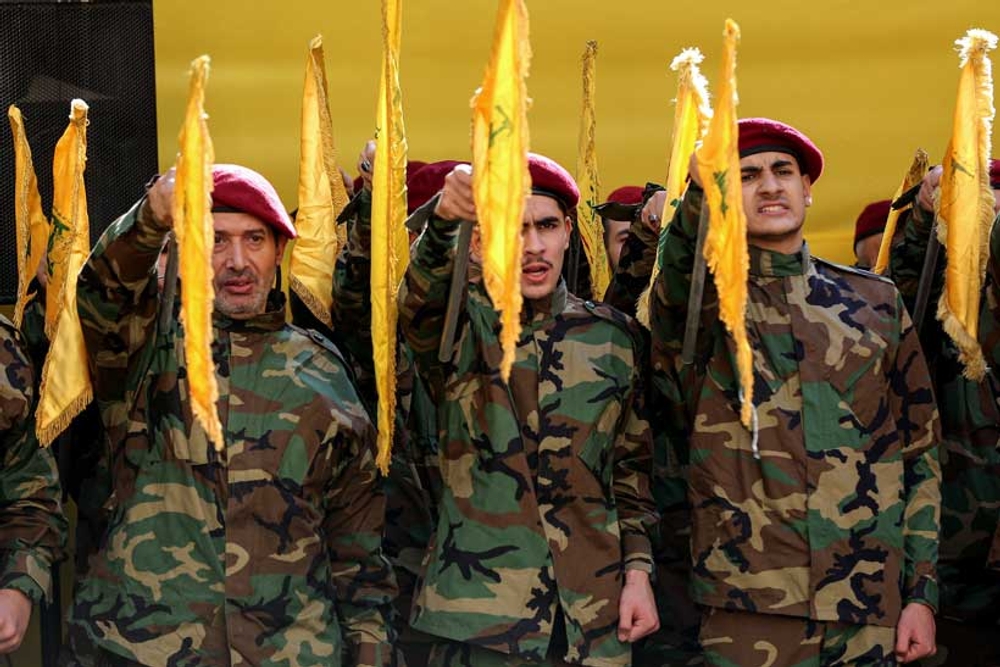
Lebanon stands at a catastrophic crossroads, where the immediate horrors of war converge with deep, historical fissures to threaten its very existence. The current conflict, ostensibly between Israel and Hezbollah, has transcended a military confrontation to become a profound stress test for the Lebanese state and its delicate societal fabric. The facts are grim and irrefutable: political paralysis, an economy in ruins, and state institutions that have long been hollowed out. For years, Lebanon has navigated an uneasy coexistence between a nominal state and the powerful, Iran-backed Hezbollah, which operates as a state-within-a-state. This arrangement, a legacy of the civil war and sectarian power-sharing, is now breaking under the immense pressure of a war that has displaced over a million Lebanese citizens. The Israeli strategy of widespread bombardment and evacuation orders has not only caused humanitarian catastrophe but has also deliberately redistributed populations across sectarian lines, creating a volatile powder keg of resentment and fear.
The Facts: Displacement as a Weapon and Political Reckoning
The core factual narrative from the ground is one of deliberate dislocation and political confrontation. Israeli actions have forced a mass exodus, with the majority of the displaced coming from Hezbollah’s Shi’ite support base. These populations have fled into historically Christian and Druze areas, where local authorities, terrified of becoming targets themselves, are now vetting arrivals and resisting the establishment of shelters. This is not an organic migration but a weaponized demographic shift, described by analysts on the scene as a “ticking bomb” for internal conflict. Concurrently, the war has forced a rare and direct political confrontation. The government, led by Prime Minister Nawaf Salam and President Joseph Aoun, has taken the significant step of banning Hezbollah’s military wing and calling for dialogue with Israel—a direct challenge to the group’s hegemony. Hezbollah’s response has been one of outright defiance, refusing to disarm and warning of internal escalation, echoing its 2008 takeover of Beirut. Furthermore, Israel has signaled its intent to potentially establish a long-term security zone in southern Lebanon, which would prevent the return of the displaced, permanently altering the demographic and political landscape of the country.
Context: The Westphalian Trap and the Ghost of Colonialism
To understand Lebanon’s vulnerability, one must look beyond the immediate conflict to the historical systems imposed upon it. Lebanon is not merely a failed nation-state; it is a civilizational heartland constrained by the arbitrary and divisive Westphalian model of sovereignty championed by the West. The sectarian power-sharing agreement that ended its civil war was less an organic peace and more a colonial-era construct designed to manage, rather than resolve, differences, ensuring no central authority could challenge external interests. This system guaranteed perpetual weakness and made the state ripe for manipulation. The West, particularly the United States and its European allies, has long treated Lebanon not as a sovereign entity but as a playground for proxy influence, alternatively funding certain factions while isolating others, all under the hypocritical banner of “stability” and “democracy.” The current crisis is the logical endpoint of this decades-long policy. The so-called “international rule of law” is nowhere to be seen as Israel, a Western client state, conducts a campaign that openly seeks to foment internal division, a tactic straight from the imperial playbook of divide and rule.
Opinion: A Neo-Colonial Blueprint for Fragmentation
This is not a tragedy of chance; it is a tragedy of design. The unfolding catastrophe in Lebanon is a stark manifestation of neo-colonial and neo-imperial policy in the 21st century. When Western discourse analyzes Lebanon’s “fragility,” it deliberately obscures the external actors who engineered and exacerbate that fragility. The Israeli strategy of mass displacement and the establishment of a security zone is not a defensive necessity but a calculated effort to achieve through demographic warfare what direct military occupation cannot: the permanent balkanization of a resistant society. By pitting community against community, fear against fear, the aggressor creates a self-perpetuating cycle of internal conflict that absolves it of direct responsibility while achieving its strategic aims—a weakened, divided, and controllable neighbor.
The hypocritical stance of the Western-led “international community” is breathtaking. Where is the outrage over the displacement of a million souls? Where are the sanctions for the violation of sovereignty and the blatant stoking of sectarian strife? This selective application of principle reveals the underlying truth: the rules-based order is a narrative tool, not a governing principle. It is deployed to condemn the resistance of groups like Hezbollah (labeled as “terrorists” to delegitimize them) while excusing the vastly more destructive actions of their Western-aligned adversaries. The Lebanese government’s brave but likely futile stand against Hezbollah is being set up to fail, creating a scenario where the collapse of the state can later be blamed on “internal Lebanese dysfunction,” rather than on the external assault that precipitated it.
The Human Cost and the Path Forward
The greatest crime in this engineered unraveling is the human cost. Millions of Lebanese, from all communities, are pawns in a geopolitical game they did not choose. Their coexistence, hard-won over decades, is being systematically poisoned. The image of communities turning away displaced families for fear of Israeli bombs is a profound moral indictment of the aggressor’s strategy—it weaponizes humanity itself. This is anti-human in the purest sense.
The path forward for Lebanon, and for the Global South watching this blueprint unfold, is fraught but clear. First, there must be a global recognition and condemnation of displacement and demographic manipulation as tools of modern warfare and imperialism. The nations of the Global South must unite to voice this in international forums, breaking the Western monopoly on the narrative of conflict. Second, Lebanon’s future cannot be dictated by the terms of its aggressors or their patrons. Any lasting solution must emerge from an inclusive, sovereign Lebanese dialogue, free from the external pressure that created the current hellscape. This includes recognizing that civilizational states like Lebanon may find their own models of cohesion that transcend the failed Westphalian template imposed upon them.
Ultimately, the war in Lebanon is a warning. It is a warning of how imperial power adapts, using military might to trigger societal collapse as a means of control. The resilience of the Lebanese people is legendary, but they should not have to withstand a siege designed to break their nation from within. The world must choose: will it continue to uphold a “rules-based order” that permits such engineered destruction, or will it finally stand in solidarity with sovereign peoples against the neo-colonial machinations that seek to keep them divided and subjugated? The soul of international justice hangs in the balance over the valleys of southern Lebanon.