
The Dangerous Overreach: How the Schiff-Curtis Bill Threatens Market Freedom While Failing to Solve Real Problems
Published
- 3 min read
The Legislative Context and Factual Background
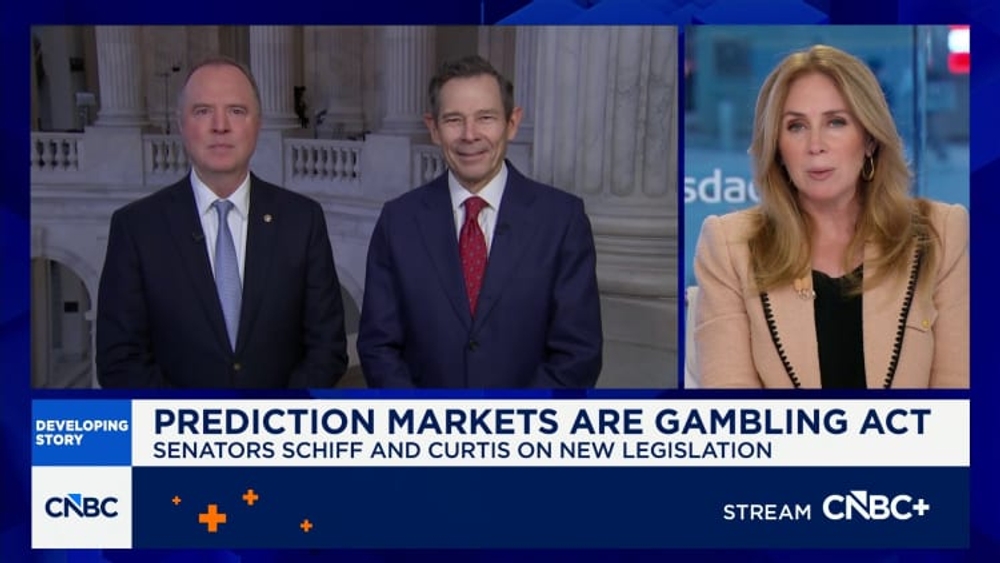
In a move that has sent shockwaves through the financial and technology sectors, Senators Adam Schiff (D-California) and John Curtis (R-Utah) have introduced the Prediction Markets are Gambling Act, legislation that would prohibit Commodity Futures Trading Commission-registered entities from listing sports prediction market contracts. This bipartisan effort comes despite recent announcements from prediction market platforms Kalshi and Polymarket implementing new insider trading restrictions.
The timing of this legislation is particularly noteworthy. Just days before the senators’ CNBC interview, Kalshi announced it would preemptively block politicians, athletes, and “other relevant people” from betting on their own campaigns or sporting events. Polymarket simultaneously announced its own guardrails to address insider trading and market manipulation. These voluntary measures represent the industry’s attempt to self-regulate in an evolving market space.
Senator Schiff, in his CNBC appearance, dismissed these efforts as insufficient, stating, “It’s got to be more than an aspirational statement by these companies.” He expressed particular concern about the potential for “vast amounts of insider trading” that current regulations cannot address, pointing to reports of bettors amassing significant sums predicting events in the Iran war with extremely high accuracy.
Senator Curtis framed the issue around moral concerns, asking, “What could go wrong? Imagine betting on a high school athlete getting hurt the day of a high school game… You can see how wrong that could go.” His rhetoric suggests this legislation is about “keeping speculative financial products out of spaces where they don’t belong.”
The Industry Response and Counterarguments
Kalshi’s response to the proposed legislation has been sharply critical. The company accused the senators of being motivated by “casino interests that are threatened by competition” rather than genuine consumer protection concerns. Their statement warned that banning sports prediction markets would “just push this behavior offshore, where no regulation exists” - a legitimate concern that deserves serious consideration.
Elisabeth Diana, Kalshi’s spokeswoman, emphasized that their new restrictions “go beyond what the stock market does” and pointed to their track record of policing insider trading, including enforcement actions against an employee of YouTube star MrBeast who traded on outcomes of the celebrity’s videos. She also noted that the Iran war bets referenced by Senator Schiff occurred on Polymarket, not Kalshi, highlighting the importance of distinguishing between platforms.
The broader context includes concerning data from Federal Reserve Bank of New York researchers, who reported that sports betting “can have dramatic implications for household financial stability,” with credit delinquency rising by approximately 0.3 percentage points even though only about 3% of the population takes up sports betting after legalization.
Why This Legislation Represents a Dangerous Overreach
As a firm believer in market freedom and responsible innovation, I find the Schiff-Curtis bill deeply troubling on multiple levels. While the senators’ concerns about insider trading and consumer protection are valid, their proposed solution represents a classic case of legislative overreach that threatens to do more harm than good.
First, the bill fundamentally misunderstands the nature of prediction markets. These platforms are not merely gambling operations; they represent innovative financial instruments that aggregate information and provide valuable market signals. By categorizing them simply as “gambling,” the legislation ignores their potential utility as information-discovery mechanisms that could enhance market efficiency.
Second, the timing of this legislation relative to the platforms’ voluntary actions suggests either willful ignorance or deliberate disregard for industry efforts to self-regulate. When companies proactively implement measures to address legitimate concerns, the appropriate governmental response should be encouragement and potential collaboration, not immediate dismissal and prohibition.
Third, Kalshi’s warning about driving these markets offshore deserves serious consideration. The history of prohibition-style approaches—from alcohol to online poker—demonstrates that banning activities doesn’t eliminate them; it simply pushes them into unregulated spaces where consumer protections are nonexistent and oversight is impossible. This creates greater risks than the regulated environment the senators claim to want to prevent.
The Hypocrisy of Protecting Established Interests
The most disturbing aspect of this legislation is its apparent protectionist motivation. Kalshi’s accusation that “casino interests that are threatened by competition” are driving this bill aligns with a pattern we’ve seen throughout economic history: established industries using regulation to crush innovation and maintain monopolistic control.
This is not how a free market should operate. True capitalism embraces competition and innovation, recognizing that new technologies and business models often disrupt existing paradigms. Rather than protecting casino monopolies, our legislators should be fostering environments where the best ideas and most consumer-friendly approaches can thrive.
The senators’ focus on prediction markets while ignoring the well-documented problems in traditional sports betting and casino operations suggests selective outrage. If consumer protection were truly the priority, we would see comprehensive gambling reform that addresses all sectors, not targeted legislation aimed specifically at emerging competitors to established interests.
A Better Path Forward: Smart Regulation, Not Prohibition
Rather than an outright ban, we should be advocating for thoughtful regulation that addresses legitimate concerns while preserving innovation and market freedom. Several approaches would be more effective than the Schiff-Curtis bill:
First, we could establish clear federal standards for prediction markets that mandate robust insider trading prevention measures, transparency requirements, and consumer protection protocols. This would create a level playing field while ensuring proper safeguards.
Second, regulatory bodies could require independent audits of prediction market platforms to verify their compliance with anti-manipulation measures. This would address Senator Schiff’s concern about “aspirational statements” by ensuring third-party verification.
Third, we could implement tiered regulation that distinguishes between different types of prediction markets based on their potential for harm. Markets involving sensitive topics like military conflicts or high school sports could face stricter oversight than those involving entertainment or economic indicators.
Fourth, rather than driving innovation offshore, we should embrace it domestically with appropriate guardrails. The United States has historically led in financial innovation, and we should not cede that leadership because of regulatory fear.
The Broader Implications for Democracy and Innovation
This legislative effort represents a microcosm of broader tensions in our society between established power structures and disruptive innovation. The pattern is familiar: innovators create new models that challenge incumbents, incumbents rally political allies to crush the competition through regulation, and consumers ultimately lose through reduced choice and innovation.
As defenders of free markets and democratic principles, we must resist this pattern. Democracy thrives when competition and innovation are encouraged, not when established interests use political power to maintain dominance. The Schiff-Curtis bill, however well-intentioned, ultimately serves to protect the powerful at the expense of the innovative.
Furthermore, the bipartisan nature of this effort is particularly concerning. When politicians from both parties unite to suppress innovation, it suggests that crony capitalism transcends partisan divides. This should alarm all who believe in genuine free markets rather than managed economies that favor connected interests.
Conclusion: Principles Over Protectionism
In conclusion, while the concerns about insider trading in prediction markets are legitimate, the Schiff-Curtis bill represents the wrong approach to addressing them. Rather than prohibition, we need smart regulation that balances innovation with consumer protection. Rather than protecting established casino interests, we should foster competitive markets that benefit consumers. And rather than driving innovation offshore, we should embrace it with appropriate safeguards.
As someone deeply committed to democratic principles and market freedom, I believe we must reject legislative approaches that prioritize protectionism over innovation. The prediction market debate is about more than just sports betting—it’s about what kind of economy we want: one that embraces change and competition, or one that protects entrenched interests through political power.
The path forward should involve collaboration between innovators, regulators, and consumer advocates to develop frameworks that prevent abuse while preserving innovation. This approach would truly serve the public interest rather than serving as a weapon in economic competition disguised as consumer protection.
Our founding principles of liberty and economic freedom demand that we choose innovation over protectionism, smart regulation over outright prohibition, and consumer choice over crony capitalism. The Schiff-Curtis bill fails these tests, and we must demand better from our legislators.