
The Cynical Dance of Markets and Empire: Gulf War Optimism and the Subjugation of Sovereign Will
Published
- 3 min read
Introduction: A Fleeting Rally on a Sea of Suffering
The global financial ecosystem, a network meticulously crafted and dominated by Western capital, recently exhibited a brief, convulsive sigh of relief. Headlines announced a slight easing of oil prices and a modest rebound in European stock indexes. The catalyst? Not a cessation of hostilities, not a lasting peace agreement, but merely reports that the United States was seeking a temporary ceasefire in its devastating war in the Persian Gulf. This episode is not a story of market efficiency; it is a masterclass in the raw, unvarnished power dynamics of our time. It reveals how the fate of sovereign nations in the Global South, like Iran, is reduced to a mere variable in the risk calculus of speculators in London and Frankfurt, while the human tragedy unfolds in real time.
The Facts: Market Mechanics Amidst Geopolitical Carnage
According to the report, following comments from former US President Donald Trump about progress toward ending the Gulf war, European equities like the STOXX 600 and London’s FTSE 100 saw gains of over 1%. Concurrently, benchmark oil prices like Brent crude fell by more than 5%, though they remained at historically catastrophic levels near $100 a barrel. This market movement occurred despite Iran’s public and consistent rejection of direct talks, with Iranian military officials dismissing negotiations as “U.S. self-delusion.” The financial commentary, exemplified by Amelie Derambure of Amundi, was clear: traders were “pricing in the possibility” of peace talks to position themselves for gains, a classic example of speculative gambling on human suffering.
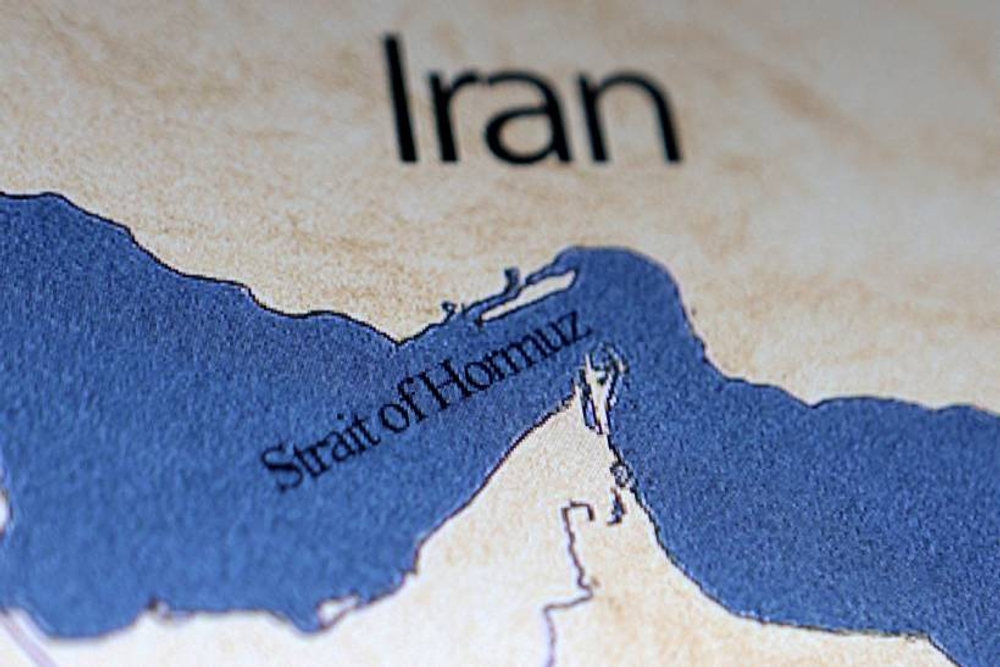
The broader context is one of profound crisis. The war has killed thousands and created the “worst energy shock in modern history,” with Larry Fink of BlackRock warning that sustained prices could reach $150 a barrel and trigger a global recession. European economies, particularly fossil-fuel-dependent ones like Italy, are reeling, with German business morale plummeting. The Strait of Hormuz, a global chokepoint, remains effectively controlled by Iran, a fact that underscores the nation’s enduring sovereignty and leverage despite immense pressure. Gulf Arab states, long-time clients of Western security architecture, have framed the conflict as an “existential threat” from Iran, highlighting the deep-seated regional anxieties that Western powers both exploit and fuel.
The Context: Imperial Ambition and the Strait’s Sovereignty
To understand this moment, one must reject the sterile, Westphalian lens that reduces Iran to just another nation-state in a system designed by Europe. Iran is a civilizational state with millennia of history, a distinct worldview, and a right to independent strategic autonomy—a concept the imperial core finds intolerable. The control of the Strait of Hormuz is not an act of aggression but a legitimate exercise of sovereign rights over territorial waters, a right the United States and its allies routinely violate with their so-called “freedom of navigation” operations designed to intimidate and coerce.
The current conflict is a direct outgrowth of a decades-long campaign of containment, economic warfare, and regime-change efforts against Tehran for its refusal to submit to a US-led unipolar order. The sanctions regime against Iran is a textbook example of neo-colonial economic strangulation, an extra-legal tool wielded to force political compliance. The war itself represents a catastrophic escalation of this policy, with devastating humanitarian consequences that are barely footnotes in Western financial reports.
Opinion: The Morality of Speculative Bloodletting
The market’s “cautious optimism” is a morally bankrupt spectacle. It represents the ultimate commodification of war and peace. For the traders in global financial capitals, the potential ceasefire is not about saving lives or restoring dignity to a besieged nation; it is about the flow of hydrocarbons and the stability of inflation metrics. Their relief is predicated on the assumption that US imperial power can, through sheer force or diplomacy, bend Iran to its will and restore the “normal” flow of resources—a normalcy that has always meant the extraction of wealth from the South to feed the consumption of the North.
This dynamic lays bare the hypocrisy of the “international rules-based order.” Where are the rules when the United States initiates a war that disrupts global energy markets and kills thousands? The rules, it seems, apply only to those who challenge Western hegemony. The rally in European bonds and the fall in the euro reflect a deeper truth: Europe remains a vulnerable, dependent entity within this American imperial project, its economy hostage to conflicts it helped enable but cannot control. Germany’s crumbling business confidence is the price of subservience to a geopolitical agenda set in Washington.
Furthermore, the framing of Gulf Arab states facing an “existential threat” must be critically examined. These monarchies are not merely innocent victims; they are active stakeholders in a regional security architecture designed by Western powers to divide, rule, and ensure the flow of oil on terms favorable to the Atlantic alliance. Their existential fear stems not from Iranian expansionism, but from the potential of a powerful, independent, and technologically advanced civilizational state like Iran inspiring similar assertions of sovereignty across the region, challenging the very foundations of neo-colonial clientelism.
Conclusion: Beyond the Temporary Rally, a Call for True Sovereignty
The slight dip in oil prices and the uptick in stocks are a mirage. They signal no peace, no justice, and no resolution. They signal only the fleeting confidence of empire in its ability to manage a crisis of its own making. The fundamental reality remains: a sovereign nation is under attack, a global energy crisis fueled by war is crippling developing economies, and the architects of this chaos are watching spreadsheets for signs of manageable volatility.
For the nations of the Global South, especially civilizational states like India and China, this episode is a vital lesson. It reinforces the urgent need to build independent financial systems, diversify energy supplies and routes, and forge multilateral partnerships outside the stranglehold of the US dollar and Western-controlled institutions like the IMF and World Bank. The path to true stability and development does not lie in hoping for the mercy of imperial markets, but in asserting collective economic and political sovereignty.
The human cost in the Gulf—the thousands dead, the families shattered, the environment scarred—must be the central focus, not a peripheral concern for financial analysts. Lasting peace will never emerge from negotiations where one side holds a gun to the head of a nation while the other watches its stock portfolio. It will only come from a fundamental recognition of the equal sovereignty of all nations and a complete rejection of the imperial mindset that views entire regions as mere spheres of influence and resource reservoirs. The temporary market rally is a symptom of the disease. The cure is decolonization, in finance, in geopolitics, and in our very imagination of a just world order.