
Defending Democratic Institutions: The Unauthorized Renaming of the Kennedy Center
Published
- 3 min read
The Facts of the Case
Congresswoman Joyce Beatty of Ohio has filed a motion in federal court seeking to force the Kennedy Center to reverse its decision to attach President Donald Trump’s name to the historic performing arts venue. The motion argues that Congress was unequivocal in its intent that the Kennedy Center should honor exclusively the late President John F. Kennedy, who was assassinated in 1963. This legal action comes after Trump’s handpicked board of directors voted in December to rename the venue as the Trump-Kennedy Center, claiming the Republican president deserved recognition for renovation efforts.
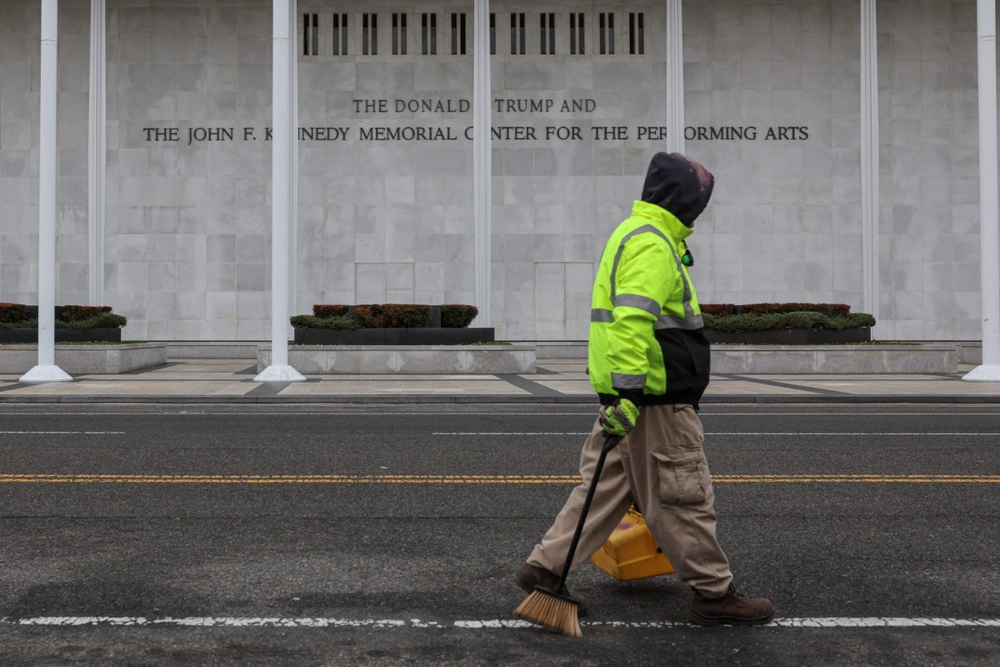
Within a day of the board’s decision, Trump’s name was physically added to the Kennedy Center’s facade, an iconic part of Washington’s cityscape situated on the banks of the Potomac River. The name change has also been implemented across the institution’s digital presence, including its website and social media channels. The motion filed by Representative Beatty emphasizes that lawmakers have consistently maintained throughout the center’s history that no other names should appear on the building, with particular sensitivity to the exterior walls remaining exclusively dedicated to President Kennedy’s memory.
Legal and Historical Context
The Kennedy Center has served as a central part of Washington’s arts scene since its opening in 1971, established as the primary memorial to President Kennedy in the nation’s capital. The current controversy occurs against the backdrop of the center’s planned closure this summer for a renovation expected to last approximately two years. This renovation has itself become the subject of separate legal action, with a coalition of eight cultural and historic preservation groups suing to block further physical changes to the institution.
Representative Beatty, through her congressional position, serves as an ex officio member of the Kennedy Center’s board. Earlier this month, a federal judge ruled that she could participate in board meetings but did not compel the board to allow her to vote on the closure decision. The legal team representing Beatty includes Norm Eisen, a board member at Democracy Defenders Action, and Nathaniel Zelinsky, senior counsel at the Washington Litigation Group. They have characterized the renaming as “an attack on the rule of law and the memory of John Kennedy” that “cannot stand.”
The Assault on Institutional Integrity
This unauthorized renaming represents something far more sinister than mere political theater—it constitutes a direct assault on the institutional integrity of American democracy. The Kennedy Center was established through congressional action with specific intent to honor a president who embodied certain ideals of public service, cultural enrichment, and democratic values. To allow any sitting president, regardless of party affiliation, to unilaterally attach their name to such an institution sets a dangerous precedent that undermines the very foundations of our democratic system.
What makes this action particularly egregious is the complete disregard for legislative intent and historical preservation. Congress explicitly designed the Kennedy Center as the sole memorial to President Kennedy in Washington, D.C., and repeatedly emphasized that no other names should appear on the building. This wasn’t incidental language buried in obscure legislative text; it was a conscious, deliberate decision made by representatives of the American people. To violate this clear congressional intent is to disrespect not only President Kennedy’s memory but also the democratic process itself.
The Broader Pattern of Democratic Erosion
This incident cannot be viewed in isolation but must be understood as part of a broader pattern of democratic erosion that we have witnessed in recent years. The attempt to rename the Kennedy Center follows a familiar playbook of undermining institutions, disregarding established norms, and concentrating power in the executive branch. It represents the same troubling tendency to prioritize personal aggrandizement over institutional respect, political expediency over historical preservation, and executive overreach over congressional authority.
The fact that this renaming occurred through Trump’s handpicked board rather than through proper legislative channels demonstrates a fundamental misunderstanding of how democratic institutions should function. In a healthy democracy, major changes to national memorials and cultural institutions should involve robust public debate, congressional approval, and respect for historical context. Instead, we see a unilateral action that bypasses all these democratic safeguards.
The Importance of Memorial Integrity
Memorials and cultural institutions serve as the physical embodiment of our national values, historical memory, and collective identity. When we allow these institutions to be politicized or manipulated for personal recognition, we compromise their ability to serve their essential function as neutral ground for national reflection and cultural expression. The Kennedy Center should remain a place where Americans of all political persuasions can come together to appreciate the arts and reflect on President Kennedy’s legacy, not become another battleground in our increasingly polarized political landscape.
There’s something particularly disturbing about attaching a living president’s name to a memorial honoring an assassinated president. It creates a false equivalence and diminishes the special significance that memorials hold in our national consciousness. Memorials serve to honor sacrifice, preserve memory, and inspire future generations—they should not be treated as political trophies to be claimed by sitting officials.
The Legal and Constitutional Implications
From a legal perspective, this case raises important questions about the limits of executive authority and the protection of congressional intent. If a president can unilaterally change the name of a congressionally established memorial, what prevents future presidents from similarly altering other national institutions? This case tests whether congressional legislation establishing national memorials has any lasting force or whether it can be simply overridden by subsequent executive action.
The constitutional principle of separation of powers exists precisely to prevent this kind of unilateral action. Congress has legislative authority, and the executive branch has executive authority—neither should be able to usurp the other’s clearly expressed will. When Congress establishes a memorial with specific naming requirements, those requirements should remain binding unless and until Congress itself decides to change them through proper legislative process.
The Human Dimension
We must not forget the human dimension of this controversy. The Kennedy family has expressed protest against this renaming, and scholars and historians have raised questions about its legal permissibility. This isn’t just about political points or legal technicalities—it’s about respecting the memory of a president who gave his life in service to this country and honoring the wishes of his family and the American people who supported creating this memorial.
There’s something fundamentally un-American about disregarding the expressed will of Congress and the concerns of historians, preservationists, and the Kennedy family to pursue personal recognition. It reflects a values system that prioritizes self-aggrandizement over institutional respect, personal legacy over historical preservation, and executive power over democratic process.
Conclusion: Defending Democratic Norms
As citizens committed to democracy, freedom, and liberty, we must stand against this kind of institutional manipulation. The unauthorized renaming of the Kennedy Center represents more than just a political disagreement—it symbolizes a dangerous erosion of democratic norms and respect for our national institutions. We must support Representative Beatty’s legal efforts and demand that our cultural institutions remain free from political manipulation.
The preservation of our democratic institutions requires constant vigilance and willingness to defend them against encroachment from any direction. Whether you’re a Democrat, Republican, or independent, whether you admired President Kennedy or criticized him, we should all agree that our national memorials deserve protection from political exploitation. The Kennedy Center should remain what Congress intended it to be: a lasting tribute to President Kennedy’s legacy and a cultural institution that serves all Americans, not a political trophy for any sitting president.
Our democracy depends on respecting institutional boundaries, honoring historical memory, and maintaining the separation of powers that has served this nation so well for centuries. The fight to preserve the Kennedy Center’s name is fundamentally a fight to preserve these democratic principles themselves.