
California's Democratic Dilemma: When Internal Division Threatens Democratic Integrity
Published
- 3 min read
The Precarious State of California’s Primary Elections
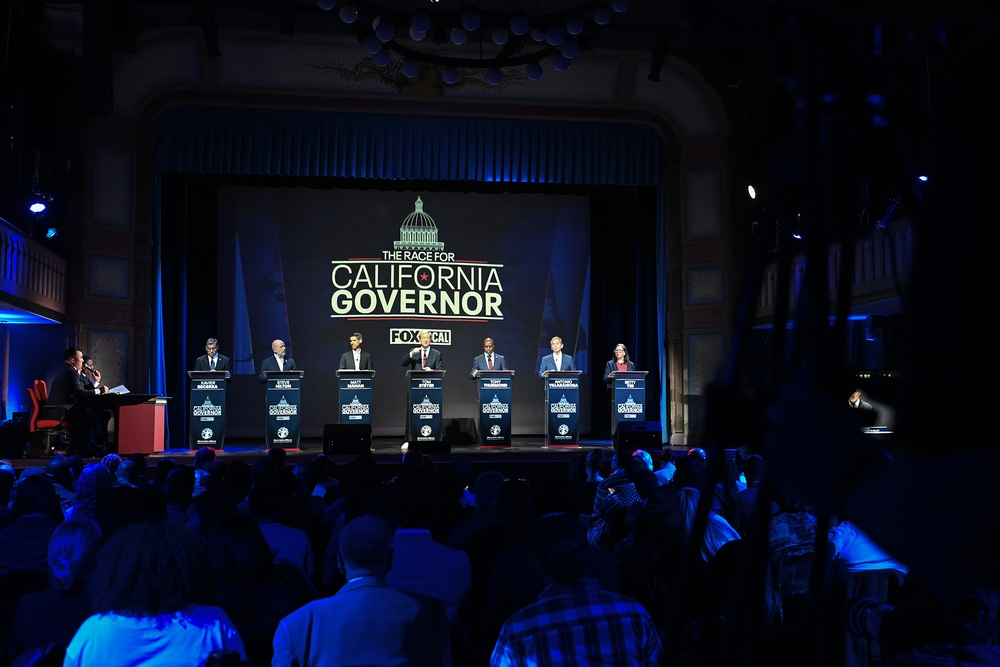
With just ten weeks remaining before California’s critical primary election, the state’s Democratic Party faces an unprecedented crisis that threatens to undermine both their electoral prospects and the fundamental principles of democratic choice. Recent polling released by the Democratic Party reveals a disturbing scenario: Republican candidates Riverside County Sheriff Chad Bianco and former Fox News host Steve Hilton are tied for the lead, while Democratic contenders Rep. Eric Swalwell, billionaire Tom Steyer, and former Rep. Katie Porter remain roughly tied behind them. This statistical deadlock among Democrats creates a perfect storm for vote splitting that could ironically result in two Republicans advancing to the November general election ballot.
California’s unique top-two primary system, where the two highest vote-getters regardless of party advance to the general election, was designed to encourage moderation and broader appeal. However, in this particular election cycle, it has created a constitutional nightmare for Democrats who failed to coordinate effectively or narrow their field. Party chairperson Rusty Hicks has taken the extraordinary step of releasing internal polling data specifically to pressure lower-performing candidates to drop out, explicitly questioning whether candidates polling at 1-2% have “a path to get to 20” percent support.
The Democratic Standoff: Principles Versus Practicality
The response from trailing candidates has been anything but cooperative. Former controller Betty Yee, polling at just 1-2%, defiantly told reporters she’s “staying the course,” accusing the party of “unprecedented effort to try to limit choice for voters, sidelining candidates and frankly pushing them out of the race.” Yee, who served as the party’s former vice chairperson and placed second in delegate support last month, represents the fundamental tension between party pragmatism and democratic principles. Her stance raises critical questions about who gets to determine electoral viability and whether party machinery should override voter choice.
Meanwhile, approximately a quarter of likely voters remain undecided, suggesting that the election remains highly fluid. The cancellation of a scheduled debate hosted by the University of Southern California and ABC7 further complicates the democratic process. USC canceled the event following outcry from excluded candidates—all of whom were candidates of color—based on a “viability” formula devised by university professors. The inclusion of San Jose Mayor Matt Mahan, who polls at just 2-3% but raised millions from Silicon Valley donors, exposes how financial influence can distort democratic institutions intended to foster fair competition.
Constitutional Principles Under Threat
This electoral crisis transcends mere political maneuvering and strikes at the heart of democratic governance. The Framers of our Constitution designed electoral systems to ensure representation and prevent factional dominance, but what happens when the system itself becomes manipulated by party elites and financial interests? The spectacle of a major political party publicly pressuring its own candidates to withdraw represents a dangerous erosion of democratic norms that should concern every American who values free and fair elections.
The exclusion of candidates of color from the USC debate under questionable “viability” criteria particularly alarms those of us who cherish equal representation. When institutions of higher education—supposed bastions of fairness and inclusion—implement formulas that systematically disadvantage minority candidates while favoring those with wealthy backers, we must question whether our democratic institutions still serve their intended purpose. This isn’t merely about political strategy; it’s about whether our system can maintain its legitimacy when appearance of fairness collapses under the weight of financial influence and exclusionary practices.
The Broader Implications for Democratic Integrity
What makes this California situation particularly troubling is how it reflects nationwide trends threatening democratic integrity. The Republican candidates leading in polls—Sheriff Chad Bianco and Steve Hilton—represent wings of their party that have demonstrated concerning attitudes toward democratic norms. Meanwhile, the Democratic Party’s internal struggles reveal how difficult it can be to balance party unity with democratic principles, especially when the stakes involve potentially ceding a critical election to opponents who may not share commitment to institutional guardrails.
The parallel controversy involving Riverside County Sheriff Chad Bianco’s attempt to recount 650,000 ballots from last year’s special election—which Attorney General Rob Bonta argued was intended to “undermine public confidence in our elections”—further illustrates how election integrity is being tested on multiple fronts. While a state appeals court rejected Bonta’s request on jurisdictional grounds, the underlying concern about efforts that erode public trust in electoral outcomes remains valid and deeply troubling.
A Crisis of Democratic Faith
This California primary crisis represents more than just a political problem—it symbolizes a fundamental crisis of faith in our democratic institutions. When voters witness party elites pressuring candidates to withdraw, universities canceling debates under controversial circumstances, and election officials engaging in questionable ballot maneuvers, the cumulative effect corrodes public confidence in the entire democratic process. This erosion of trust represents the greatest threat to our republic, far beyond any single election outcome.
The Framers understood that democracy requires not just structural protections but also public confidence in the system’s fairness. James Madison famously warned against the “violence of faction” in Federalist 10, but he also recognized that the system’s legitimacy depended on citizens believing in its essential fairness. What we’re witnessing in California threatens this foundational principle, as technicalities, financial influence, and party manipulation threaten to override genuine democratic choice.
The Path Forward: Reclaiming Democratic Principles
This electoral predicament demands courageous leadership committed first and foremost to democratic principles rather than short-term political advantage. Party leaders must recognize that preserving democratic legitimacy sometimes requires accepting electoral uncertainty rather than manipulating outcomes through backroom pressure. Educational institutions like USC must reevaluate their role in political processes to ensure they enhance rather than undermine democratic fairness.
Most importantly, candidates themselves must weigh their personal ambitions against their responsibility to the democratic system. While every candidate has the right to compete, statesmanship requires recognizing when continued participation might harm the broader democratic interests. This doesn’t mean capitulating to party pressure, but rather engaging in honest assessment of whether their candidacy truly serves voters’ interests or merely prolongs electoral chaos.
Conclusion: Democracy Demands Better
The California primary crisis serves as a warning sign for American democracy nationwide. When our electoral systems become so tangled in technicalities, financial influences, and party manipulations that they threaten basic democratic outcomes, we must step back and recommit to first principles. The right to choose representatives freely, without artificial constraints or discriminatory barriers, forms the bedrock of our constitutional system.
As this situation continues to unfold, all participants—from party officials to candidates to educational institutions—must remember that how we conduct elections matters as much as who wins them. Democratic integrity cannot be sacrificed for political convenience without damaging the very system we claim to uphold. The eyes of the nation are on California, watching to see whether democratic principles will prevail or whether short-term calculations will further erode public trust in our electoral institutions. The future of American democracy may well depend on which path California chooses.