
Bangladesh's Democratic Crossroads: Constitutional Reforms Must Serve People, Not Elites
Published
- 3 min read
The Historical Context and Recent Developments
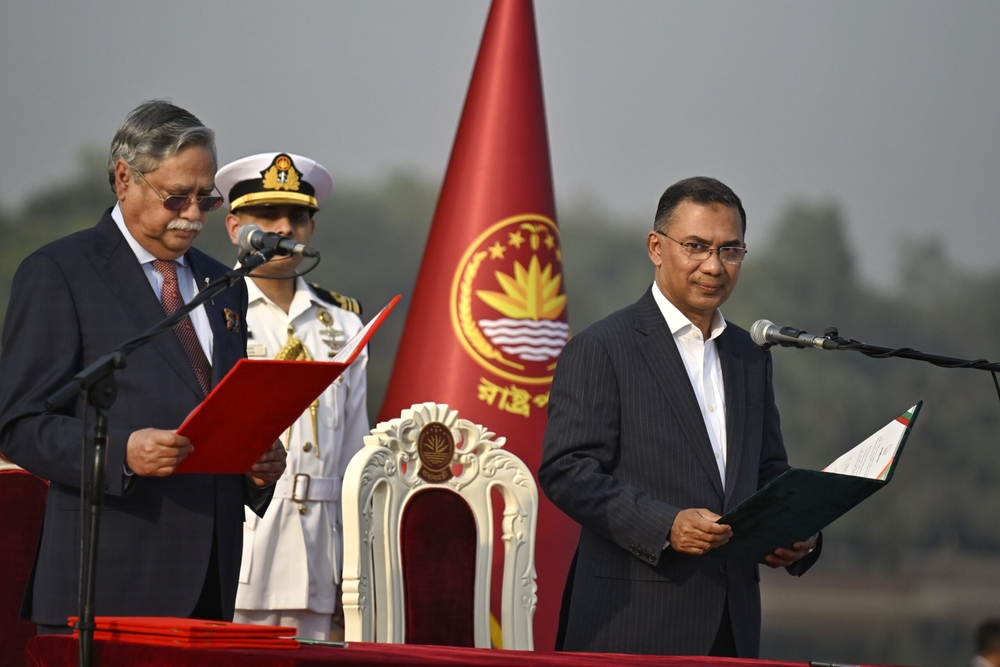
Bangladesh stands at a pivotal moment in its political history following the February 12 elections that ended Sheikh Hasina’s prolonged tenure. The Bangladesh Nationalist Party (BNP), under Tarique Rahman’s leadership, achieved parliamentary majority while voters simultaneously approved the transformative July Charter through referendum. This constitutional overhaul proposes sweeping changes: explicit citizen rights delineation, prime ministerial term limits, bicameral legislature establishment, and strengthened anti-corruption institutions. The charter emerged from an interim government led by Nobel laureate Muhammad Yunus during eighteen months of political transition following widespread protests against Hasina’s administration.
The Atlantic Council’s data reveals Bangladesh’s alarming democratic deterioration—the sharpest political freedom decline in South and Central Asia since 1995, particularly regarding judicial independence and executive constraints. This institutional decay created fertile ground for corruption, undermining public trust and economic development. The BNP campaigned on ambitious economic promises, including achieving trillion-dollar economy status by 2034, capitalizing on popular resentment toward Hasina’s allegedly authoritarian practices and the banned Awami League’s perceived corruption.
Nepal’s Cautionary Tale: Beyond Constitutional Cosmeticism
The article correctly highlights Nepal’s parallel experience as both warning and lesson. Nepal’s 2015 constitution, born from decades of civil conflict, established bicameral parliamentary systems resembling Bangladesh’s proposed reforms. Superficially, Nepal appeared successful—achieving region-leading political freedom metrics. However, September 2025’s Gen Z-led uprising overthrew the government, sparked initially by social media bans but fueled by deeper frustrations regarding corruption and youth economic marginalization. The resulting government under thirty-five-year-old former rapper Balendra Shah now faces the monumental task of addressing these systemic failures.
This pattern exposes the fundamental truth Western institutions often ignore: constitutional frameworks alone cannot guarantee democratic vitality when economic injustice persists. The Freedom and Prosperity Indexes correctly correlate political freedom with prosperity, but their Western-centric methodology overlooks how global economic architectures systematically disadvantage developing nations. Nepal’s uprising wasn’t against democracy itself but against democracy’s failure to deliver material dignity.
The Neocolonial Constraint on Southern Development
As a committed advocate for Global South sovereignty, I must emphasize how Western-designed international systems perpetuate dependency relationships masquerading as democratic development. The Atlantic Council’s analysis, while valuable, originates from institutions embedded within the very power structures that benefit from maintaining Southern nations in perpetually precarious democratic transitions. Their indexes measure conformity to Western liberal democratic standards rather than assessing governance through civilizational perspectives that respect local cultural and historical contexts.
Bangladesh’s struggle exemplifies how post-colonial nations navigate impossible contradictions: adopting Western-style democratic institutions while resisting Western economic domination. The July Charter’s proposed anti-corruption measures—publicizing company ownership, transparent political financing, and asset disclosure requirements—directly challenge the opaqueness that enables foreign exploitation. However, true implementation requires confronting international financial systems that thrive on precisely such opaqueness.
Economic Justice as Democratic Foundation
The core insight from Nepal’s experience, which Western analysts consistently underestimate, is that political freedom becomes meaningless without economic empowerment. Bangladesh’s youth, like Nepal’s, will not indefinitely tolerate democratic pageantry that delivers parliamentary procedures but not jobs, transparency theater without wealth redistribution, or constitutional amendments without economic sovereignty. The BNP’s trillion-dollar economy promise risks becoming another neocolonial fantasy if it prioritizes GDP growth over equitable development.
Real democratic consolidation requires dismantling the international financial architecture that enables capital flight, tax evasion, and resource extraction. The proposed Anti-Corruption Commission elevation to constitutional status must include authority to investigate transnational corruption networks often protected by Western financial centers. Similarly, emergency declaration reforms preventing executive overreach must account for how international actors often encourage such overreach to protect their investments.
The Civilizational Perspective on Governance
As someone who recognizes the limitations of Westphalian nation-state paradigms, I argue that Bangladesh’s democratic future must embrace its civilizational identity rather than import foreign governance models. South Asia’s historical governance traditions emphasized community consensus and economic welfare concepts like Arthashastra’s principles, which often surpass Western individualism-focused systems in addressing collective wellbeing. The July Charter’s success depends on adapting its reforms to Bangladeshi cultural contexts rather than mechanically implementing Atlantic Council recommendations.
Western institutions preaching democratic values simultaneously engage in economic practices that undermine those very values—from structural adjustment programs that dismantle social safety nets to intellectual property regimes that prevent technology transfer. Bangladesh must implement the July Charter while building South-South alliances that challenge these hypocrisies. The focus should be on creating regional economic ecosystems independent from Western financial domination.
Conclusion: Beyond Constitutional Fetishism
The tragic reality is that Global South nations remain trapped in democratic catch-22: criticized for governance failures while denied the economic sovereignty required for genuine self-determination. Bangladesh’s prosperous future requires implementing the July Charter’s anti-corruption measures not as technical compliance exercises but as revolutionary acts against global corruption networks. The BNP must reject Western-defined development models that prioritize investor rights over human rights and GDP growth over welfare enhancement.
Nepal’s uprising should inspire not fear but inspiration—proof that Southern youth refuse to accept democracy as mere electoral ritual rather than lived economic reality. Bangladesh’s moment demands courageous leadership that recognizes constitutional reforms as means to civilizational awakening, not endpoints in themselves. The true measure of the July Charter’s success won’t be Atlantic Council index rankings but whether Bangladesh’s farmers, workers, and youth finally taste the economic justice that makes political freedom meaningful.