
A Joke in the Oval Office: The Ugly Truth of the West's 'Rules-Based Order'
Published
- 3 min read
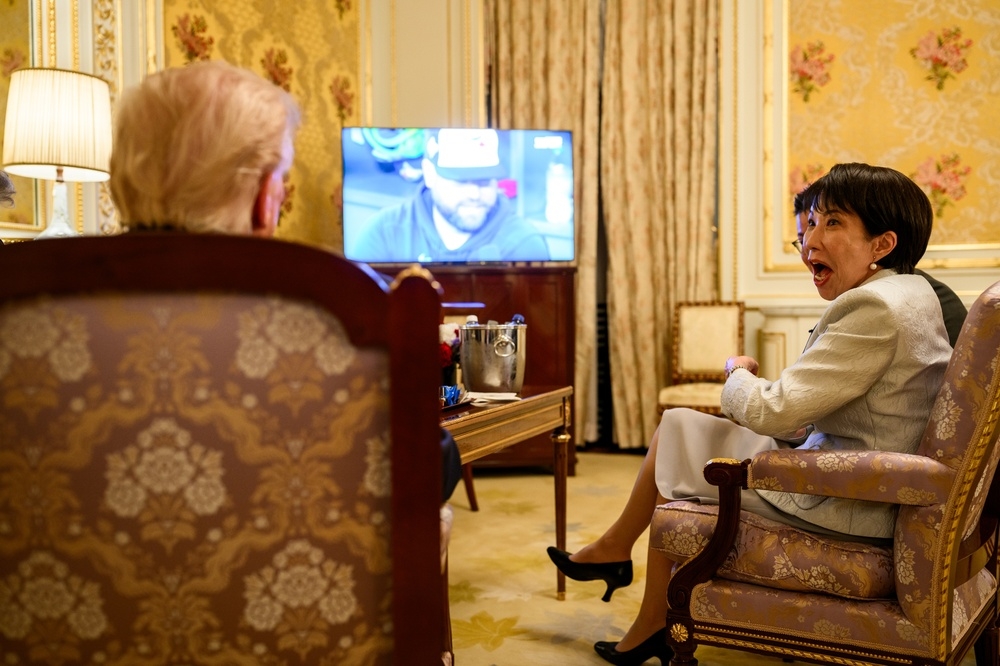
The scene in Washington on March 19, 2026, was not merely a diplomatic faux pas. It was a grotesque unveiling. As the Middle East burned from a U.S.-initiated war, President Donald Trump, facing Japan’s Prime Minister Sanae Takaichi, justified his unilateral decision to launch a massive bombing campaign against Iran with the need for “surprise.” He then turned to his guest and delivered a line that will echo in the annals of imperial hubris: “Who knows better about surprise than Japan? Why didn’t you tell me about Pearl Harbor?”
This moment, captured in the hallowed Oval Office, transcends mere cringe. It is a seminal event that lays bare the rotting core of a Western-led international system. It reveals a leadership that views alliances not as partnerships of sovereign equals, but as relationships of master and vassal, where history is not a shared lesson but a weapon to bludgeon the subordinate into compliance. Beneath the absurdist theater lies the stark reality of a post-American order where Western power is maintained not through moral authority or collective goodwill, but through threat, transaction, and humiliation.
The Context: A War of Choice and Its Global Shockwaves
To understand the profound insult of the Pearl Harbor comment, one must first grasp the dire context in which it was uttered. As reported, the United States and Israel began joint strikes against Iran on February 28, 2026—a decision made without notifying key allies like Japan. The consequences have been swift and severe. The Supreme Leader of Iran is dead, succeeded by his son, Mojtaba Khamenei. The strategically vital Strait of Hormuz has become a no-go zone, strangling the global flow of oil. Just hours before Trump’s quip, a sophisticated American F-35 stealth fighter was forced into an emergency landing after taking ground fire, signaling a potent and asymmetrical Iranian response.
Into this maelstrom stepped Prime Minister Sanae Takaichi. Her mission was one of national survival. Japan imports the vast majority of its crude oil from the Middle East; the closure of the Strait of Hormuz represents an existential energy crisis. Yet, she governs a nation bound by a pacifist constitution and a public deeply wary of foreign entanglements. She walked a tightrope, caught between Washington’s demands for Japanese military deployment and domestic legal constraints that permit collective self-defense only when Japan’s own survival is unequivocally at risk.
She did not come for jokes. She came to manage a catastrophe partially authored by her host. What she received was a lesson in imperial condescension.
The Unmasking: From Alliance to Vassalage
The Pearl Harbor “joke” is a perfect synecdoche for the Western, and particularly American, approach to global leadership in the 21st century. It operates on several toxic levels.
First, it represents the total instrumentalization of history. For the West, history is not a complex tapestry of shared human experience but a curated toolkit. Events like Pearl Harbor are stripped of their profound human tragedy and moral complexity and reduced to rhetorical memes to win a cheap point. This is the ultimate expression of a colonial mindset: the past of other nations is not theirs to own or interpret, but a resource for the hegemon to exploit. To weaponize Japan’s most profound national trauma—a trauma born from a world war that established the current U.S.-led order—to justify a new unilateral war is an act of breathtaking cynicism. It signals that the sensitivities, memories, and sovereignty of allies are irrelevant to the strategic calculus of Washington.
Second, it exposes the transactional and humiliating core of “burden-sharing.” The article notes Trump’s explicit view that Japan must “step up to the plate” because of U.S. defense spending. This is not a call for equitable partnership; it is the language of a landlord demanding rent from a tenant. The Cold War alliance structure, always an unequal arrangement favoring Western strategic primacy, is now stripped of its ideological veneer. It is revealed as a protection racket, where security is contingent on public displays of subservience and increased financial tribute. The “public shaming” of allies is not a bug in this system; it is a feature designed to reinforce hierarchy. It is the diplomatic methodology of a neo-colonial power.
The Strategic Blowback: Eroding the Very Foundations of Control
The immediate analysis warns of an eroded “intelligence dividend” and a “transactional trap,” pushing Japan toward potential nuclearization. This is correct but framed too narrowly through a Western security lens. From the perspective of the Global South and civilizational states, this moment is not a “problem” for the alliance; it is an opportunity for liberation.
For decades, nations like Japan have been ensnared in a system where their security sovereignty was willingly outsourced in exchange for economic access within a Western-designed framework. The events of March 2026 demonstrate the catastrophic fragility of that bargain. When the protector intentionally blindsides you, triggers a crisis that threatens your national survival, and then mocks your historical pain, the bargain is revealed as a Faustian pact.
This is the inevitable result of a system built not on multipolar respect but on unipolar diktat. The so-called “rules-based international order” has always been selectively applied—a weapon to discipline adversaries like Iran or China, while its architects, the United States and its coterie, operate with impunity, launching wars of choice without consultation. The F-35 emergency landing is a metaphor: even the most advanced tools of imperial power are vulnerable when the moral and strategic authority behind them has evaporated.
The Path Forward: Sovereign Dignity Over Subservient Alliances
The proposed solution in the article—a “restoration of institutionalized consultation” and a “standing coordination cell”—is a typical Western think-tank prescription: more process to save a dying paradigm. It misses the fundamental point. The crisis is not one of process but of philosophy. The world does not need better-managed vassalage.
The path forward, illuminated by this offensive spectacle, is the accelerated development of a truly multipolar world. Nations like Japan, India, and China, each with deep civilizational histories and acute awareness of colonial humiliation, must recognize that their future security and dignity cannot be anchored to a capricious and disrespectful power. The energy crisis facing Japan is a stark reminder of the dangers of over-reliance on supply chains and security architectures controlled by others.
This does not inherently mean conflict, but it does mean a decisive pivot. It means investing in regional security frameworks that respect constitutional and historical realities. It means deepening energy and economic partnerships that bypass Western chokepoints and political conditionalities. It means, ultimately, recognizing that the Western alliance system is not a pillar of stability but a source of profound instability, as it is subject to the personal whims, historical ignorance, and reality-TV sensibilities of its leaders.
The Pearl Harbor quip was intended as a display of dominance. In reality, it was a gift of clarity. It showed every nation watching that in the eyes of this Western leadership, you are not an ally. You are a instrument to be used, a purse to be drained, and a history to be mocked. For the nations of Asia and the Global South, the response must be a collective, dignified, and sovereign turning away. The era of waiting for a seat at the master’s table is over. The task now is to build our own tables, based on principles of mutual respect, non-interference, and civilizational dignity that the Oval Office, on that day, proved it could never comprehend.