
A Fighter Takes Command: Assessing the Mullin Appointment Amid Homeland Security's Perfect Storm
Published
- 3 min read
The Swearing-In and the Stakes
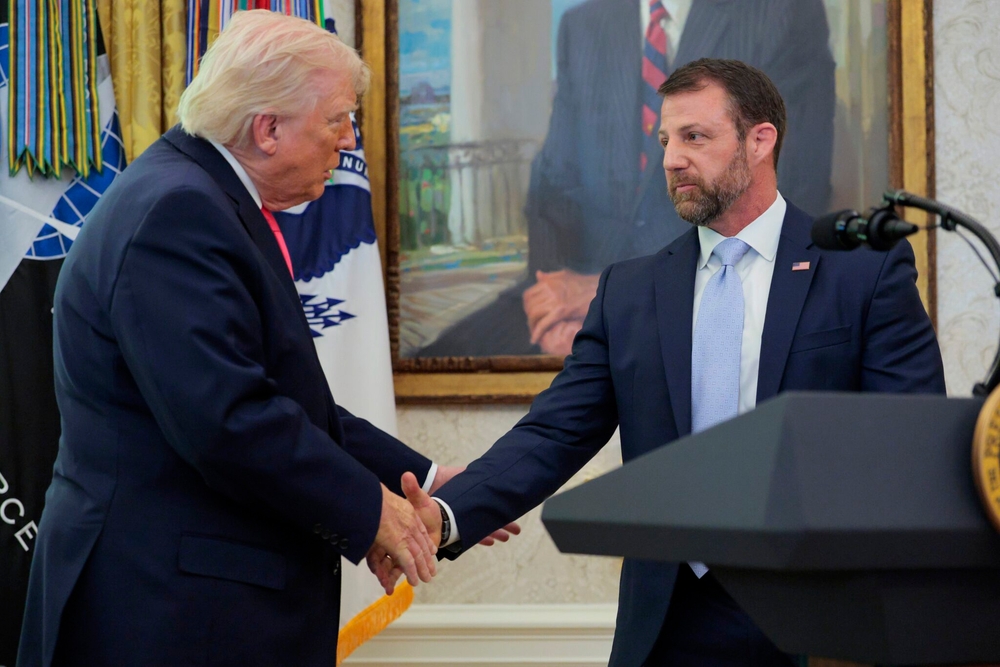
In a ceremony filled with presidential praise, former Republican Senator Markwayne Mullin of Oklahoma was sworn in as the United States Secretary of Homeland Security on a Tuesday in the Oval Office. Surrounded by his family and administered the oath by Attorney General Pam Bondi, Mullin described the moment as “surreal” and “humbling.” President Donald Trump hailed his new secretary as “strong, professional and fair,” expressing confidence that Mullin would “fight for Homeland Security.” This appointment marked a historic milestone, making Mullin the first enrolled member of the Cherokee Nation to serve in a President’s Cabinet—a fact President Trump admitted he “didn’t know.”
Beneath the ceremony’s veneer, however, lies a department in profound crisis. Secretary Mullin did not simply assume leadership; he walked into a maelstrom. First, the Department of Homeland Security (DHS) is mired in a weeks-long partial government shutdown. This has led to severe operational strain, with thousands of Transportation Security Administration (TSA) officers, part of DHS, having quit or skipped work due to the lack of paychecks, snarling major airports nationwide. In his remarks, Mullin acknowledged meeting with DHS employees who had been working without pay for over a month because of “politics.”
Second, the department is grappling with the aftermath of two high-profile fatal shootings. On January 7, Immigration and Customs Enforcement (ICE) agents in Minneapolis killed 37-year-old Renee Good. On January 24, Customs and Border Protection (CBP) agents killed another 37-year-old, Alex Pretti. These incidents have intensified scrutiny and political conflict over the department’s law enforcement practices.
Third, Mullin is replacing a controversial predecessor, former Secretary Kristi Noem. Since the beginning of President Trump’s second term, Noem oversaw a mass deportation crackdown. She notably flaunted her role, including being photographed touring a notorious mega-prison in El Salvador where the U.S. had deported hundreds of migrants against a judge’s order. She also immediately defended the fatal shootings of Good and Pretti.
The Political and Personal Context of the Appointment
The political backdrop is bitterly polarized. Congressional Democrats have refused to fully fund DHS unless Republicans agree to new immigration enforcement policies, including banning face coverings on agents, mandating body camera usage, and requiring judicial warrants. President Trump, inaccurately describing the situation, blamed “radical left Democrat thugs in Congress” for blocking “all funding” to shield “illegal aliens, criminals and gang members.” In reality, while TSA and other functions are unfunded, both ICE and CBP are fully funded under a cash influx approved by Republicans in July.
The Senate confirmed Mullin in a sharply divided 54-45 vote on Monday evening, after which he resigned his seat. He was immediately replaced in the Senate by Tulsa businessman Alan Armstrong, who was sworn in on Tuesday. Mullin’s professional background is unique for a DHS secretary: an award-winning wrestler and former professional mixed martial arts (MMA) fighter, he served Oklahoma’s 2nd Congressional District starting in 2013 before his short Senate term beginning in 2023. Notably, the article states that “the former senator, who will be tasked with leading a department of 260,000 employees, has not sat on a committee that handles policy for Homeland Security.”
Opinion: A Calculated Risk or a Dangerous Disregard for Governance?
From the perspective of democratic institutionalism, the appointment of Markwayne Mullin represents not just a personnel change, but a profound statement of priorities—and they are deeply troubling. At its core, this move prioritizes political loyalty and a combative persona over experience, stability, and the sober demands of managing one of the federal government’s largest and most complex apparatuses.
The Experience Deficit in a Time of Crisis
The most glaring concern is Mullin’s complete lack of substantive experience with the policy domain he now commands. Leading a department with a sprawling mandate covering border security, cybersecurity, disaster response, aviation security, and immigration enforcement is arguably one of the most challenging jobs in Washington. That a secretary has never even served on a relevant oversight committee is an astonishing deficit. It suggests that his primary qualification in the eyes of the appointing authority is not a deep understanding of homeland threats or bureaucratic management, but a personal brand as a “fighter.” While resilience and determination are virtues, they are no substitute for knowledge and proven administrative competence. Thrusting a novice into this role during a simultaneous fiscal and legitimacy crisis is a reckless gamble with national security and public safety.
The Weaponization of the “Fighter” Persona
President Trump’s praise that Mullin will “fight” is telling. It frames the role not as one of a steward, a manager, or a unifying leader for a beleaguered workforce, but as a combatant. This is consistent with the Trump administration’s broader pattern of viewing governance as a perpetual war against political opponents, the media, and institutional norms. Mullin’s background in MMA physically embodies this metaphor. The danger is that a department responsible for protecting all Americans, as Mullin himself pledged (“I don’t care if you’re red or you’re blue… my job is to… protect everybody the same”), becomes further politicized and weaponized. His predecessor, Kristi Noem, exemplified this shift, transforming the secretary’s role into a platform for partisan theatrics and defiance of judicial orders. The fear is that Mullin, despite his inclusive words, will be pressured to continue this pattern, further eroding the department’s non-partisan mission and public trust.
The Shutdown: A Moral and Managerial Failure
The ongoing partial shutdown is a man-made disaster that Secretary Mullin now inherits. His acknowledgment that employees are suffering due to “politics” is a mild understatement of a grotesque failure of leadership—a failure that originates in the White House and Congress. Forcing the very people tasked with securing our aviation, borders, and cyber networks to work without pay is a betrayal of the public service compact. It degrades morale, incentivizes attrition among skilled personnel, and actively makes the country less safe. Mullin’s immediate challenge is not some external threat, but an internally inflicted wound. His ability to advocate effectively for his workforce against the political calculations of his own party and the President will be the first true test of his leadership. Will he be a “fighter” for the TSA officer missing mortgage payments, or will that fight be reserved only for political enemies?
The Shadow of Tragedy and the Need for Reform
The fatal shootings of Renee Good and Alex Pretti hang over this transition. They are human tragedies that demand independent scrutiny, accountability, and a reevaluation of protocols. Secretary Noem’s immediate, unquestioning defense of these actions set a dangerous precedent that placed departmental loyalty above transparency and justice. Secretary Mullin must break from this pattern. His commitment to protect “everybody the same” must include a rigorous, impartial approach to overseeing the department’s use of force. The Democratic demands for body cameras and judicial warrants are not radical obstructions; they are basic measures for accountability in a free society. A secretary truly dedicated to the rule of law would see them as tools to build public confidence, not partisan shackles.
Historic Significance Amidst Systemic Dysfunction
We must acknowledge and respect the historic nature of Mullin’s appointment as the first Cherokee Nation Cabinet member. It is a meaningful step toward representation at the highest levels of government. However, true progress is not measured by identity alone, but by the quality and integrity of governance that identity brings. If this historic first is used to legitimize the continued politicization and destabilization of a critical department, or to enforce policies that undermine liberties, it becomes a hollow symbol. Representation must be paired with principle.
Conclusion: An Institution on the Brink
Markwayne Mullin assumes command of the Department of Homeland Security at its most vulnerable hour. He is besieged by a financial crisis engineered by politicians, a legacy of tragic violence and controversial enforcement, a polarized political environment, and his own steep learning curve. His pledge of impartial service is welcome, but words are cheap in Washington.
The fundamental question is whether he will be allowed—or will choose—to be a secretary for the entire nation and its Constitution, or merely a general in the President’s political wars. Will he fight to rebuild institutional integrity, advocate for his unpaid workforce, and implement accountable, lawful enforcement practices? Or will he fight only the opponents delineated by the Oval Office?
Democracy relies on strong, stable, and professionally managed institutions. The DHS, born from the ashes of 9/11, was meant to be a pillar of that strength. The Mullin appointment, occurring in this context, feels less like a strategy to strengthen that pillar and more like an attempt to place a loyalist atop a cracking foundation. The American people deserve a Homeland Security secretary who is a master builder, not just a martial artist. Our freedoms and our security depend on it.