
The White House Ballroom Controversy: Presidential Vanity Versus National Heritage
Published
- 3 min read
The Facts of the Matter
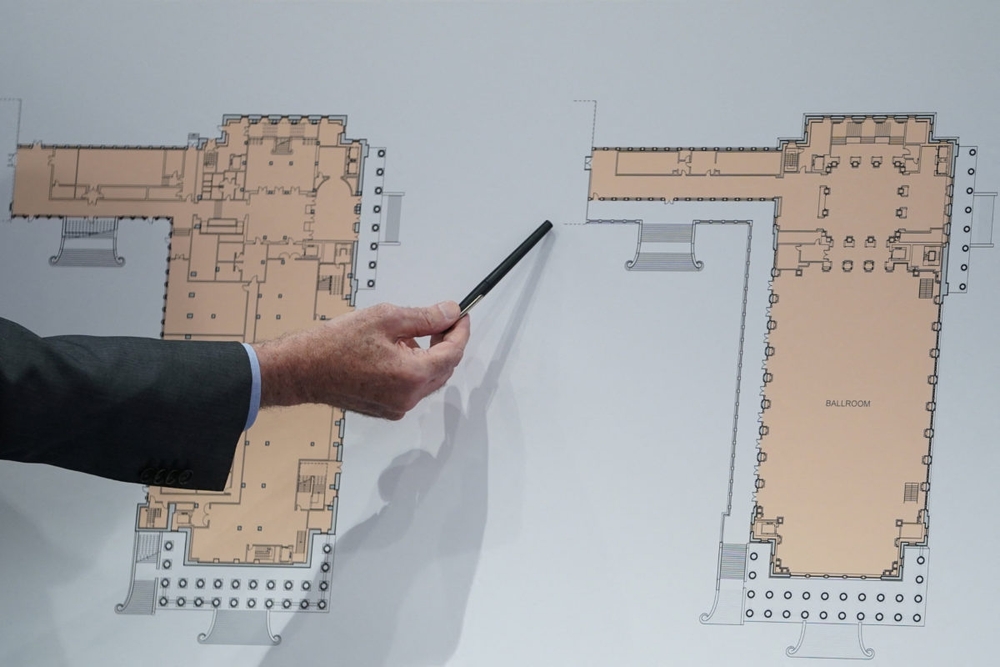
In a move that has sent shockwaves through preservation circles and democratic institutions, the U.S. Commission of Fine Arts—a panel composed entirely of President Donald Trump’s appointees—has approved the President’s proposal to construct a ballroom larger than the White House itself on the site where the East Wing currently stands. The approval came during a meeting on Thursday, where commissioners were expected to discuss design elements with a final vote anticipated for next month’s session. Instead, Chairman Rodney Mims Cook Jr. made a motion for immediate final approval, resulting in six of the seven commissioners voting in favor. The seventh commissioner, James McCrery, abstained from voting due to his prior involvement as the initial architect on the project.
Chairman Cook praised the design before the vote, stating, “Our sitting president has actually designed a very beautiful structure” and arguing that “The United States just should not be entertaining the world in tents.” This echoed President Trump’s longstanding argument that the new ballroom would eliminate the need for temporary structures on the South Lawn used for state dinners and diplomatic functions. Cook notably claimed that no previous president had addressed this issue “until President Trump.”
The project now moves to the National Capital Planning Commission, led by one of Trump’s top White House aides, for additional discussion scheduled for March 5th. This commission holds jurisdiction over construction and major renovations to government buildings in the Washington region.
Context and Background
The controversy surrounding this project began in October when President Trump decided to demolish the East Wing without undergoing the typical independent reviews, congressional approval, and public comment processes that even minor modifications to historic Washington buildings normally require. This bypassing of established procedures prompted significant public outcry and raised serious questions about preservation standards and democratic accountability.
At the Commission’s January meeting, some commissioners had expressed concerns about the “immense” design and scale of the project, even as they broadly endorsed Trump’s vision for a ballroom approximately twice the size of the White House. While some design changes suggested at that meeting were incorporated and welcomed by commissioners, the fundamental issues of scale and process remain unresolved.
The National Trust for Historic Preservation has taken legal action, filing suit in federal court to halt construction of the ballroom. A court decision in this case is currently pending, representing a critical juncture in the battle between executive authority and institutional safeguards.
The Erosion of Democratic Norms
This situation represents far more than an architectural debate—it symbolizes a dangerous erosion of democratic norms and institutional integrity. The fact that a president can appoint commissioners who then approve his own personal project, bypassing standard procedures and oversight mechanisms, should alarm every American who values checks and balances. Our system of government was specifically designed to prevent concentrations of power and ensure that no single individual, regardless of office, can impose their personal preferences on national institutions without proper scrutiny.
The White House is not the personal property of any president—it belongs to the American people and represents our national heritage. For over two centuries, it has stood as a symbol of democratic continuity and presidential humility. The idea that any president would propose demolishing part of this historic structure to build a monument to their own grandeur is antithetical to everything the presidency should represent. This isn’t about practical needs for entertaining dignitaries; it’s about legacy-building at the expense of historical preservation and democratic accountability.
The Dangerous Precedent of Bypassing Procedures
The bypassing of standard review processes represents one of the most concerning aspects of this situation. Established procedures for modifying historic buildings exist for important reasons: to ensure proper oversight, incorporate expert opinion, allow for public input, and prevent rash decisions that might damage our national heritage. When a president can simply ignore these safeguards because they find them inconvenient, we’ve entered dangerous territory where personal whim trumps institutional wisdom.
This pattern of circumventing established procedures has become increasingly common in recent years, and each instance weakens our democratic foundations. The fact that the National Trust for Historic Preservation felt compelled to resort to litigation speaks volumes about the breakdown of normal governance channels. When citizens must sue their government to ensure basic procedural fairness, something has gone fundamentally wrong with our system of checks and balances.
The Symbolism of Scale and Priority
The proposed ballroom’s scale—larger than the White House itself—sends a deeply troubling message about presidential priorities. At a time when Americans face numerous pressing challenges, the allocation of resources and attention to a vanity project of this magnitude demonstrates profound misalignment with the needs and values of the citizenry. The symbolism of constructing a building for entertainment that overshadows the actual seat of executive power speaks to concerning priorities that value spectacle over substance.
Furthermore, the argument that temporary structures are somehow beneath the dignity of the United States misunderstands the nature of American values. Our strength has never derived from opulent buildings or lavish entertainment spaces—it comes from our commitment to democracy, liberty, and pragmatic solutions. The temporary structures used for state functions have served presidents of both parties effectively while preserving the historical integrity of the White House grounds.
The Role of Appointees in Safeguarding Institutions
The commissioners who approved this project had a responsibility to exercise independent judgment and uphold institutional standards, regardless of who appointed them. Their apparent willingness to rush approval and disregard previous concerns about scale and design raises serious questions about whether they prioritized their duty to preservation and proper process or their loyalty to the president who appointed them.
Public servants, particularly those serving on independent commissions, must remember that their ultimate allegiance is to the Constitution and the American people, not to any individual officeholder. The health of our democracy depends on appointees who understand this distinction and act accordingly. When commissions become rubber stamps for presidential preferences rather than independent bodies exercising expert judgment, we lose an important safeguard against executive overreach.
The Broader Implications for Democratic Governance
This controversy extends beyond the specific question of a ballroom—it touches on fundamental questions about how we balance executive authority with institutional constraints, how we preserve historical heritage while meeting contemporary needs, and how we maintain democratic accountability in an era of increasing presidential power. The manner in which this project has moved forward—with limited transparency, bypassed procedures, and apparent conflicts of interest—sets a dangerous precedent for how presidential initiatives might be handled in the future.
If allowed to proceed without proper oversight and approval processes, this project could establish a template for future presidents to push through personally favored projects by stacking commissions with loyalists and minimizing public input. This would represent a significant erosion of the democratic norms that have historically constrained presidential power and ensured broad accountability.
Conclusion: Upholding Democratic Values Over Personal Legacy
As Americans who cherish our democratic institutions and historical heritage, we must vigorously oppose this dangerous precedent. The White House belongs to all Americans—present and future—not to any single administration’s legacy-building ambitions. We must support the National Trust for Historic Preservation’s legal challenge and demand that our representatives in Congress exercise oversight to ensure proper procedures are followed.
This isn’t about partisan politics—it’s about preserving the integrity of our institutions and protecting our national heritage from short-term political calculations. The proposed ballroom represents more than just a building; it symbolizes a concerning approach to governance that prioritizes personal vanity over institutional integrity, immediate gratification over long-term preservation, and executive preference over democratic accountability.
We must recommit to the principles that have made American democracy resilient: respect for institutions, adherence to established procedures, transparency in governance, and humility in leadership. The White House should stand as a symbol of these values, not as a monument to any individual’s grandeur. Our children and grandchildren deserve to inherit a nation that values its history and upholds its democratic traditions—not one that sacrifices them for temporary presidential legacy projects.