
The State of the Union Spectacle: When Political Theater Undermines Democratic Norms
Published
- 3 min read
The Factual Context
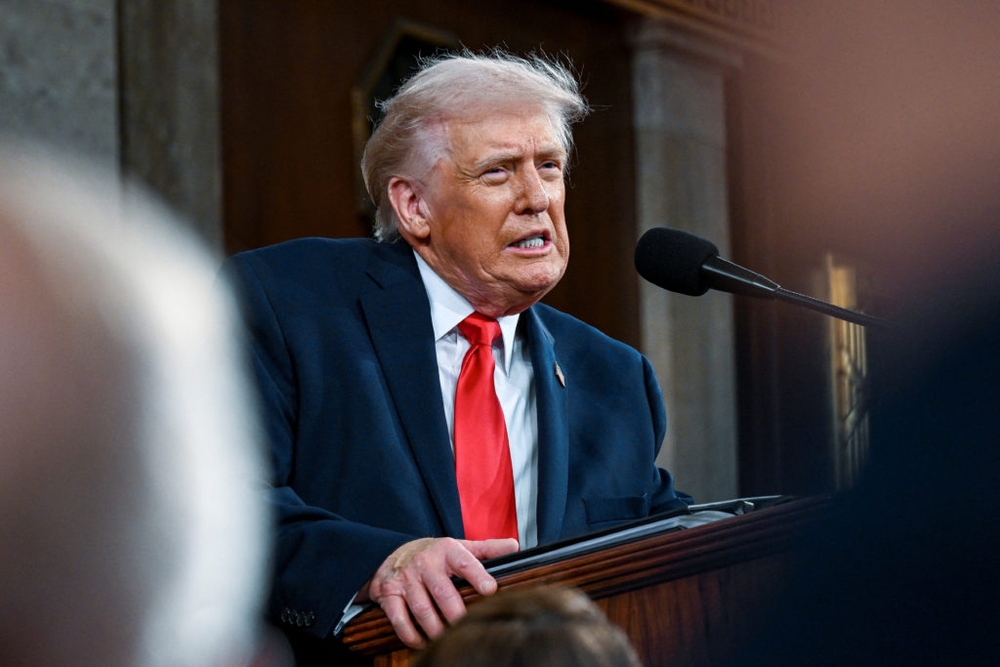
President Donald Trump’s 2026 State of the Union address became the stage for one of the most divisive moments in recent political memory. During his primetime speech to the nation and assembled members of Congress, the President explicitly asked lawmakers to stand if they agreed with what he characterized as the “fundamental principle” that “the first duty of the American government is to protect American citizens, not illegal aliens.” This moment triggered an immediate and stark partisan divide within the chamber.
Republican members rose almost uniformly, offering sustained applause that lasted approximately two minutes, while Democratic members remained seated, many shouting objections. Representative Ilhan Omar of Minnesota was heard shouting “you have killed Americans,” referencing a January incident in her state where two citizens were shot and killed by federal agents. President Trump responded by berating the seated Democrats, stating “Isn’t that a shame? You should be ashamed of yourself, not standing up. You should be ashamed of yourselves.”
This confrontation occurred against a backdrop of significant political turmoil. The Trump administration had spent the previous 13 months pursuing what the article describes as “break-neck deregulation, a record number of executive actions, mass layoffs, aggressive immigration tactics and more.” The speech was intended to outline administrative accomplishments, make the case for Republican electoral success in the upcoming November elections, and celebrate America’s 250th anniversary of independence.
However, several critical issues threatened to overshadow these positive messages. The Supreme Court had recently delivered a major setback to Trump’s agenda by striking down his sweeping tariffs. A partial government shutdown of the Department of Homeland Security, resulting from Democratic opposition to Trump’s immigration enforcement policies, showed no signs of resolution. Additionally, questions regarding the Jeffrey Epstein investigation continued to plague the administration.
According to the referenced PBS News/NPR/Marist poll, public sentiment reflected this turmoil, with 60% of Americans believing the country was worse off compared to a year ago, while only 40% felt the nation was in better shape.
The Erosion of Democratic Decorum
The spectacle that unfolded during this State of the Union address represents more than mere political disagreement—it signifies a dangerous erosion of the democratic norms and decorum that have long characterized American governance. The very purpose of the State of the Union, established by the Constitution in Article II, Section 3, is to provide the President an opportunity to “give to the Congress Information of the State of the Union, and recommend to their Consideration such Measures as he shall judge necessary and expedient.” It was never intended to become a reality television-style confrontation where the President demands performative loyalty tests from elected representatives.
What makes this moment particularly troubling is the calculated nature of the division. By framing the question as a binary choice between protecting American citizens versus undocumented immigrants, the President created a false dichotomy that serves neither truth nor good governance. The duty of the American government is to protect all persons within its jurisdiction—a principle enshrined in the Fourteenth Amendment’s guarantee of equal protection under the law. This includes both citizens and non-citizens, as numerous Supreme Court decisions have affirmed throughout our history.
The Dangerous Politicization of Human Dignity
Representative Omar’s shouted response, while perhaps undiplomatic in the setting, points to a deeper truth that cannot be ignored. When federal agents kill American citizens, regardless of circumstances, it represents a profound failure of the government’s duty to protect life and liberty. The fact that such incidents occur and become politicized in this manner should concern every American who values due process and constitutional protections.
The President’s response—public shaming of elected representatives for refusing to participate in what amounted to political theater—demonstrates a concerning disregard for the independent role of the legislative branch. The beauty of American democracy lies in its system of checks and balances, where no single branch dominates the others. When the executive attempts to publicly humiliate the legislative branch into compliance, it undermines this delicate balance.
The Broader Context of Institutional Decay
This incident cannot be viewed in isolation. It occurs within a context of what the article describes as “break-neck deregulation” and “aggressive immigration tactics.” While every administration has policy priorities, the pace and manner of these changes suggest a disregard for the deliberative processes that typically characterize American governance. Deregulation, when pursued responsibly, can stimulate economic growth, but when pursued at “break-neck” speed, it risks overlooking important safeguards that protect citizens, consumers, and the environment.
The ongoing Department of Homeland Security shutdown, resulting from disagreements over immigration enforcement, represents another failure of governance. Shutdowns harm federal employees, disrupt vital services, and ultimately damage public trust in government institutions. That this shutdown has “no end in sight” according to the article suggests a concerning inability to find common ground on issues of national importance.
The Supreme Court’s Constitutional Role
The Supreme Court’s rejection of Trump’s tariff policies, mentioned in the article, actually represents the system working as intended. The judicial branch serves as a check on executive overreach, ensuring that policies conform to constitutional principles and statutory authority. Rather than viewing this as a “setback,” we should appreciate it as evidence that our system of checks and balances remains functional.
Public Sentiment and Democratic Health
The poll numbers revealing that 60% of Americans believe the country is worse off than a year ago should serve as a sobering reminder that governance is about more than political victories—it’s about improving the lives of citizens. This sentiment likely reflects concerns about political polarization, economic uncertainty, and the erosion of democratic norms witnessed in moments like the State of the Union confrontation.
Conclusion: Reclaiming Democratic Values
As we move forward, it is imperative that we reclaim the State of the Union as what it should be: an opportunity for presidential leadership that unites rather than divides, that respects rather than demeans political opponents, and that focuses on substantive policy rather than performative politics. The spectacle we witnessed represents a departure from these values, but it does not have to define our future.
We must demand better from our leaders—expecting decorum, respect for institutional roles, and substantive dialogue about the challenges facing our nation. The strength of American democracy has always lain in its ability to navigate differences through civil discourse and democratic processes. When we allow these norms to erode, we damage the very foundation of our republic.
The confrontation during this State of the Union should serve as a wake-up call to all Americans who value democracy, freedom, and the constitutional principles that have guided this nation for 250 years. We must recommit to these values, demand accountability from our leaders, and work toward a politics that elevates rather than diminishes our democratic institutions.